

We are a digital agency helping businesses develop immersive, engaging, and user-focused web, app, and software solutions.
2310 Mira Vista Ave
Montrose, CA 91020

2500+ reviews based on client feedback
What's Included?
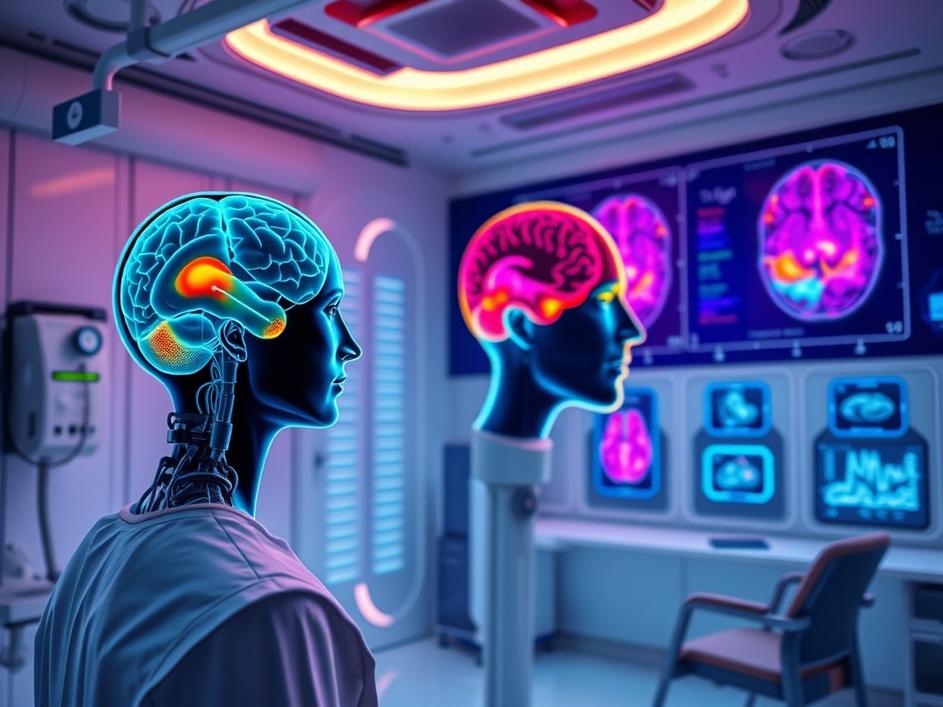
ToggleImagine if doctors could look at a brain scan and instantly see the telltale signs of chronic stress. It sounds like science fiction, but it’s edging closer to reality. Researchers have developed an artificial intelligence (AI) model that can detect a biomarker for chronic stress using routine imaging techniques. This is a big step because, until now, there hasn’t been a reliable way to physically see the impact of long-term stress on the brain.
The study, which is making waves in both the medical and tech fields, used a deep learning AI to analyze brain scans. Deep learning is a type of AI that can learn from large amounts of data. In this case, the AI was trained to identify patterns in brain scans that are associated with chronic stress. What’s truly exciting is that this biomarker is detectable through imaging methods already used in many hospitals and clinics.
Chronic stress is a major problem. It’s linked to a long list of health issues, including heart disease, depression, and weakened immune function. But one of the challenges in treating chronic stress is that it’s often difficult to diagnose objectively. People experience stress differently, and symptoms can vary widely. This new AI-powered tool could provide a more concrete way to identify individuals who are experiencing the physical effects of chronic stress, even before they develop severe symptoms. It could help doctors intervene earlier and provide more targeted treatments.
While the specifics of the AI model are complex, the basic idea is that it looks for subtle changes in brain structure and activity that are characteristic of chronic stress. These changes might not be visible to the naked eye, but the AI can pick them up by analyzing large amounts of data and identifying patterns. The identified biomarker offers a quantifiable measure of stress’s impact, moving beyond subjective self-reporting and clinical observation.
This research opens up several exciting possibilities. First, it could lead to the development of new diagnostic tools for chronic stress. Doctors could use the AI model to screen patients and identify those who are at risk. Second, it could help researchers better understand the biological mechanisms of stress. By studying the biomarker, scientists could gain insights into how stress affects the brain and body. Third, it could pave the way for more personalized treatments for stress-related disorders. Imagine a future where treatments are tailored to an individual’s specific brain signature of stress. The success of the AI will depend upon further testing across diverse populations, ensuring it is accurate for different age groups, genders, and ethnic backgrounds.
It’s no secret that we live in stressful times. The pressures of work, family, and social life can take a toll on our mental and physical health. And while we often talk about the importance of stress management, it can be hard to know if we’re really making a difference. This new AI technology offers a tangible way to assess the impact of stress and track the effectiveness of interventions. It’s not just about identifying people with chronic stress; it’s also about empowering them to take control of their health.
As with any AI-based technology used in healthcare, there are important ethical considerations to keep in mind. It’s crucial to ensure that the AI model is accurate and unbiased, and that it’s used in a way that respects patient privacy and autonomy. Additionally, the results provided by AI should be interpreted by trained professionals who can consider individual circumstances and medical history. It is also important to consider the potential psychological impact of being diagnosed with chronic stress based on an AI assessment. Safeguards need to be in place to ensure that individuals receive appropriate support and counseling.
This AI-powered biomarker for chronic stress represents a significant advancement in our understanding and management of stress-related health problems. While further research is needed, this technology holds immense promise for improving the lives of individuals struggling with the burden of chronic stress. It is a powerful reminder of how technology can be used to address some of the most pressing health challenges of our time.



Comments are closed