

We are a digital agency helping businesses develop immersive, engaging, and user-focused web, app, and software solutions.
2310 Mira Vista Ave
Montrose, CA 91020

2500+ reviews based on client feedback
What's Included?
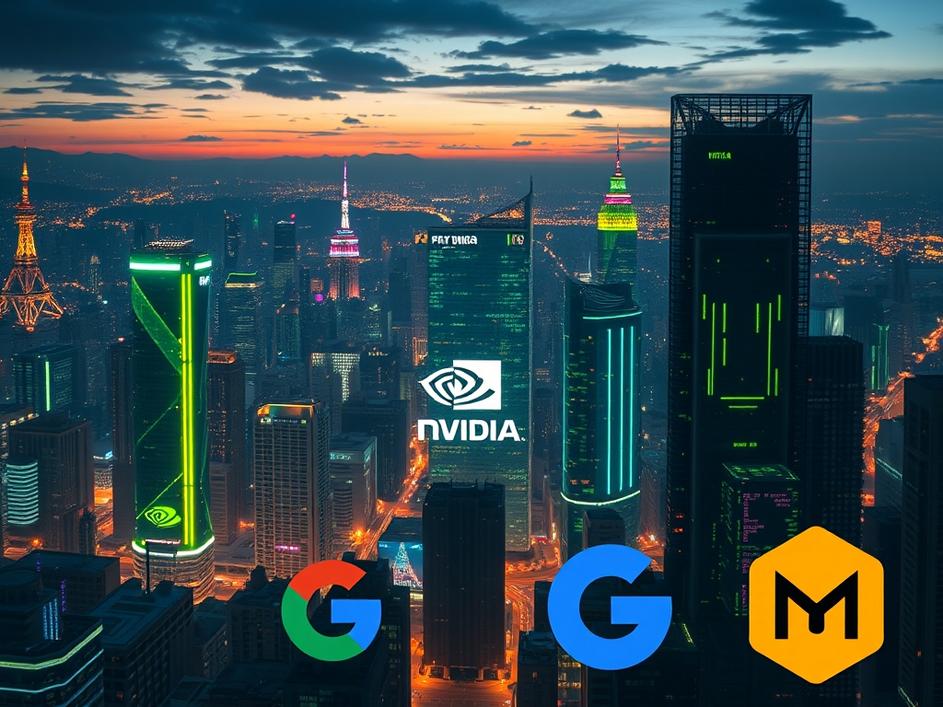
ToggleNvidia, the current king of the hill in AI chips, might be facing some serious competition. Recent news suggests that Meta, the parent company of Facebook, could be looking to Google for its AI chip needs. This development sent Nvidia’s stock price tumbling, a clear sign that investors are taking this threat seriously. The idea that Meta might turn to Google’s Tensor Processing Units (TPUs) instead of Nvidia’s GPUs has significant implications for the future of the AI hardware market. It signals a potential shift in power and a diversification of options for companies building AI models.
What makes Google’s TPUs so attractive? Well, Google has been developing these specialized chips for years, specifically designed for the demands of machine learning. They’re optimized for the types of calculations that AI models require, potentially offering better performance and efficiency compared to general-purpose GPUs in certain AI tasks. Meta’s possible move indicates that Google’s TPUs are maturing and becoming a viable alternative for even the most demanding AI workloads. And so this isn’t just about cost, although that is definitely a factor. It’s about getting the best performance for specific AI applications.
For a long time, Nvidia has been the go-to choice for AI chip needs. Their GPUs have powered breakthroughs in everything from image recognition to natural language processing. But this dominance comes at a price. Nvidia’s chips are expensive, and the high demand has sometimes led to supply constraints. This has created an opening for competitors like Google to offer alternative solutions. Companies like Meta don’t want to be entirely dependent on a single supplier, and are always looking for ways to reduce costs and increase bargaining power. So, by exploring options like Google’s TPUs, Meta is hedging its bets and ensuring it has access to the best possible technology at a reasonable price.
If Meta does start using Google’s TPUs, it could reshape the entire AI chip market. It would signal to other companies that there are viable alternatives to Nvidia, potentially leading to increased competition and lower prices. This could also accelerate the development of AI chips, as companies like Nvidia and Google race to innovate and offer the best possible performance. And so, for consumers and businesses alike, this increased competition is good news. It means more choices, better technology, and potentially lower costs for AI-powered products and services.
But this isn’t just about chips. It’s about the broader strategic positioning of these tech giants in the AI landscape. Meta is investing heavily in AI for everything from content recommendation to building the metaverse. Google, with its vast resources and expertise in AI, is not only developing TPUs but also integrating AI into all its products and services. And Nvidia is working to maintain its lead by constantly innovating and expanding its offerings beyond just GPUs. The decisions that Meta makes about its AI infrastructure reflect its long-term vision for its place in the tech world, and also the need for it to cut spending. This shift might reflect Meta’s overall AI strategy, and its desire to control costs while still maintaining high performance.
It’s also important to consider the role of cloud computing in all of this. Google’s TPUs are tightly integrated with its cloud infrastructure, offering seamless access to AI resources for its cloud customers. This gives Google a distinct advantage, as companies can easily experiment with and deploy AI models without having to invest in their own hardware. Nvidia, on the other hand, is also working to expand its presence in the cloud, offering its GPUs through various cloud providers. The cloud is becoming an increasingly important battleground in the AI chip war, as companies compete to offer the most comprehensive and accessible AI solutions. As companies increase reliance on AI, they will seek partners that can meet the hardware and cloud demands in conjunction.
Furthermore, the open source movement could further disrupt the AI chip market. Open-source AI frameworks like TensorFlow and PyTorch are making it easier for companies to develop and deploy AI models on a variety of hardware platforms. This reduces the reliance on proprietary technologies and gives companies more flexibility in choosing their AI infrastructure. As open-source AI becomes more prevalent, it could level the playing field and allow smaller players to compete with the tech giants.
While the immediate impact of Meta’s possible move is a drop in Nvidia’s stock price, the long-term implications are much more significant. It signals a shift in the AI landscape, with increased competition, more choices for consumers and businesses, and accelerated innovation. The AI chip war is just beginning, and the next few years will be crucial in determining who comes out on top. It’s a safe bet that companies like Nvidia and Google will continue to invest heavily in AI chip development, while companies like Meta will continue to explore all available options. So it isn’t just about one quarter’s numbers, but rather the long game of AI dominance.



Comments are closed