

We are a digital agency helping businesses develop immersive, engaging, and user-focused web, app, and software solutions.
2310 Mira Vista Ave
Montrose, CA 91020

2500+ reviews based on client feedback
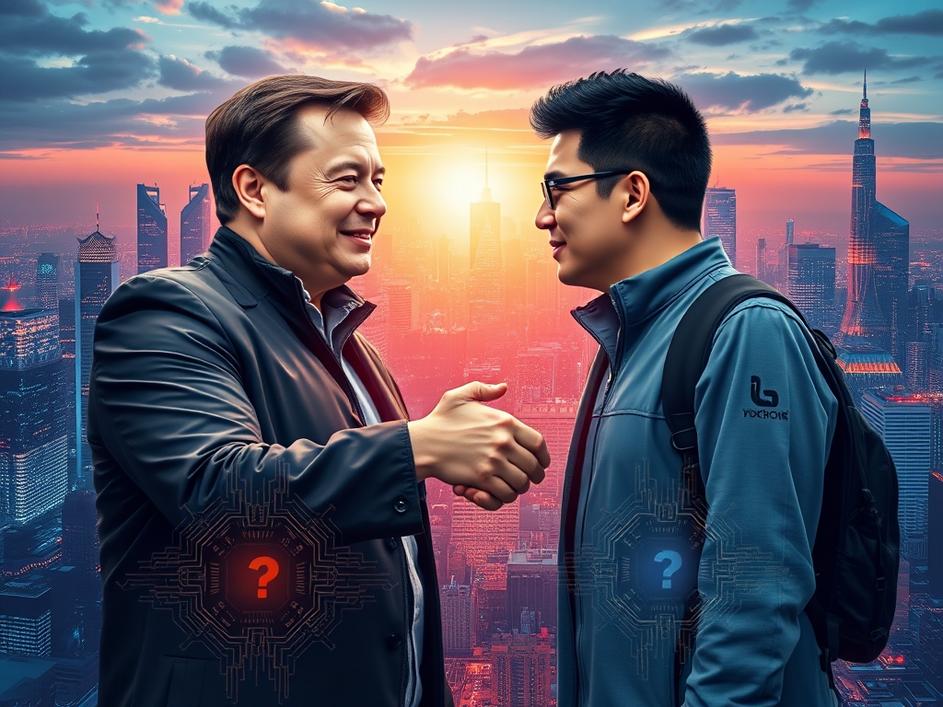
The buzz is all about a potential collaboration between Elon Musk, the visionary behind Tesla and SpaceX, and Jensen Huang, the CEO of Nvidia, the undisputed king of AI chips. While details are scarce, the very idea of these two titans joining forces sends ripples of excitement – and a healthy dose of speculation – through the tech industry. What could they possibly be working on? And what does it mean for the rest of us?
Tesla has made no secret of its ambition to achieve full self-driving capability. But achieving true autonomy requires immense processing power and sophisticated AI algorithms. Tesla has been developing its own chips, but partnering with Nvidia could give them a significant edge. Nvidia’s GPUs are already the gold standard for AI training and inference. Imagine Tesla’s self-driving cars powered by Nvidia’s cutting-edge technology. It’s a match made in tech heaven, promising enhanced safety, efficiency, and a smoother driving experience.
The potential collaboration goes beyond just autonomous vehicles. Both Musk and Huang have expressed profound interest in the broader applications of artificial intelligence. Think about robotics, automation, and even the development of artificial general intelligence (AGI). Nvidia’s chips are being used in everything from medical imaging to scientific simulations. Combining Nvidia’s hardware prowess with Tesla’s expertise in robotics and AI software could lead to breakthroughs we can’t even imagine yet. The possibilities are truly limitless.
The discussion around AI chips isn’t just about technology; it’s also about geopolitics. The United States, China, and other nations are locked in a fierce competition to dominate the AI landscape. Access to advanced chips is crucial for this competition. Nvidia currently holds a dominant position in the AI chip market, but other players are emerging. Tesla developing its own chips, or potentially even working with other partners could further change the landscape of competition in the future.
With great power comes great responsibility, and the development of advanced AI raises serious ethical questions. How do we ensure that AI is used for good and not for harm? How do we prevent bias in AI algorithms? How do we protect jobs from automation? These are complex questions that require careful consideration. Musk has been a vocal advocate for AI safety, and Huang has emphasized the importance of responsible AI development. Any collaboration between these two should prioritize ethical considerations and ensure that AI benefits all of humanity.
The details of a potential Musk-Huang partnership remain shrouded in secrecy. Whether it’s a formal collaboration or simply a shared vision for the future of technology, one thing is clear: these two leaders are shaping the world as we know it. Their decisions will have far-reaching consequences for the economy, society, and the very future of humanity. It’s a time of great change and uncertainty, but also of incredible opportunity. The future is being written now, and Musk and Huang are two of the key authors.
While a Musk-Huang partnership could bring significant innovation, it’s also worth noting the potential for competition. Tesla and Nvidia operate in overlapping areas, and their interests may not always align. Tesla is increasingly developing its own AI hardware and software, potentially reducing its reliance on Nvidia in the long run. This dynamic tension between collaboration and competition could drive innovation even further, as both companies strive to stay ahead of the curve. Ultimately, the beneficiaries will be consumers and society as a whole.
As AI becomes more pervasive, it’s crucial that the development process is transparent and open to public scrutiny. The decisions made by companies like Tesla and Nvidia will have a profound impact on our lives, and we deserve to understand the implications. Open dialogue, collaboration between industry, government, and academia, and a strong emphasis on ethical considerations are essential to ensure that AI is developed responsibly and benefits everyone.
The rise of AI will also require significant investments in education and training. As jobs are automated, new skills will be needed to thrive in the future economy. Governments, businesses, and educational institutions must work together to prepare the workforce for the changes ahead. This includes investing in STEM education, providing opportunities for lifelong learning, and supporting workers who are displaced by automation. The future belongs to those who are prepared to adapt and embrace new technologies.
The potential collaboration between Musk and Huang is just one example of the rapid technological advancements transforming our world. AI, chips, and related technologies are evolving at an unprecedented pace, creating both immense opportunities and significant challenges. By embracing innovation, fostering collaboration, and prioritizing ethical considerations, we can harness the power of technology to build a brighter future for all. It’s a journey we must embark on together, with open minds and a shared commitment to progress.


Comments are closed