

We are a digital agency helping businesses develop immersive, engaging, and user-focused web, app, and software solutions.
2310 Mira Vista Ave
Montrose, CA 91020

2500+ reviews based on client feedback
What's Included?
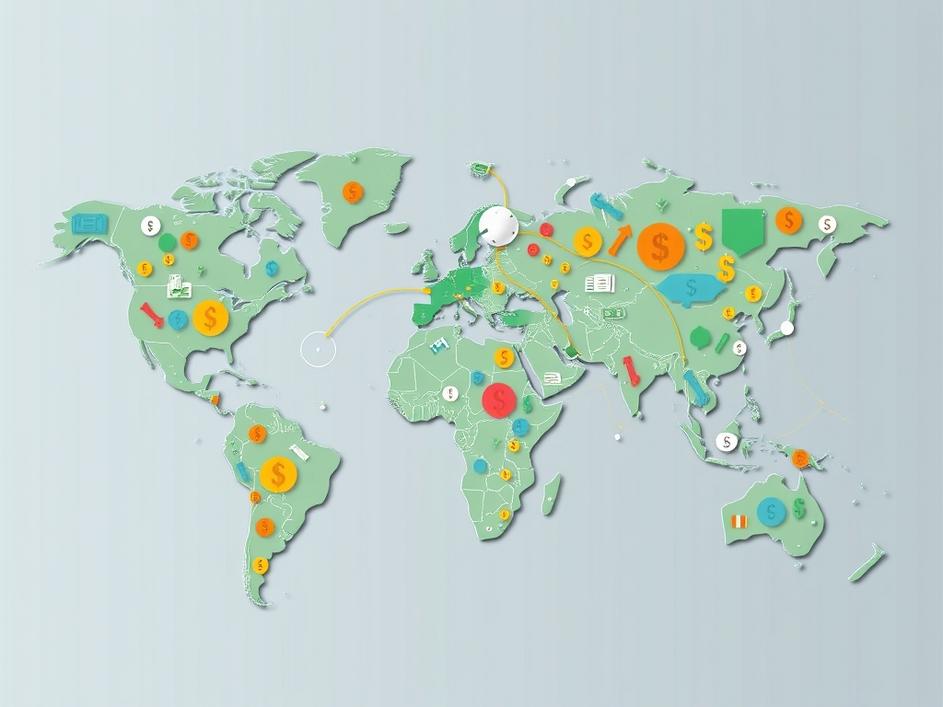
ToggleWe live in an interconnected world. Countries don’t operate in isolation. They trade, invest, and interact financially in countless ways. All these interactions are tracked, and understanding how they’re tracked is key to understanding global economics. This brings us to the Balance of Payments, or BoP. Think of the BoP as a country’s financial report card, showing all money coming in and going out. It’s a comprehensive record of a nation’s financial transactions with the rest of the world over a specific period – usually a year or a quarter.
The Balance of Payments isn’t just one big number. It’s divided into different accounts, each telling a different part of the story. The most important is the Current Account. This account primarily tracks trade in goods and services. If a country exports more than it imports, it has a current account surplus. If it imports more than it exports, it has a current account deficit. And it includes things like tourism, transportation, and royalties. Also included are net income and current transfers. Net income comprises wages, profits, and investment income. Current transfers comprise remittances, donations, and official assistance.
Next, we have the Capital and Financial Account. This account deals with investments. It shows how money is flowing in and out for things like stocks, bonds, and real estate. If foreign investors are putting a lot of money into a country, that’s a capital inflow. If investors from that country are investing heavily abroad, that’s a capital outflow. This section of the BoP also includes transactions such as debt forgiveness. Additionally, there is the financial account, which records investment flows, including foreign direct investment (FDI), portfolio investment, and other investments such as loans.
So, why should anyone care about the BoP? It provides valuable insights into a country’s economic health and its relationship with the global economy. A large current account deficit, for example, might suggest that a country is relying too heavily on foreign borrowing. This could make it vulnerable to economic shocks. On the other hand, a large current account surplus might indicate that a country isn’t investing enough domestically, choosing to send its savings abroad instead. BoP data is crucial for policymakers. They use it to make decisions about exchange rates, trade policy, and monetary policy. For instance, a country with a persistent current account deficit might consider devaluing its currency to make its exports more competitive. BoP data also informs investment decisions, helping businesses and investors assess the risks and opportunities of investing in different countries.
The Balance of Payments isn’t a perfect measure. Data collection can be challenging, and there can be lags in reporting. Also, the BoP only tells part of the story. It doesn’t capture things like the quality of goods and services traded or the environmental impact of economic activity. Moreover, interpreting the BoP requires understanding the specific context of each country. A current account deficit might be perfectly sustainable for a fast-growing economy that’s attracting foreign investment. But it could be a warning sign for a country with weak fundamentals.
The Balance of Payments operates under an accounting identity that says the current account plus the capital account plus the financial account should equal zero. In reality, this rarely happens due to measurement errors and omissions. This discrepancy is captured by the “net errors and omissions” item in the BoP statement. Because the BoP must always balance, any deficit in the current account must be offset by a surplus in the capital and financial accounts, and vice versa. This interplay highlights the interconnectedness of trade and investment flows.
The global economy is constantly evolving. New technologies, changing trade patterns, and increasing financial integration are all shaping the Balance of Payments. For example, the rise of digital services is making it harder to track cross-border transactions. And the growth of sovereign wealth funds is changing the dynamics of international investment. As the world changes, our understanding of the BoP must also evolve. It will continue to be an essential tool for understanding the global economy, but it needs to be used thoughtfully and critically.
The Balance of Payments is more than just a set of numbers. It’s a window into the complex financial relationships between countries. By understanding the BoP, we can gain valuable insights into the health of national economies and the dynamics of the global economy. While it has its limitations, it remains a vital tool for policymakers, investors, and anyone interested in understanding how the world works. It is a complex topic, but the fundamentals are understandable and essential for comprehending global finance.

Comments are closed