

We are a digital agency helping businesses develop immersive, engaging, and user-focused web, app, and software solutions.
2310 Mira Vista Ave
Montrose, CA 91020

2500+ reviews based on client feedback
What's Included?
ToggleHuman rights. We hear the term a lot, but what does it really mean? It’s easy to get lost in the legal jargon and political debates. Simply put, human rights are basic rights and freedoms that belong to every single person in the world, from birth until death. These rights apply regardless of where you’re from, what you believe, or how you choose to live your life. They are universal and inalienable, meaning they cannot be taken away. They form the foundation of a just and equitable society, ensuring everyone has the chance to live with dignity and respect. They include the right to life, liberty, and security of person; freedom from slavery and torture; freedom of opinion and expression; the right to work and education; and many more. These are not privileges granted by governments; they are inherent to our humanity.
Why should we care about human rights? Because they protect us from abuse and oppression. When human rights are respected, people are free to speak their minds, participate in their government, and live without fear of discrimination or violence. They allow us to flourish, to reach our full potential as human beings. Without these fundamental protections, societies can easily descend into chaos and injustice. Think about places where freedom of speech is suppressed. People can’t criticize the government, leading to corruption and abuse of power. Or consider societies where women are denied equal rights. The entire community suffers when half the population is prevented from contributing their talents and skills. Human rights are not just abstract ideas; they are the bedrock of a peaceful and prosperous world.
The most important document outlining these rights is the Universal Declaration of Human Rights (UDHR). Adopted by the United Nations in 1948, it’s a milestone document in the history of human rights. Drafted by representatives with different legal and cultural backgrounds from all regions of the world, the Declaration proclaims the rights to which everyone is inherently entitled as a human being – regardless of race, color, religion, sex, language, political or other opinion, national or social origin, property, birth or other status. While not legally binding in itself, the UDHR has served as the foundation for numerous international treaties, national constitutions, and laws. It’s a common standard of achievement for all peoples and all nations, inspiring movements for social justice and equality around the world.
Even with these declarations and treaties, human rights violations remain a serious problem globally. We see it in the news every day: war crimes, genocide, discrimination, and oppression. Poverty, inequality, and lack of education often exacerbate these issues. Powerful individuals and governments sometimes prioritize their own interests over the rights of their citizens. Sometimes, violations stem from ignorance or prejudice. People may not understand the importance of human rights or they may hold discriminatory beliefs that lead them to treat others unfairly. Addressing these challenges requires a multi-faceted approach: education, advocacy, legal reforms, and international cooperation. We must hold governments accountable for their human rights obligations and support organizations that work to protect and promote human rights around the world.
Protecting human rights is not just the responsibility of governments and international organizations. Each of us has a role to play. We can start by educating ourselves about human rights and speaking out against injustice. We can support organizations that are working to defend human rights. We can challenge discriminatory attitudes and behaviors in our own communities. Even small actions can make a big difference. For example, supporting ethical businesses that respect workers’ rights, advocating for inclusive policies in our schools and workplaces, or simply treating everyone with dignity and respect. By standing up for human rights, we are not only protecting others, we are also building a more just and compassionate world for ourselves and future generations. It is our shared responsibility to uphold the inherent dignity and worth of every human being.
The fight for human rights is an ongoing process. As societies evolve, new challenges and threats emerge. Issues like climate change, artificial intelligence, and data privacy pose new questions about how to protect human rights in the 21st century. We must be vigilant in adapting our strategies and approaches to meet these challenges. Furthermore, we must ensure that human rights principles are integrated into all aspects of society, from education and healthcare to business and technology. By working together, we can create a world where human rights are not just ideals, but a lived reality for everyone.
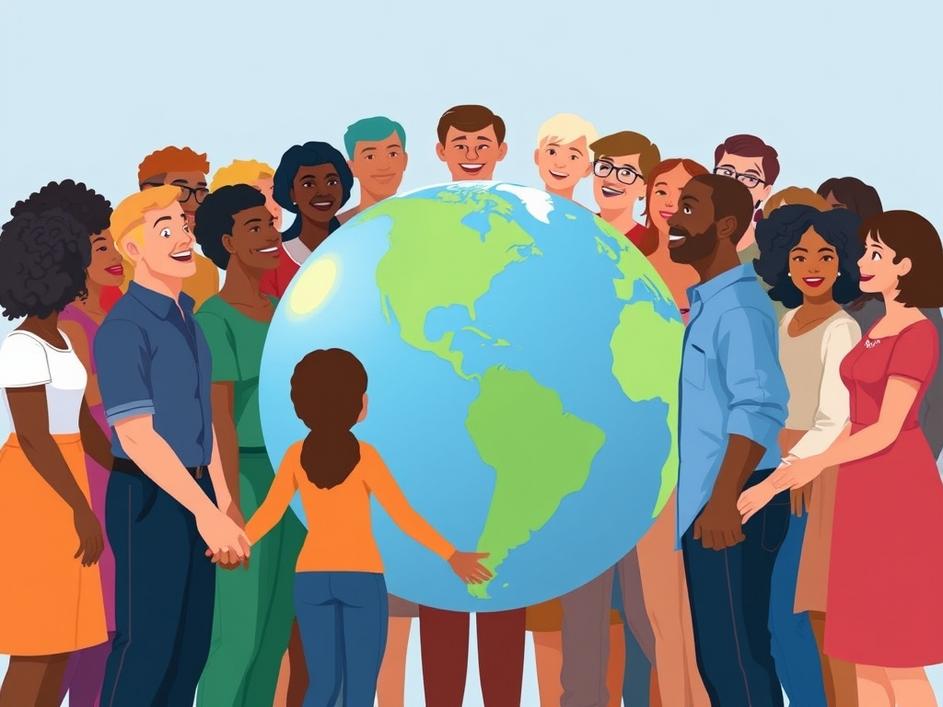
Ultimately, understanding and defending human rights is a continuous journey, one that requires constant learning, reflection, and action. Resources like the Universal Declaration of Human Rights, accessible online, can serve as a starting point for gaining knowledge. Engaging in discussions, supporting human rights organizations, and holding our leaders accountable are ways we can all contribute. The illustrations, like those in the presentation, serve as a powerful tool for education and advocacy, helping to make these complex concepts more accessible and understandable. It reminds us that the principles of equality, dignity, and justice are worth defending.



Comments are closed