

We are a digital agency helping businesses develop immersive, engaging, and user-focused web, app, and software solutions.
2310 Mira Vista Ave
Montrose, CA 91020

2500+ reviews based on client feedback
What's Included?
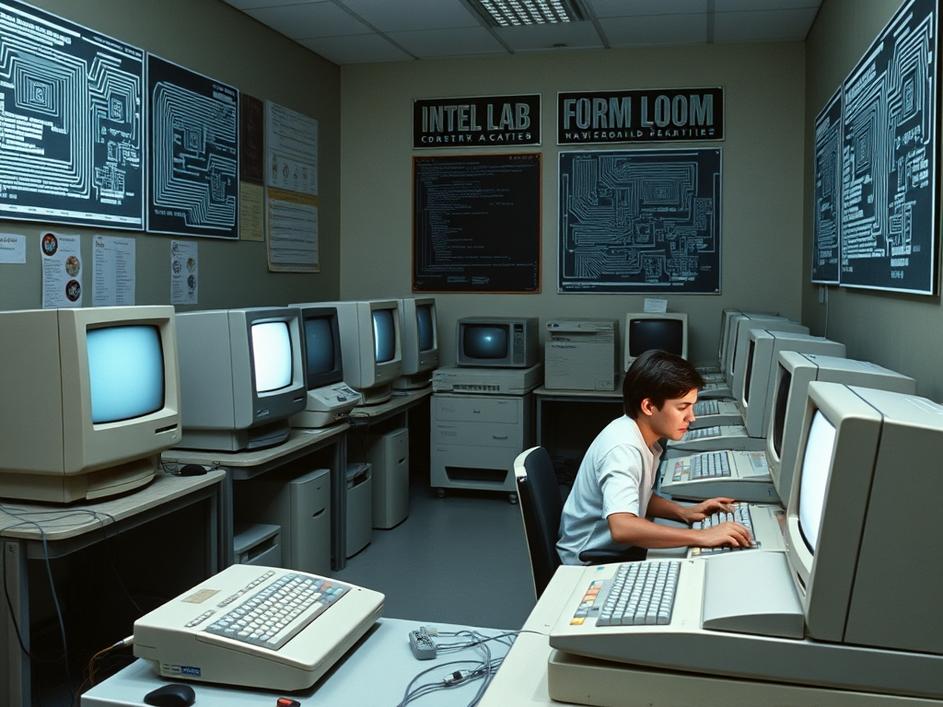
ToggleBefore sleek smartphones and powerful laptops, there was the microprocessor. And among the early pioneers, the Intel 8086 stands out as a truly significant chip. It powered the original IBM PC, a machine that arguably launched the personal computing revolution. Understanding its architecture and instruction set provides valuable insight into the foundations upon which modern computing is built.
Released in 1978, the 8086 was a 16-bit microprocessor, meaning it could process data in chunks of 16 bits at a time. This was a significant leap forward from its 8-bit predecessors. It had a segmented memory architecture, which, while somewhat complex, allowed it to address more memory than would otherwise have been possible. The 8086 wasn’t just about raw power; it was also about affordability and accessibility, making it a popular choice for early PC manufacturers.
The 8086’s instruction set is the vocabulary the processor understands. It includes instructions for moving data, performing arithmetic operations, logical operations, and controlling the flow of a program. For example, instructions like `MOV` (move data), `ADD` (add two numbers), `SUB` (subtract two numbers), `CMP` (compare two numbers), and `JMP` (jump to a different location in the program) are fundamental. Each instruction is represented by a specific opcode, a numerical code that the processor decodes and executes.
Understanding these instructions is key to understanding how programs were written for the 8086. Programmers often had to work at a very low level, writing assembly language code that directly manipulated the processor’s registers and memory locations. This required a deep understanding of the architecture and instruction set.
Assembly language is a low-level programming language that corresponds directly to the machine code instructions understood by a processor. Writing in assembly language for the 8086 gave programmers fine-grained control over the hardware. They could optimize their code for speed and memory usage, which was crucial in the early days of computing when resources were limited. While higher-level languages like C eventually became more popular, assembly language remained important for tasks that required maximum performance or direct hardware access.
The 8086 microprocessor may seem ancient compared to today’s processors, but its legacy is undeniable. It established the x86 architecture, which remains the dominant architecture for desktop and laptop computers. Even modern CPUs from Intel and AMD can trace their lineage back to the 8086. Understanding the 8086 provides a valuable historical perspective on the evolution of computing and highlights the ingenuity of the engineers who designed it. The principles of its architecture and instruction set continue to influence computer architecture today. Studying it is not just an academic exercise; it’s a journey into the heart of how computers work.
Today, you don’t need an original IBM PC to explore the 8086. Emulators like DOSBox allow you to run old DOS programs and experiment with assembly language programming on modern computers. Numerous online resources, including tutorials and documentation, are available to help you learn about the 8086 architecture and instruction set. These resources provide a hands-on way to understand the concepts discussed and to appreciate the challenges and triumphs of early programmers. The journey of learning about the 8086 is a fascinating glimpse into the past, with lessons that are still relevant today.
The story of the 8086 is more than just a story of technical specifications and instruction sets. It’s a story of innovation, problem-solving, and the relentless pursuit of progress. The engineers who designed the 8086 faced significant challenges with limited resources. They had to make difficult trade-offs and find creative solutions to overcome technical hurdles. Their work laid the foundation for the modern computing landscape, and their spirit of innovation continues to inspire engineers and scientists today. By understanding the 8086, we gain a deeper appreciation for the ingenuity and hard work that went into creating the technology we take for granted today. It serves as a reminder that even seemingly simple devices can have a profound impact on the world.
While the 8086 itself is no longer in widespread use, the concepts it introduced are still relevant. Understanding the fundamentals of computer architecture, such as instruction sets, memory management, and input/output operations, is essential for anyone working in the field of computer science. By studying the 8086, students and professionals alike can gain a deeper understanding of these fundamentals and appreciate the evolution of computing technology. The 8086 serves as a bridge between the past and the present, connecting us to the roots of modern computing and providing valuable insights into the challenges and opportunities of the future.


Comments are closed