

We are a digital agency helping businesses develop immersive, engaging, and user-focused web, app, and software solutions.
2310 Mira Vista Ave
Montrose, CA 91020

2500+ reviews based on client feedback
What's Included?
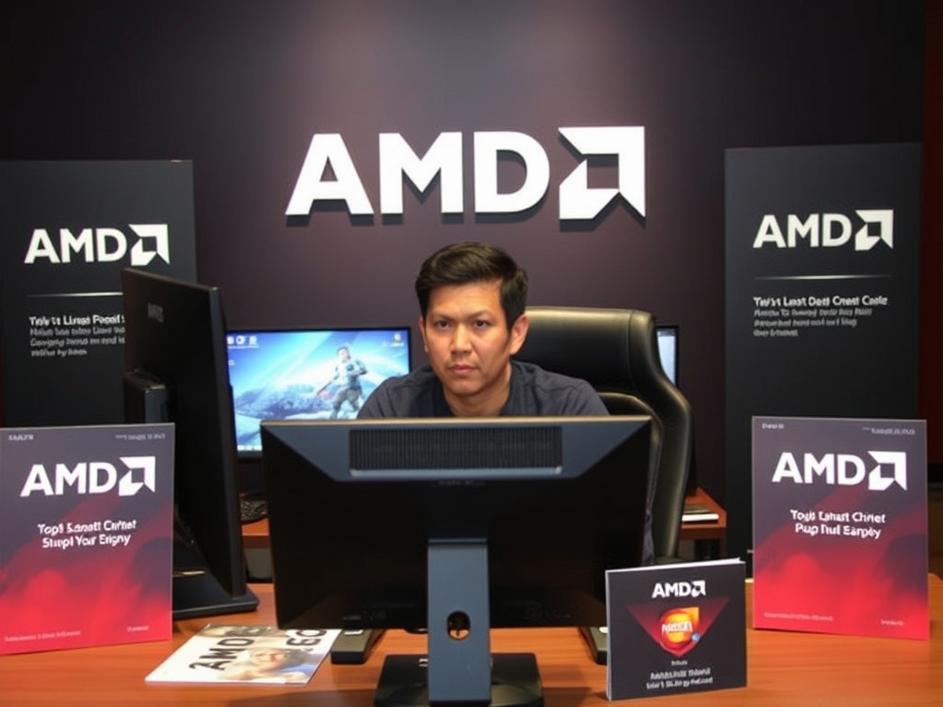
ToggleImagine a world where your laptop, desktop, maybe even your handheld gaming device, is powered exclusively by AMD. No Intel CPUs, no NVIDIA graphics cards. For years, that idea might have seemed like settling for second best. But with AMD’s recent advancements, particularly the buzz around their upcoming Strix Halo APU, the prospect is becoming seriously tempting. This challenge, the “1-Month All-AMD Challenge”, is about pushing that temptation to its limits.
Much of this excitement revolves around the Strix Halo APU, slated for release sometime in early 2025. The whispers suggest it could be a real contender against Apple’s M-series chips, known for their impressive performance and efficiency. That’s a bold claim, and it’s driving a lot of the anticipation. Think about the possibilities: a single chip handling both processing and graphics with surprising power. No more juggling separate CPU and GPU vendors. Just pure, unadulterated AMD goodness.
So, why would you even want to try an all-AMD setup? A few reasons come to mind. First, there’s the potential for cost savings. AMD often offers competitive performance at more attractive price points than Intel and NVIDIA. Second, there’s the lure of platform synergy. With a single vendor handling both the CPU and GPU, there’s a chance for better driver support and overall system optimization. And third, let’s be honest, there’s a certain satisfaction in supporting a company that’s consistently pushing the boundaries and challenging the established players.
Now, let’s be realistic. An all-AMD challenge isn’t going to be a walk in the park. There will be hurdles. Availability of Strix Halo-powered devices in early 2025 is an obvious one; new tech always faces launch shortages. Driver compatibility is another potential headache, although AMD has made huge strides in recent years. And then there’s the simple fact that Intel and NVIDIA still hold significant performance leads in certain areas, especially at the high end. Giving up that top-tier performance for a month could be a tough pill to swallow for some.
To make this challenge meaningful, we need some ground rules. First, the challenge period would be one full month. During that time, all your primary computing tasks – work, gaming, content creation – must be performed on AMD hardware. This means an AMD CPU, an AMD GPU (or an AMD APU handling both), and an AMD chipset motherboard, if applicable. Using an NVIDIA GPU for gaming while your primary workstation relies on an AMD CPU doesn’t count. It’s all-in or all-out. Second, document your experience. Keep a daily or weekly log of your experiences, noting any performance differences, compatibility issues, or unexpected benefits. Third, be prepared to adapt. You might need to tweak settings, install different drivers, or find alternative software to get things working smoothly. This is part of the learning process.
What do we hope to gain from this challenge? Several things. We want to see if AMD’s current and upcoming hardware is truly capable of replacing Intel and NVIDIA in a real-world scenario. We want to identify any potential pain points or limitations of the AMD ecosystem. And we want to share our findings with the community, helping others make informed decisions about their own hardware choices. Is AMD “good enough” for the average user, or even for power users with specific needs? That’s the question we’re trying to answer.
Beyond raw performance numbers, there’s the intangible factor of the user experience. How does it *feel* to use an all-AMD system day in and day out? Is the software stable? Are the drivers reliable? Are there any unexpected quirks or annoyances? These are the kinds of questions that benchmarks can’t answer. Only by living with the hardware can we truly understand its strengths and weaknesses.
The 1-Month All-AMD Challenge isn’t for the faint of heart. It requires a willingness to experiment, a tolerance for potential frustration, and a genuine curiosity about the state of AMD’s hardware. But for those who are up for the challenge, the rewards could be significant. You might discover a new appreciation for AMD’s products, uncover hidden gems within their ecosystem, or even save some money in the process. So, are you ready to take the plunge? Will you commit to a month of AMD-only computing? The choice is yours.
This isn’t about blind brand loyalty; it’s about understanding the landscape. AMD has come a long way, and the Strix Halo represents a potentially huge leap forward. This challenge is about exploring that potential, pushing the limits, and seeing if AMD has truly arrived as a complete, viable alternative to the Intel-NVIDIA duopoly. Whether you’re a hardcore gamer, a content creator, or just a regular user, the all-AMD challenge offers a unique opportunity to reassess your assumptions and discover what AMD has to offer. It’s a chance to see if the future of computing might just be a little more… red.



Comments are closed