

We are a digital agency helping businesses develop immersive, engaging, and user-focused web, app, and software solutions.
2310 Mira Vista Ave
Montrose, CA 91020

2500+ reviews based on client feedback
What's Included?
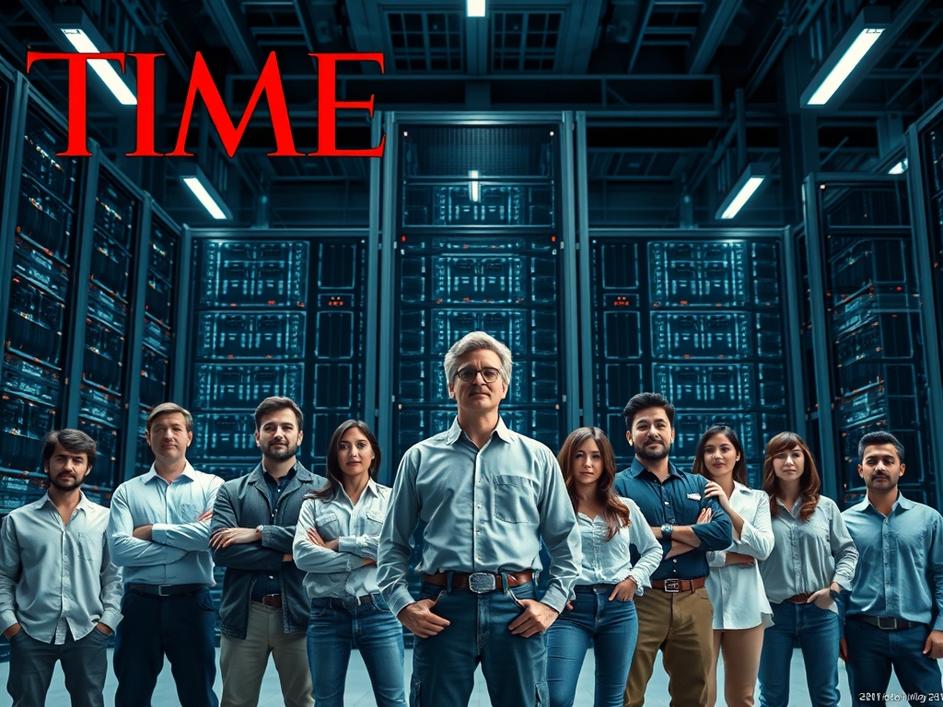
ToggleTime magazine has announced its ‘Person of the Year,’ and this time, it’s not a person, but a collective: ‘the architects of AI.’ This acknowledges the massive impact artificial intelligence has had this year. From chatbots writing poems to algorithms driving cars (sometimes into walls), AI is now a mainstream topic. It’s not just for tech nerds anymore; your grandma probably knows what ChatGPT is. But is this recognition premature? Are we celebrating progress a little too enthusiastically, or are we opening Pandora’s Box?
The piece mentions that some AI business executives have become household names. And that’s true, figures like Sam Altman and Demis Hassabis are increasingly well-known. But this fame comes with a side of existential dread. We’re simultaneously fascinated and terrified by the technology they’re building. It’s like watching a Frankenstein movie, but instead of a mad scientist in a lab, it’s venture capitalists in Silicon Valley. And instead of a monster made of corpses, it’s an algorithm that might automate away your job… or worse.
There’s a lot of hype surrounding AI. Every new app or feature is suddenly ‘AI-powered,’ even if it just means it has a slightly smarter search function. The real progress is undeniable. Machine learning is improving medical diagnoses, optimizing energy consumption, and accelerating scientific research. But, it’s easy to get caught up in the excitement and overlook the potential downsides. Think about biased algorithms perpetuating discrimination, the spread of misinformation through deepfakes, or the ethical implications of autonomous weapons. It’s not all sunshine and rainbows.
One crucial aspect is the responsibility of the “architects.” Building powerful tools comes with a heavy burden. These individuals and their companies need to prioritize ethics, transparency, and safety. It’s not enough to just build something cool; they need to consider the consequences of their actions. How do we ensure that AI benefits everyone, not just a select few? How do we prevent it from being used for malicious purposes? These are not easy questions, and the answers require a global conversation involving experts, policymakers, and the public.
Let’s step away from the headlines and focus on the real-world impact. AI is already changing how we work, communicate, and live. Consider the automation of routine tasks, freeing up humans to focus on more creative and strategic endeavors. Or the potential for personalized education, tailoring learning experiences to individual needs. However, this shift also requires us to adapt and acquire new skills. We need to invest in education and training programs to help people navigate this new landscape. The future isn’t about humans vs. machines, it’s about humans with machines.
Time’s choice of ‘the architects of AI’ as Person of the Year is a reflection of our times. It highlights the transformative power of AI, but it also serves as a reminder of the challenges and responsibilities that come with it. As we move forward, it’s essential to approach AI with a critical and informed mindset. Don’t blindly accept the hype, but don’t dismiss the potential either. Ask questions, demand transparency, and hold the ‘architects’ accountable. The future of AI is not predetermined; it’s up to us to shape it.
Think of AI as a labyrinth. It offers exciting pathways to innovation and progress, but also hidden dangers and dead ends. We need skilled guides – the ethicists, the policymakers, the concerned citizens – to help us navigate this complex landscape. We can’t just rely on the ‘architects’ alone; we need a collective effort to ensure that AI serves humanity’s best interests. Otherwise, we might find ourselves lost in the maze, with no escape.
Ultimately, the story of AI is still being written. This year might be defined by breakthroughs and breakthroughs, but the coming years will determine its ultimate legacy. Will AI be remembered as a force for good, solving global problems and improving lives? Or will it be seen as a cautionary tale, a technology that amplified our flaws and led to unintended consequences? The answer depends on the choices we make today. The architects have built the foundation; it’s up to us to build the rest of the house.


Comments are closed