

We are a digital agency helping businesses develop immersive, engaging, and user-focused web, app, and software solutions.
2310 Mira Vista Ave
Montrose, CA 91020

2500+ reviews based on client feedback
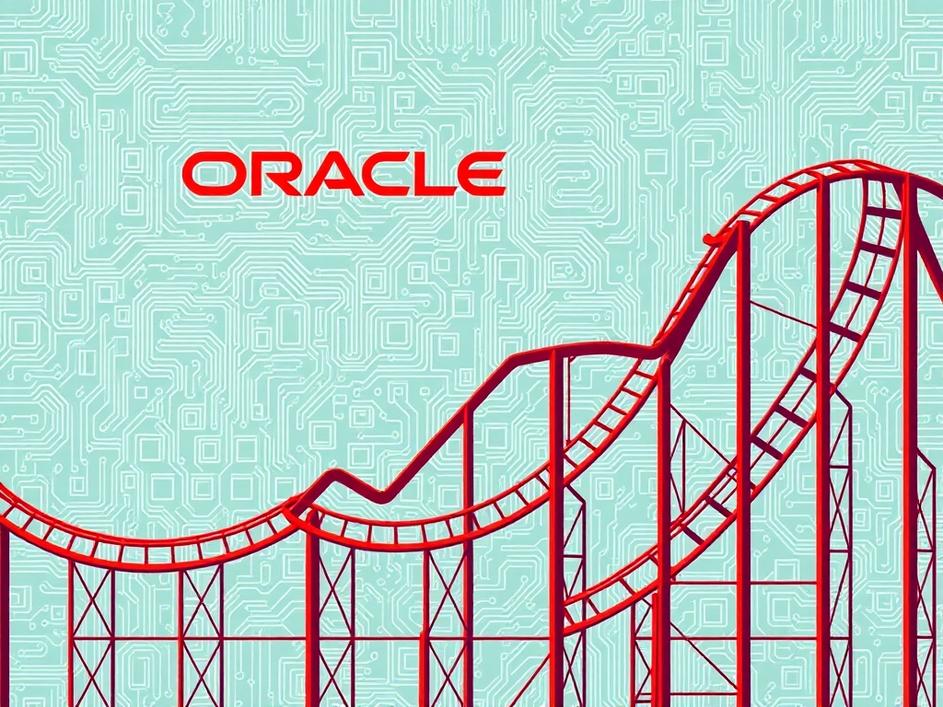
Oracle, a giant in the tech world, recently saw its stock take a tumble. This drop has sparked conversations about whether the artificial intelligence (AI) bubble might be starting to deflate, at least a little. Some experts suggest the market’s reaction is “justified,” pointing to concerns about Oracle’s heavy spending and somewhat underwhelming forecasts. But what’s really going on here?
Oracle has been making significant investments in AI, hoping to capitalize on the current boom. They’re pouring money into infrastructure, data centers, and talent acquisition, all in an effort to become a major player in the AI space. And that costs a lot of money, so shareholders become concerned. The question is whether these investments will pay off quickly enough to satisfy investors. So far, the signs are mixed, leading to the recent stock decline.
Part of the problem seems to be Oracle’s own forecasts. While they’re optimistic about the long-term potential of AI, their short-term projections haven’t exactly wowed the market. This has led some analysts to question whether Oracle’s AI strategy is progressing as rapidly as initially hoped. And when expectations aren’t met, stock prices often suffer.
The AI landscape is filled with both excitement and uncertainty. While there’s no doubt that AI has the potential to transform industries, it’s important to remember that many AI applications are still in their early stages. Moving from theoretical possibilities to tangible results can be a slow and challenging process, and companies like Oracle are learning this firsthand. It is not enough to just implement it; there has to be a use case and a revenue stream in sight for investors to stay happy.
Oracle’s AI ambitions are closely tied to its cloud computing business. They’re hoping to offer AI-powered services through their cloud platform, attracting new customers and generating new revenue streams. However, the cloud market is highly competitive, with major players like Amazon Web Services (AWS) and Microsoft Azure already well-established. Oracle needs to demonstrate that its AI offerings are truly differentiated and compelling to stand out from the crowd.
One of the biggest concerns surrounding Oracle’s AI push is the sheer amount of money they’re spending. Building out AI infrastructure, hiring top talent, and acquiring AI-related companies all come at a hefty price. Some analysts worry that Oracle may be overextending itself, potentially putting a strain on its finances. It’s a high-stakes game, and there’s always the risk that the investments won’t deliver the expected returns.
The AI market is becoming increasingly crowded, with companies of all sizes vying for a piece of the pie. From established tech giants to innovative startups, everyone seems to be jumping on the AI bandwagon. This intense competition puts pressure on companies like Oracle to constantly innovate and differentiate themselves. The company has to be faster than the pack.
AI algorithms require vast amounts of data to learn and improve. Companies with access to large and diverse datasets have a significant advantage in the AI race. Oracle’s expertise in database management could give it an edge in this area, but they need to ensure they can effectively leverage their data assets to build compelling AI solutions. Data security is also an important consideration and differentiator.
For Oracle, the key challenge is to balance its growth ambitions with the need to maintain profitability. Investing in AI is essential for long-term growth, but it’s also important to manage expenses and ensure that the investments are generating a reasonable return. Investors are watching closely to see how Oracle navigates this balancing act.
So, what does the future hold for Oracle and its AI endeavors? The answer is complex and uncertain. While the recent stock dip suggests some skepticism about Oracle’s strategy, it’s important to remember that AI is still a relatively new field with enormous potential. If Oracle can successfully execute its AI vision, it could reap significant rewards in the long run. But if it stumbles, it could face further challenges. The AI bubble is something the company should avoid. The next few years will be crucial in determining whether Oracle’s AI gamble pays off. The company needs to demonstrate real progress and deliver tangible results to regain investor confidence and solidify its position in the AI market. Time will tell if the company is able to execute its plan.



Comments are closed