

We are a digital agency helping businesses develop immersive, engaging, and user-focused web, app, and software solutions.
2310 Mira Vista Ave
Montrose, CA 91020

2500+ reviews based on client feedback
What's Included?
ToggleIn today’s world, data is everywhere. It’s the lifeblood of businesses, governments, and even our personal lives. From the simplest online search to complex scientific research, data fuels decision-making and innovation. Understanding how to collect, manage, and utilize data effectively is becoming an increasingly crucial skill.
When we think about data collection, spreadsheets might be the first thing that comes to mind. And while they still have their place, the reality is that modern data collection is far more sophisticated. We’re talking about a whole range of methods and technologies, from online surveys and mobile apps to sophisticated sensors and APIs that pull information from various sources. It’s a complex web of information constantly being updated.
The presentation about “Pengumpulan Data SDI dan data lainnya” (Data Collection SDI and other data) available on Slideshare touches on this broad subject. While the presentation itself may be a starting point, it highlights the need for a structured approach to data collection, especially when dealing with sensitive or large-scale information. “SDI” likely refers to Spatial Data Infrastructure, implying a focus on geographic or location-based data, which adds another layer of complexity. It is essential to remember that data does not always stay in a single location and the methods of retrieving it have to evolve over time.
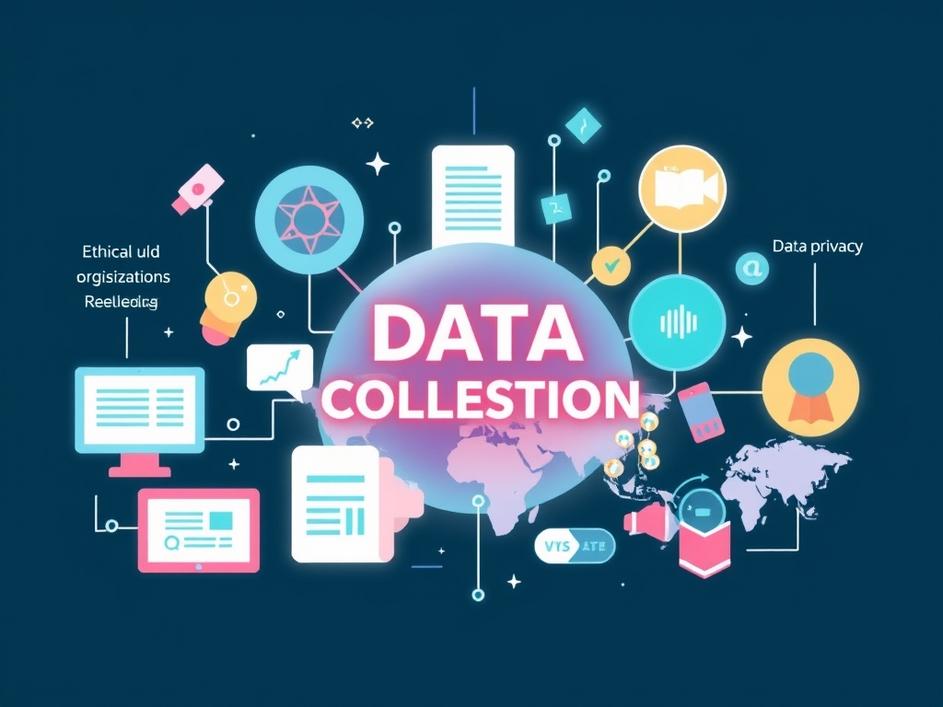
Collecting data isn’t just about gathering information; it’s also about doing it responsibly. Ethical considerations and data privacy are paramount. We need to be mindful of how data is being used, who has access to it, and what measures are in place to protect individual privacy. Regulations like GDPR are setting the standards. This is important in the US as well, since data is a global commodity and privacy is expected to be protected for every user. Transparency and user consent are key. People need to know what data is being collected, why it’s being collected, and how it will be used.
Once data is collected, the real magic begins. Analyzing and visualizing data allows us to uncover patterns, trends, and insights that would otherwise remain hidden. This is where data scientists and analysts come into play. They use a variety of tools and techniques to transform raw data into actionable intelligence. Simple charts and graphs, interactive dashboards, and sophisticated machine learning algorithms are some of the tools being used.
The journey from raw data to actionable insights involves several key steps. First, data needs to be cleaned and preprocessed to remove errors and inconsistencies. Then, it needs to be organized and structured in a way that facilitates analysis. Finally, data visualization techniques are used to present the findings in a clear and concise manner. This entire process has to be carefully monitored for data integrity, and it is also important to make sure that the data is readily available when it is needed for analysis.
The future of data collection is likely to be even more automated and integrated. We can expect to see increased use of artificial intelligence and machine learning in data collection processes. For example, AI-powered systems can be used to automatically identify and extract relevant information from unstructured data sources. We can also expect to see more emphasis on real-time data collection and analysis. The internet of things (IoT) is generating massive amounts of data in real-time, which can be used to improve decision-making and optimize processes. The future also expects better security, since bad actors are becoming more sophisticated as well.
Data collection is a powerful tool that can be used to improve our lives in countless ways. However, it’s important to remember that data is not neutral. It can be used for good or for ill. As data collection becomes more pervasive, it’s crucial that we embrace it responsibly and ethically. That means prioritizing data privacy, ensuring transparency, and using data to create a better world for all. Learning the basic and the importance of data structure is going to be a necessity for future leaders.



Comments are closed