

We are a digital agency helping businesses develop immersive, engaging, and user-focused web, app, and software solutions.
2310 Mira Vista Ave
Montrose, CA 91020

2500+ reviews based on client feedback
What's Included?
ToggleIndia is making a bold move to prepare its students for a future increasingly shaped by artificial intelligence (AI). The National Council of Educational Research and Training (NCERT), the country’s top body for curriculum development, is putting together a team to create AI textbooks for students in grades 11 and 12. This isn’t just about adding a new subject; it’s about integrating AI literacy into the core of the education system, ensuring that young Indians are not just consumers of AI technology but also its creators and critical thinkers.
The decision to introduce AI education at the higher secondary level reflects a growing global recognition of AI’s importance. AI is no longer a futuristic concept; it’s a present-day reality transforming industries, economies, and daily life. For India, a nation with a large youth population, equipping students with AI skills is crucial for economic competitiveness and innovation. This initiative aims to provide a foundational understanding of AI concepts, algorithms, and applications, fostering a generation that can harness AI for problem-solving and development.
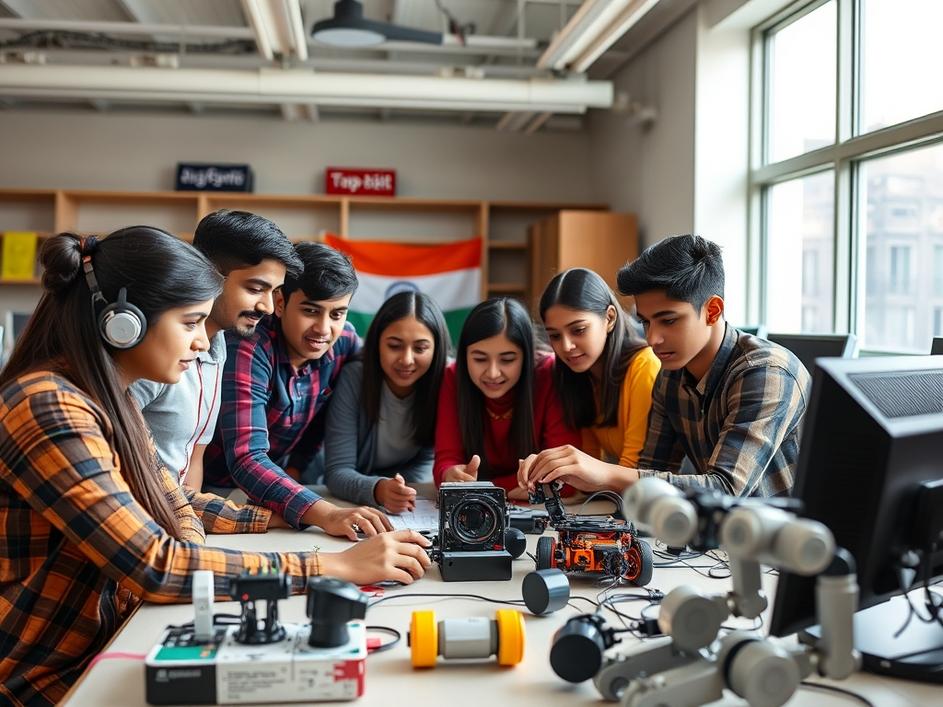
While specific details of the curriculum are still under development, we can anticipate a focus on both theoretical knowledge and practical application. Students will likely learn about the history of AI, different AI techniques like machine learning and neural networks, and the ethical considerations surrounding AI development and deployment. More importantly, the curriculum will likely include hands-on projects and activities that allow students to experiment with AI tools and build their own AI applications. This could involve using programming languages like Python, working with AI platforms, and exploring real-world datasets.
Implementing AI education on a large scale is not without its challenges. One of the biggest hurdles is teacher training. Many teachers may not have the necessary expertise in AI to effectively deliver the curriculum. NCERT will need to invest in comprehensive teacher training programs to ensure that educators are well-equipped to teach AI concepts and guide students in their AI projects. Another challenge is access to resources. Not all schools have the necessary computing infrastructure and software to support AI education. Addressing this digital divide is essential to ensure that all students have equal opportunities to learn about AI.
The introduction of AI textbooks in grades 11 and 12 has the potential to create a ripple effect throughout the education system. As students develop AI skills and knowledge, they will be more likely to pursue AI-related fields in higher education and careers. This could lead to a significant increase in the number of AI professionals in India, boosting the country’s AI ecosystem and driving innovation across various sectors. Furthermore, AI education can empower students to become more informed and engaged citizens, capable of understanding the social and ethical implications of AI and contributing to responsible AI development.
Ultimately, the goal of AI education is not just to train students in technical skills but also to foster creativity, critical thinking, and problem-solving abilities. By engaging with AI concepts and tools, students will learn to think algorithmically, break down complex problems into smaller steps, and design innovative solutions. They will also develop the ability to evaluate the biases and limitations of AI systems, ensuring that AI is used ethically and responsibly. This holistic approach to AI education will prepare students not just for jobs in the AI industry but also for a wide range of careers that will be increasingly influenced by AI.
India’s decision to integrate AI education into its school curriculum is a forward-thinking step that will benefit the nation for years to come. By giving the next generation the skills and knowledge they need to understand and use AI, India is investing in its future. The move ensures that Indian students are ready to participate and succeed in an increasingly AI-driven world, contributing to economic growth and social progress. But the work doesn’t stop here. Ongoing evaluation, adaptation, and investment will be needed to ensure the success of this initiative and realize its full potential. Continuous updates to the curriculum will be needed to ensure that it remains relevant and reflects the latest advances in AI. Collaboration between educators, industry experts, and policymakers will be essential to create a robust and effective AI education ecosystem.
This initiative marks a significant step toward building an AI-ready India. It signals a commitment to empowering young people with the skills and knowledge they need to thrive in a rapidly changing world. As these students enter the workforce, they will be equipped to drive innovation, solve complex problems, and shape a future where AI benefits all of society. The journey to AI literacy may have its challenges, but the potential rewards are immense. With careful planning, dedicated implementation, and ongoing support, India can become a global leader in AI education and a hub for AI innovation.

Comments are closed