

We are a digital agency helping businesses develop immersive, engaging, and user-focused web, app, and software solutions.
2310 Mira Vista Ave
Montrose, CA 91020

2500+ reviews based on client feedback
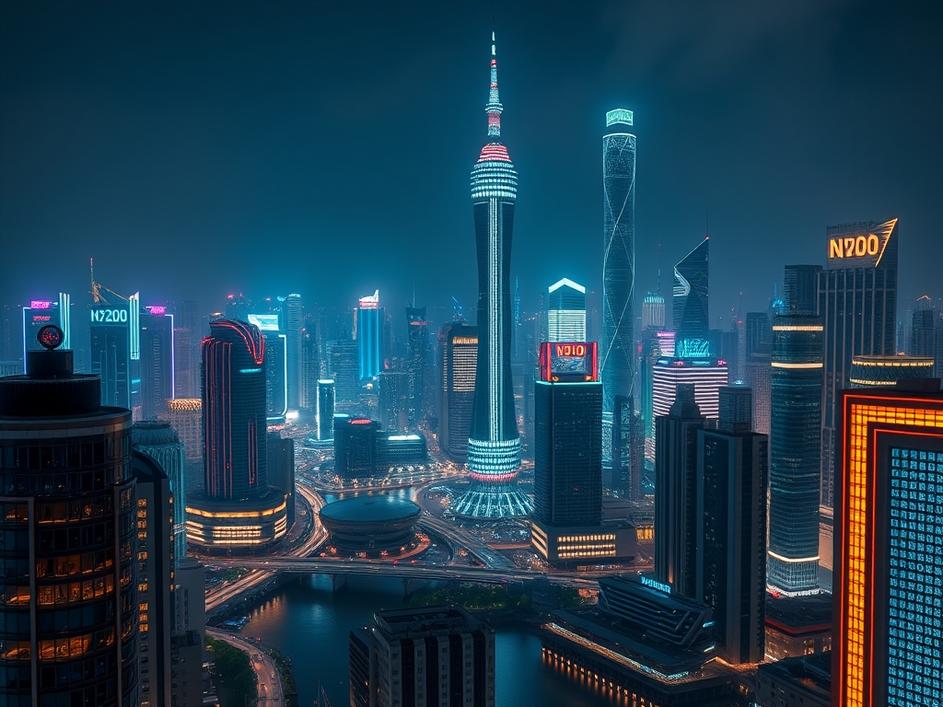
Nvidia, a dominant force in the world of artificial intelligence chips, is reportedly gearing up to begin shipping its H200 chips to China by mid-February. This development arrives amidst ongoing adjustments to comply with U.S. export regulations, which have placed restrictions on the sale of advanced technology to China. The H200 represents Nvidia’s second most powerful AI chip, and its deployment in the Chinese market is a significant move, highlighting the delicate balance Nvidia must strike between global market share and regulatory compliance. This is a big deal because China is a massive market for AI, and Nvidia wants to keep a foothold there.
The U.S. government has implemented export controls aimed at limiting China’s access to advanced technologies that could be used for military applications or to bolster its technological capabilities in ways that could threaten U.S. national security. These restrictions have forced Nvidia to adapt its product offerings for the Chinese market, creating modified versions of its high-end chips that meet the required specifications. The H200 is likely one such adaptation, designed to deliver substantial AI performance while staying within the boundaries set by the export regulations. It’s a bit of a cat-and-mouse game, with Nvidia trying to innovate while staying within the rules.
For Nvidia, the Chinese market is simply too important to ignore. It represents a massive opportunity for growth and revenue. At the same time, the company must maintain a positive relationship with U.S. regulators and adhere to export controls. This requires a delicate balancing act, involving careful engineering of its products, proactive communication with government officials, and a willingness to adapt its strategies as needed. Nvidia’s approach to the Chinese market demonstrates its ability to navigate complex geopolitical landscapes while pursuing its business objectives. It also highlights how important the company perceives the Chinese market to be in its long-term strategy.
While Nvidia is a leading player, the Chinese AI chip market is becoming increasingly competitive. Domestic companies are investing heavily in developing their own AI chips, seeking to reduce reliance on foreign suppliers and achieve greater technological independence. This push for self-sufficiency is fueled by government support and a growing demand for AI solutions across various industries. Nvidia will face increasing competition from these domestic players, who may have a better understanding of the local market and be more willing to customize their products to meet specific needs. This increased competition could put pressure on Nvidia’s market share and profitability in China. And it also makes it much harder to predict what the future holds for AI chip sales in that country.
Nvidia’s continued presence in the Chinese market, even with modified products, has broader implications for the AI industry as a whole. It ensures that Chinese companies have access to at least some advanced AI hardware, which can fuel innovation and development in areas such as autonomous driving, natural language processing, and computer vision. At the same time, the export restrictions and the rise of domestic chipmakers could accelerate the development of alternative AI architectures and technologies, potentially leading to a more diverse and resilient global AI ecosystem. This might also encourage greater innovation as businesses try to make the most of the tools they have at their disposal. So it will be interesting to see how the future of AI unfolds both inside and outside of China.
The shipment of H200 chips to China represents just one chapter in an ongoing story. The interplay between U.S. export controls, Nvidia’s strategic maneuvering, and the rise of domestic Chinese chipmakers will continue to shape the future of AI in China. It’s a dynamic and complex landscape with significant implications for the global AI industry. Observing how these factors evolve will be crucial for understanding the trajectory of AI development and deployment in one of the world’s most important markets. The AI landscape is constantly shifting, and keeping up with this will be essential for businesses and governments alike.


Comments are closed