

We are a digital agency helping businesses develop immersive, engaging, and user-focused web, app, and software solutions.
2310 Mira Vista Ave
Montrose, CA 91020

2500+ reviews based on client feedback
What's Included?
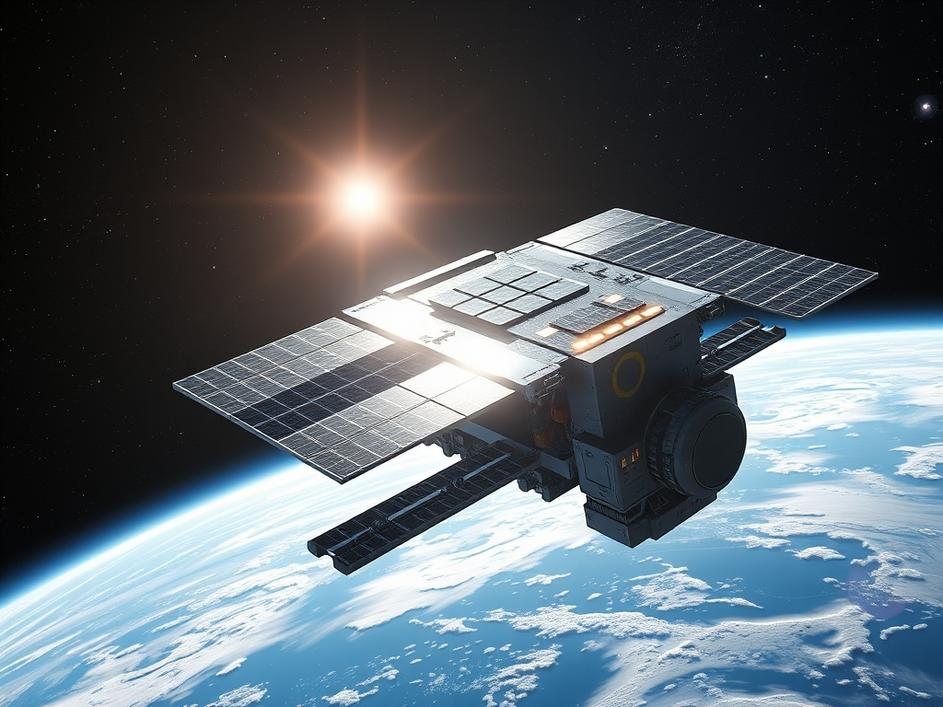
ToggleImagine a world where your data isn’t stored in some climate-controlled building on Earth, but rather orbiting the planet in a specialized satellite. It sounds like science fiction, but according to a recent analysis by Bank of America (BofA), space-based data centers are poised to become a major focus for investors in the next couple of years. The idea is gaining traction that the next wave of data storage and processing could happen among the stars. This isn’t just about novelty; there are some compelling reasons why this concept is taking off.
So, why would anyone want to put a data center in space? A few key benefits stand out. Firstly, latency is a major issue. For certain applications, like high-frequency trading or real-time gaming, the speed at which data can be accessed is critical. By placing data centers closer to satellites and other space-based assets, we can significantly reduce the time it takes for information to travel back and forth. Think of it as moving the server next door instead of across the country. This reduction in latency could open up new possibilities for various industries.
Secondly, there are security advantages. A data center in space is inherently more difficult to physically access than one on Earth. This added layer of security could be particularly attractive to organizations dealing with sensitive or classified information. Finally, space offers a unique environment for cooling servers. The vacuum of space can be used to dissipate heat more efficiently than traditional air or liquid cooling methods, potentially leading to energy savings and improved performance.
Of course, building and operating data centers in space presents some significant challenges. The cost of launching equipment into orbit is still very high, although companies like SpaceX are working to bring those costs down. Reliability is also a major concern. Data centers need to be operational 24/7, and repairing a malfunctioning server in space is a lot more complicated than fixing one in a terrestrial facility. Then there’s the issue of power. Space-based data centers will need a reliable source of energy, which could come from solar panels or other advanced technologies. Moreover, keeping the facility operational at a constant stable temperature is a non-trivial engineering problem. There are substantial technical hurdles to overcome.
While the concept of space-based data centers is still relatively new, several companies are already exploring this frontier. Established aerospace companies and tech giants are likely to play a major role, as they have the resources and expertise to tackle the technical challenges involved. Startups specializing in space-based infrastructure are also emerging, bringing innovative solutions to the table. It will be interesting to see how these different players compete and collaborate in this nascent market. I believe we’ll see partnerships between traditional data center providers and space technology companies as they try to build a presence in orbit.
BofA’s analysis suggests that investors are starting to take notice of the potential of space-based data centers. As the technology matures and costs come down, we can expect to see more investment flowing into this area. However, it’s important to remember that this is still a high-risk, high-reward proposition. There are no guarantees of success, and the regulatory landscape for space-based activities is still evolving. Investors will need to carefully assess the risks and opportunities before committing capital to this emerging market.
Beyond the direct investment in space data centers, there are other related opportunities. Companies that develop and manufacture the components for these facilities, such as specialized servers, cooling systems, and power generation equipment, could also benefit. The growth of space-based data centers could also drive demand for satellite communication services and other space-related technologies.
The idea of data centers in space may seem far-fetched, but it represents a natural evolution of our increasingly data-driven world. As we generate more and more data, and as the demand for low-latency, secure data storage grows, the advantages of space-based facilities will become more compelling. While there are certainly challenges to overcome, the potential rewards are significant. Over the next few years, we can expect to see continued innovation and investment in this area, as companies and investors alike explore the possibilities of the final data frontier.
Ultimately, the success of space-based data centers will depend on a combination of technological advancements, cost reductions, and regulatory clarity. As launch costs continue to fall and as we develop more efficient and reliable space-based technologies, the economics of space-based data centers will become more attractive. The establishment of clear and consistent regulations will also be crucial for fostering investment and innovation in this area. If these pieces fall into place, we could see a significant shift in the way we store and process data, with space becoming an increasingly important part of the global data infrastructure.



Comments are closed