

We are a digital agency helping businesses develop immersive, engaging, and user-focused web, app, and software solutions.
2310 Mira Vista Ave
Montrose, CA 91020

2500+ reviews based on client feedback
What's Included?
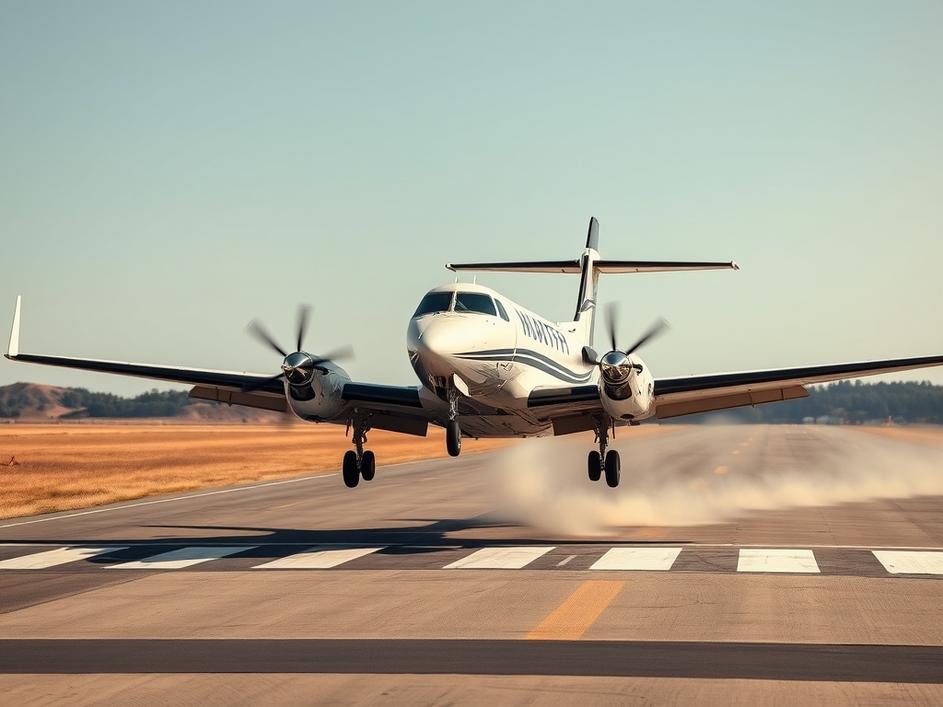
ToggleImagine this: you’re a passenger on a small plane when suddenly, the pilot becomes incapacitated. Panic might set in, but what if the plane could land itself? That’s precisely what happened recently with a Beechcraft Super King Air 200. In what’s being hailed as a landmark event, the aircraft, equipped with an advanced automation system, safely landed without human intervention. Both people on board walked away unharmed, a testament to the potential of this technology.
So, how does a plane land itself? The system uses a sophisticated network of sensors, computers, and software. Think of it as an incredibly advanced autopilot. It can assess the situation, communicate with air traffic control, and execute a safe landing. This includes controlling the plane’s speed, altitude, and direction, all without input from a pilot. The manufacturer has been developing and testing this system for years, and this event marks its first real-world success in an emergency.
This successful automated landing raises some really important questions about the future of aviation safety. Could this technology become standard on all aircraft, from small private planes to large commercial airliners? If so, it could significantly reduce the number of accidents caused by pilot error or medical emergencies. It offers a safety net in situations where a human pilot might be unable to perform their duties. And it is also reasonable to assume that, over time, the system will only get better.
Of course, there are concerns. Some people are worried about the reliability of these systems. What happens if the technology malfunctions? Can we really trust a computer to handle every situation? These are valid questions that need to be addressed through rigorous testing and certification processes. Then there’s the issue of training. Pilots will need to be trained on how to use and oversee these automated systems, ensuring they can step in if needed. Moreover, the implementation may take quite some time as the cost of such systems are likely to be expensive.
One of the biggest questions is what this means for pilots. Will they eventually become obsolete? The answer is likely no, at least not in the foreseeable future. While automated systems can handle many routine tasks and even emergency situations, pilots will still be needed for their judgment, experience, and ability to handle unforeseen circumstances that the computer cannot process. They will transition to more of a supervisory role, managing the automated systems and stepping in when necessary. The human element remains critical.
The aviation industry now faces the challenge of integrating this new technology safely and effectively. This requires collaboration between manufacturers, regulators, and airlines to develop standards and procedures for automated landing systems. There will also be a need for new regulations to govern the use of these systems and to ensure that they are properly maintained and monitored. The integration of automated systems will require careful consideration of all the potential risks and benefits.
Automated systems may provide support in various scenarios, potentially improving efficiency and reducing workload on pilots. Imagine airplanes that can automatically optimize their flight paths to save fuel, or systems that can assist pilots with complex maneuvers. The possibilities are vast, and as the technology continues to develop, we can expect to see even more innovative applications.
The successful automated landing is definitely a turning point for aviation. It shows the potential of technology to improve safety and reduce accidents. But it’s also a reminder that we need to proceed with caution, addressing the concerns and challenges before we fully embrace this new era of automation. The future of flight will likely involve a collaboration between humans and machines, where technology enhances human capabilities and makes air travel safer for everyone. It is important that we don’t rush head-first, but rather consider all facets before proceeding.


Comments are closed