

We are a digital agency helping businesses develop immersive, engaging, and user-focused web, app, and software solutions.
2310 Mira Vista Ave
Montrose, CA 91020

2500+ reviews based on client feedback
What's Included?
ToggleWe’ve all heard the hype. Since ChatGPT burst onto the scene, the narrative has been consistent: artificial intelligence is about to completely reshape how we work. Companies envisioned AI as the ultimate productivity booster, a tool that would supercharge employees and drive unprecedented levels of efficiency. The reality, however, is proving to be far more nuanced. While AI holds immense potential, its impact on the day-to-day work experience has been, so far, less of a revolution and more of a slow, steady evolution.
Three years after the initial wave of AI excitement, many businesses are still waiting for the promised transformation. Sure, there are examples of AI streamlining specific tasks or providing valuable insights, but these are often isolated cases. The wholesale changes that were predicted – the automation of entire departments, the rise of AI-powered decision-making across all levels – haven’t materialized, at least not yet. Instead, we’re seeing incremental improvements, small-scale implementations, and a gradual integration of AI into existing workflows.
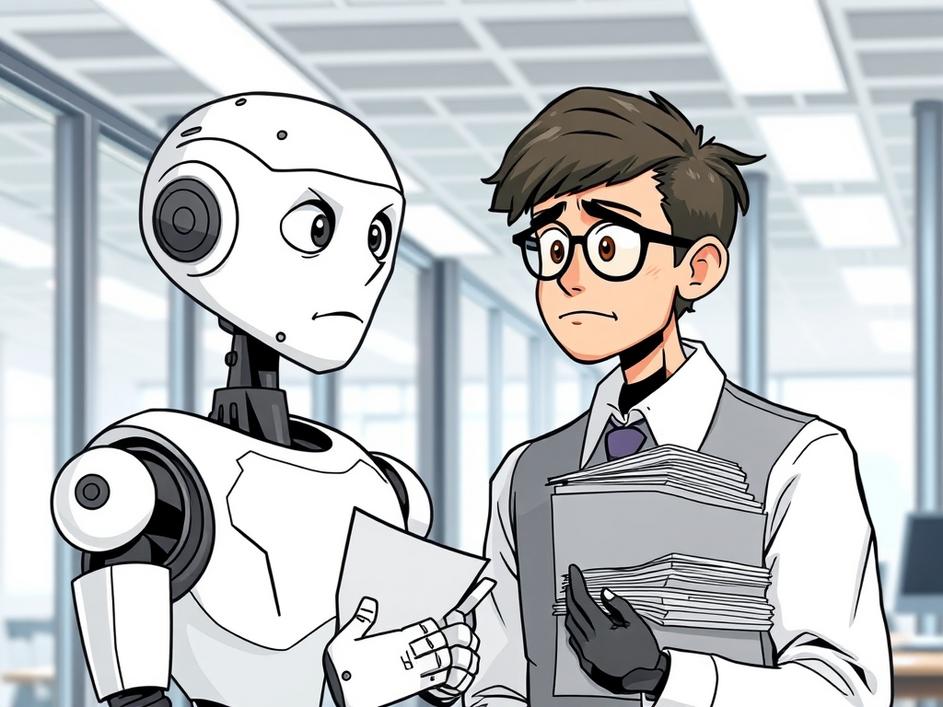
One of the key reasons for this slower-than-expected adoption is the human element. AI is, at its core, a tool. And like any tool, its effectiveness depends on how it’s used and how well it integrates with human skills and expertise. Many companies initially approached AI with the mindset of replacement, seeking to automate jobs and reduce headcount. But they’ve quickly discovered that AI is far more effective when it’s used to augment human capabilities, freeing up employees to focus on higher-level tasks that require creativity, critical thinking, and emotional intelligence. It’s about working *with* AI, not being replaced *by* it.
Another factor slowing down the AI revolution is the practical challenges of implementation. Integrating AI into existing systems can be complex and costly, requiring significant investments in infrastructure, data management, and employee training. Many companies lack the necessary expertise to effectively deploy and manage AI solutions, creating a significant skills gap. Furthermore, concerns about data privacy, security, and ethical considerations can further complicate the adoption process. These are not insurmountable obstacles, but they do require careful planning, strategic investment, and a commitment to responsible AI development.
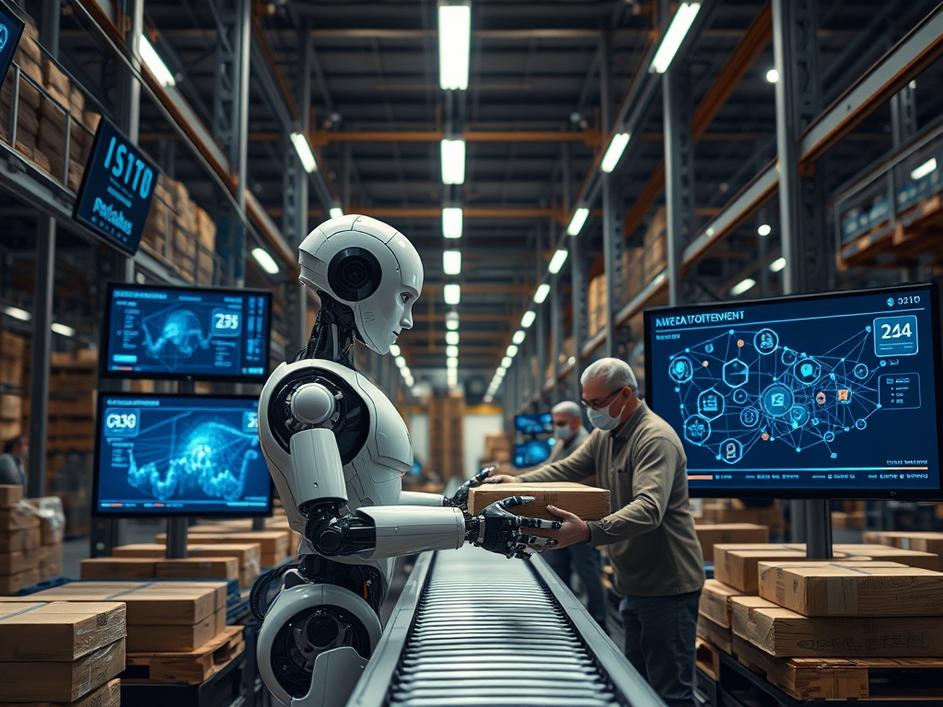
So, what does the future of work look like in the age of AI? It’s unlikely to be a scenario where robots have completely taken over. Instead, we’re moving towards a hybrid model, where humans and AI work together in a symbiotic relationship. AI will handle repetitive tasks, analyze large datasets, and provide insights, while humans will focus on strategy, innovation, and building relationships. This requires a fundamental shift in how we think about work, emphasizing adaptability, continuous learning, and the development of uniquely human skills. The workers who thrive in this environment will be those who can effectively collaborate with AI, leveraging its capabilities to enhance their own performance and contribute to the overall success of the organization.
The focus needs to shift from purely looking at AI as a cost-cutting or efficiency-boosting measure to really considering its impact on employee experience. Are employees feeling threatened by AI? Are they getting the training they need to use these new tools effectively? Are their roles evolving in a way that is engaging and fulfilling? If the answer to any of these questions is no, then the full potential of AI will remain untapped. Because at the end of the day, a workforce that feels valued and empowered is going to be far more productive and innovative than one that feels like it’s being slowly replaced by machines. The biggest transformation that AI will bring isn’t just about changing *what* we do, but also *how* we feel about doing it.
The AI revolution is not going to happen overnight. It’s a long-term process that requires patience, realistic expectations, and a willingness to adapt and learn. The initial hype may have been overblown, but the underlying potential of AI remains undeniable. As technology continues to evolve and businesses gain a better understanding of how to effectively integrate AI into their workflows, we can expect to see a more profound and transformative impact on the workplace. But it’s important to remember that AI is a tool, not a magic bullet. Its success depends on how we use it, how we manage it, and how we prioritize the human element in the equation.
It’s time to move beyond the hype and embrace a more realistic and responsible approach to AI adoption. This means investing in training and development, fostering a culture of experimentation and innovation, and prioritizing ethical considerations. It also means engaging employees in the process, listening to their concerns, and empowering them to shape the future of work. The AI revolution is not something that happens *to* us; it’s something that we create. And by working together, we can ensure that it benefits everyone.


Comments are closed