

We are a digital agency helping businesses develop immersive, engaging, and user-focused web, app, and software solutions.
2310 Mira Vista Ave
Montrose, CA 91020

2500+ reviews based on client feedback
What's Included?
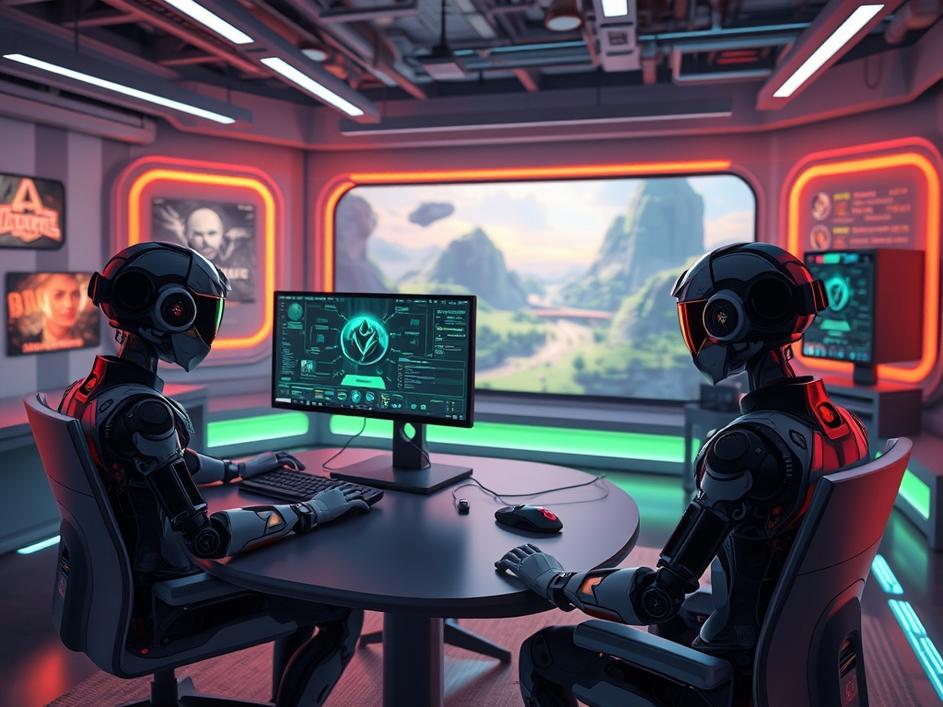
ToggleRecent market activity saw Unity’s stock take a hit following news surrounding Google’s Project Genie. The dip has investors and industry watchers pondering what this new AI venture from Google means for Unity’s long-term prospects. While it’s easy to jump to conclusions, a closer look is needed to understand the nuances of the situation.
Details surrounding Project Genie are still somewhat scarce, but the general understanding is that it is an AI-driven initiative focused on game development. The specific capabilities and intended target market are not completely clear. This is the core of why Unity’s stock has stumbled. The fear is that Google will directly compete with Unity, offering a streamlined, AI-enhanced alternative for developers. The reality is that game development is a complex field, and the idea that Genie will immediately replace existing tools is probably overblown.
Unity has established itself as a dominant force in the game development world. Their engine is known for its accessibility, cross-platform compatibility, and a massive asset store. It lets developers create games for mobile, PC, consoles, and even VR/AR devices. This broad reach is a major advantage. Beyond the technology itself, Unity has built a vast and supportive community. This ecosystem of developers, artists, and resources is a significant asset that’s hard to replicate quickly. The asset store, where developers can buy and sell pre-made game components, reduces development time and lowers the barrier to entry.
Project Genie’s impact on Unity is uncertain, and there are several possibilities. At one extreme, Genie could emerge as a strong competitor, specifically targeting indie developers or certain game genres. This would definitely pressure Unity to innovate and adapt. Another, more moderate outcome, is that Genie carves out a niche for itself without directly challenging Unity’s dominance. It might focus on specific types of games or offer a more streamlined experience for beginners, thus expanding the overall market rather than stealing Unity’s share. The possibility that Genie could actually *help* Unity shouldn’t be dismissed. If Genie spurs innovation in AI-assisted game development, Unity can adopt and integrate these advancements into their engine, potentially attracting even more users. It is also possible that Google will eventually partner with Unity to provide their AI tools to the Unity ecosystem. Given Google’s history of starting and stopping various projects, there’s also a non-zero chance that Genie doesn’t live up to the initial hype or even gets shelved altogether. That is always a possibility with any large company’s initiatives.
Stock prices often react quickly to news, especially when it involves potential competition. The market is forward-looking and discounts information very quickly. The dip in Unity’s stock price likely reflects investor uncertainty and fear of the unknown. But it’s important to remember that market sentiment can be volatile and doesn’t always reflect the long-term fundamentals of a company. Unity has a strong track record of innovation and adaptation. They’ve successfully navigated changes in the gaming landscape before, and it’s reasonable to expect they’ll do so again. They have a skilled and creative team, substantial financial resources, and a large and loyal user base.
For Unity to maintain its competitive edge, a proactive approach is essential. This involves closely monitoring Project Genie’s development, identifying potential threats and opportunities, and adapting their strategy accordingly. Investing in AI-driven tools and features for their own engine would be a smart move. Improving the user experience, expanding their asset store, and strengthening their community would also solidify their position. Open communication with developers is key. Addressing concerns and providing clarity about Unity’s plans for the future can help maintain confidence in the platform.
The news about Google’s Project Genie has introduced uncertainty into the market, which translated to downward pressure on Unity’s stock. However, it’s critical to maintain perspective. Unity is an established player with a strong foundation, and the ultimate impact of Genie remains to be seen. While competition is always a risk, it can also be a catalyst for innovation and growth. As more details about Project Genie emerge, a clearer picture will emerge, and investors can make more informed decisions. Until then, a wait-and-see approach, combined with a thorough analysis of Unity’s long-term prospects, is the most prudent course of action. The market will likely remain volatile in the short term, but the long-term success of Unity will depend on their ability to adapt, innovate, and continue providing value to game developers.

Comments are closed