

We are a digital agency helping businesses develop immersive, engaging, and user-focused web, app, and software solutions.
2310 Mira Vista Ave
Montrose, CA 91020

2500+ reviews based on client feedback
What's Included?
ToggleWe’re living in a time when artificial intelligence is rapidly changing everything around us. From self-driving cars to AI writing tools, it feels like every week brings a new development that blurs the line between what machines can do and what humans do best. It’s natural to wonder, with all this technological progress, what will be left for us? What skills and abilities will remain uniquely human, safe from the reach of algorithms and automation?
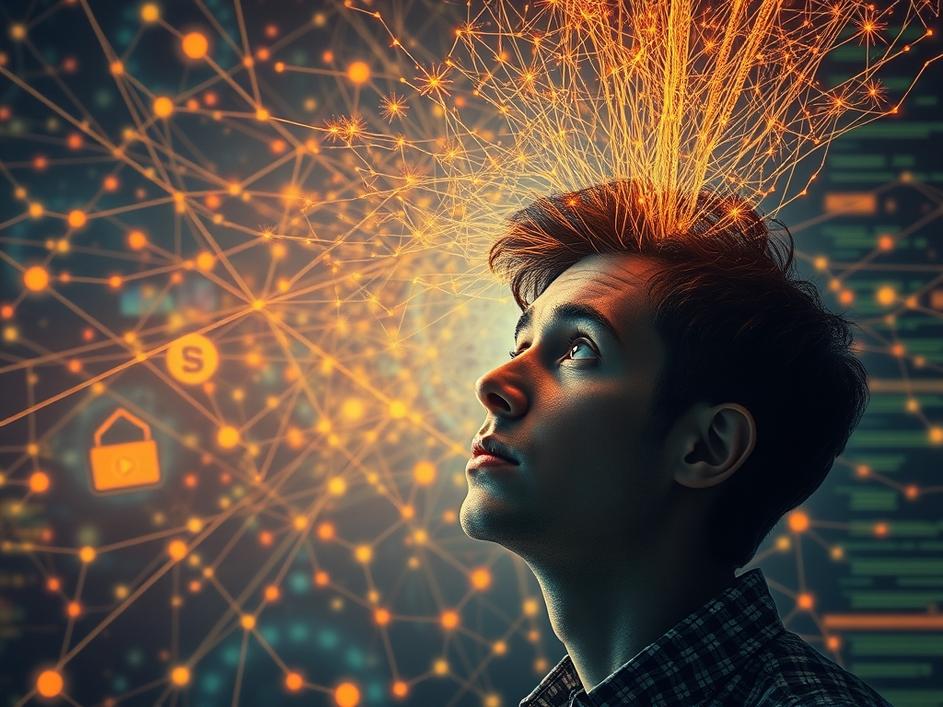
One crucial area where humans still hold a significant advantage is imagination. While AI can process data, identify patterns, and even generate new content based on existing information, it fundamentally lacks the capacity for true, original thought. It can mimic creativity, but it can’t truly *imagine* something that doesn’t already exist in some form. This is because imagination involves more than just rearranging existing pieces; it requires the ability to break free from constraints, to envision possibilities that go beyond the logical and the predictable.
AI operates on data. It learns from vast datasets and uses that knowledge to make predictions or create outputs. However, human imagination is fueled by much more than just data. It’s shaped by our emotions, our experiences, our hopes, and our fears. These subjective elements are what give our imagination its depth and richness. Think about the way a personal experience can inspire a completely new idea, or how a feeling of empathy can lead to an innovative solution. AI can’t replicate these nuances because it lacks the very human capacity for subjective experience.
Human imagination thrives on asking “what if” questions. What if we could travel to other stars? What if we could cure all diseases? What if we could build a truly sustainable society? These kinds of questions drive innovation and progress. They allow us to explore uncharted territories, to imagine possibilities that may seem impossible at first glance. AI can help us analyze the data related to these questions, but it can’t generate the initial spark of curiosity and wonder that fuels the imaginative process. That initial spark comes from within the human mind.
So, what does this mean in practical terms? How can we leverage the power of human imagination in a world increasingly dominated by AI? The answer lies in focusing on areas where creativity, empathy, and critical thinking are essential. We need people who can dream up new solutions to complex problems, who can connect with others on an emotional level, and who can question the status quo. These are skills that AI can’t easily replicate, and they will be increasingly valuable in the years to come. We need to encourage creativity in education, fostering an environment where children are encouraged to explore, experiment, and imagine. We need to value empathy and emotional intelligence in the workplace, creating teams that can work together effectively and understand the needs of their customers. And we need to cultivate critical thinking skills, encouraging people to question assumptions and challenge conventional wisdom.
It’s important to remember that AI is not our enemy. It’s a tool that can be used to augment our own abilities and help us achieve our goals. The key is to find ways to combine the power of AI with the unique strengths of human imagination. AI can handle the repetitive tasks, analyze vast amounts of data, and automate complex processes. Humans can focus on the creative aspects of problem-solving, generating new ideas, and connecting with others on a personal level. By working together, humans and AI can achieve far more than either could alone. This is the key to a future where technology empowers us to be more creative, more innovative, and more human.
The conversation shouldn’t revolve around AI *replacing* human skills, but about augmenting human potential. The Forbes article rightly points to the irreplaceable ‘imagination layer.’ It’s not just about coming up with random ideas; it’s about the intentional, empathetic, and experience-informed creation that AI, in its current form, can’t replicate. This isn’t just about job security; it’s about defining what it *means* to be human in an increasingly automated world.
The rise of AI isn’t a threat to our humanity, but a chance to rediscover and value what makes us unique. We must cultivate imagination, critical thinking, and emotional intelligence, and use AI as a tool to enhance these capabilities. The future belongs to those who can combine the logical power of machines with the boundless potential of the human spirit. Let’s embrace this challenge and build a future where imagination thrives.



Comments are closed