

We are a digital agency helping businesses develop immersive, engaging, and user-focused web, app, and software solutions.
2310 Mira Vista Ave
Montrose, CA 91020

2500+ reviews based on client feedback
What's Included?
ToggleThe buzz around artificial intelligence isn’t just hype anymore. It’s actively changing how businesses operate, and a big question mark hangs over the future of jobs. We’re not talking about science fiction; AI is already automating tasks, analyzing data, and even creating content. This rapid advancement understandably has many people wondering: will robots take my job?
Certain industries are facing a higher risk of automation than others. Repetitive tasks are low-hanging fruit for AI. Think data entry, customer service (especially basic inquiries), and even some aspects of manufacturing. AI excels at processing large amounts of information and performing predictable actions, making these jobs prime candidates for automation. Truck driving is another area people are watching closely, with self-driving technology rapidly improving. The impact on these roles could be significant.
But it’s not all doom and gloom. While AI might displace some jobs, it will also create new ones. Someone needs to build, maintain, and train these AI systems. This translates into demand for AI specialists, data scientists, machine learning engineers, and AI ethicists. Even more broadly, there’s likely to be a surge in roles that focus on uniquely human skills, like creativity, critical thinking, and complex problem-solving. Think about roles involving strategic planning, innovation, or managing teams – things AI can’t easily replicate. And there will be demand for people who can bridge the gap between technology and humans, to help manage the transition.
The key to surviving (and thriving) in the age of AI is adaptability. The most important thing you can do is continuously learn and develop new skills. Focus on skills that complement AI, rather than compete with it. Enhance your abilities in areas like critical thinking, communication, and creativity, and learn how to use AI tools to augment your own work. Don’t be afraid to explore new technologies and understand how they can be applied in your field. Being proactive about your skills development is crucial.
Ultimately, AI is a tool. It’s a powerful tool, but it’s still just a tool. It’s important to remember that AI can’t replace the human touch, empathy, and complex reasoning that are essential in many roles. Think about healthcare, education, or even sales. While AI can assist with diagnosis, personalized learning, or lead generation, the human element of care, understanding, and building relationships remains critical. The future likely lies in a collaboration between humans and AI, where AI handles the repetitive tasks and humans focus on higher-level thinking and emotional intelligence.
As AI becomes more prevalent, it’s important to consider the ethical implications. Algorithmic bias, data privacy, and job displacement are just some of the challenges we need to address. We need to ensure that AI is developed and used responsibly, with fairness and transparency in mind. This requires collaboration between policymakers, technologists, and the public to create guidelines and regulations that promote ethical AI development and deployment. Failure to address these concerns could lead to unintended consequences and exacerbate existing inequalities.
To help workers adapt to the changing job market, governments and businesses need to invest in education and retraining programs. These programs should focus on providing individuals with the skills they need to succeed in the age of AI, such as data analysis, software development, and critical thinking. Additionally, it’s important to provide support for workers who are displaced by automation, such as unemployment benefits and job placement services. By investing in education and retraining, we can help ensure that everyone has the opportunity to benefit from the AI revolution.
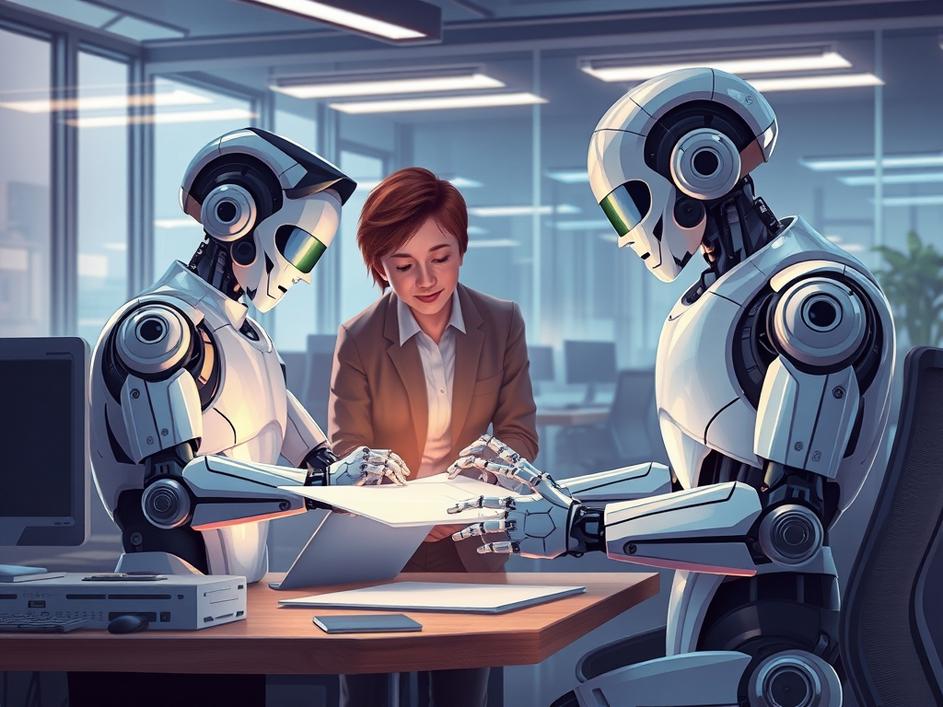
The most likely scenario is a hybrid one, where humans and AI work together. AI will automate tasks and provide insights, freeing up humans to focus on more strategic and creative work. This collaboration will require a shift in mindset, with humans learning to work alongside AI and leverage its capabilities to enhance their own performance. The key is to embrace AI as a tool that can augment human intelligence, rather than a replacement for it.
The rise of AI presents both challenges and opportunities. While some jobs are at risk of automation, new roles will emerge that require uniquely human skills and the ability to work collaboratively with AI. The key to navigating this changing landscape is adaptability, continuous learning, and a focus on developing skills that complement AI. By embracing these strategies, individuals can not only survive but thrive in the age of artificial intelligence. It’s time to be proactive, embrace change, and prepare for a future where humans and AI work together to shape a better world.



Comments are closed