

We are a digital agency helping businesses develop immersive, engaging, and user-focused web, app, and software solutions.
2310 Mira Vista Ave
Montrose, CA 91020

2500+ reviews based on client feedback
What's Included?
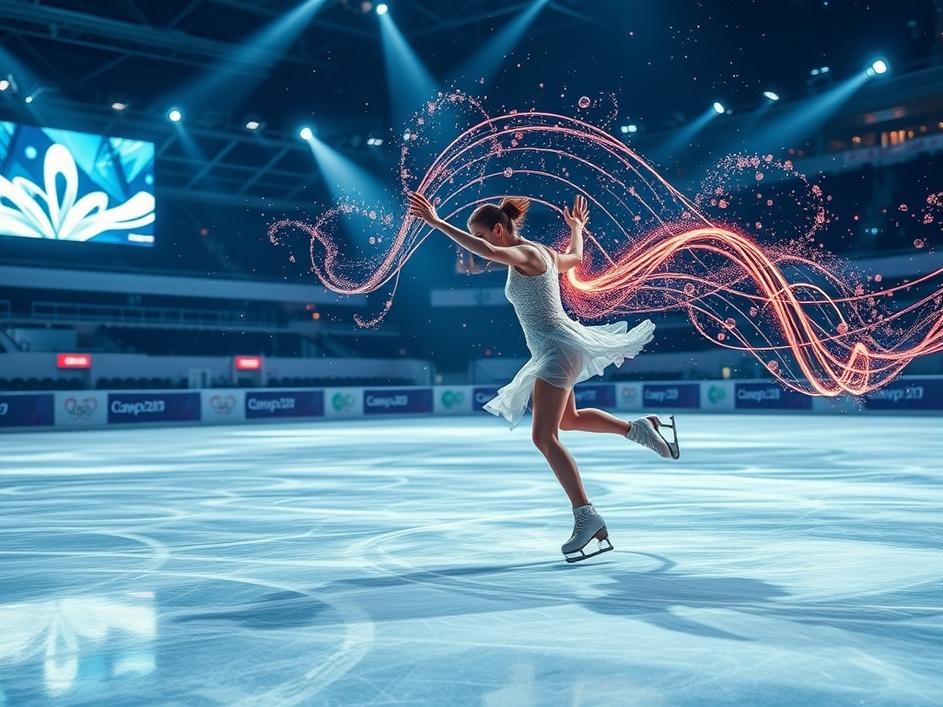
ToggleThe Winter Olympics are known for breathtaking athleticism, stunning costumes, and, of course, memorable music. But this year, something was different. During the ice dancing competition, the Czech Republic’s Kateřina Mrázková and Daniel Mrázek skated to a piece of music partly composed by artificial intelligence. It wasn’t just background noise; it was a collaboration between human creativity and a complex algorithm, marking a fascinating moment in Olympic history.
The brother-sister duo weren’t just testing out a new trend; they were pushing the boundaries of how music is created and experienced. While the core melody and structure likely came from human composers, the AI helped fill in the gaps, generating harmonies and arrangements that might not have occurred to a human mind. It’s a partnership, not a replacement, where the AI acts as a tool to augment artistic expression. This raises so many exciting questions about the future of music and how technology can enhance, rather than diminish, human creativity.
So, how does this AI music actually work? It’s not just a computer spitting out random notes. These AI systems are trained on vast libraries of existing music, learning patterns, styles, and structures. Then, given a set of parameters or a starting melody, the AI can generate new musical ideas, variations, and arrangements. Think of it as a super-powered musical assistant, capable of exploring possibilities far beyond the scope of a single composer’s imagination. In the Mrázková and Mrázek’s case, the AI likely helped to flesh out the composition, adding layers of complexity and texture that elevated their performance.
Of course, integrating AI into artistic creation isn’t without its challenges. There are questions of originality, copyright, and the potential for homogenization of music. If everyone starts using the same AI tools and datasets, will we end up with a world of bland, algorithmically generated music? And what about the role of human emotion and experience in artistic expression? Can an AI truly capture the depth and nuance of human feelings? These are crucial questions that need to be addressed as AI continues to play a larger role in the arts. The Mrázková and Mrázek duo, however, took a calculated risk, hoping the novelty and intrigue of AI-assisted music would enhance their overall performance and set them apart from the competition.
The reaction to the AI-composed music was mixed, with some praising the innovation and others questioning its artistic merit. Did it enhance the performance or distract from it? The answer, of course, is subjective and depends on individual tastes. Some may have found the music fresh and exciting, while others may have preferred a more traditional score. But regardless of personal preferences, the fact that AI music was featured at the Olympics at all speaks to its growing acceptance and influence in the world of art and entertainment. It demonstrates a willingness to experiment and push boundaries, even in a highly traditional and competitive environment.
The use of AI in the Olympics isn’t limited to music. AI is being used to analyze athlete performance, predict outcomes, and even enhance the viewing experience for fans. From optimizing training regimens to providing real-time data analysis, AI is transforming the world of sports in profound ways. And as AI technology continues to evolve, we can expect to see even more innovative applications in the years to come. This could include AI-powered judging systems, personalized training programs, and even AI-generated commentary during broadcasts. The possibilities are endless, and the potential benefits are significant.
The story of the Czech ice dancers and their AI-composed music is a microcosm of a larger trend: the increasing collaboration between humans and machines in the creative process. AI is not a replacement for human artists; it’s a tool that can augment their abilities, expand their horizons, and unlock new possibilities. By embracing AI, artists can explore uncharted territories, experiment with new sounds and styles, and create works of art that were previously unimaginable. This collaboration could revolutionize various creative domains, from music and visual arts to literature and film.
Ultimately, the Mrázková and Mrázek’s use of AI music at the Olympics serves as a reminder that technology and art are not mutually exclusive. Rather, they can be powerful allies in the pursuit of excellence and innovation. It’s a bold statement about the evolving nature of creativity and the potential for AI to enhance human expression. While the ethical and artistic implications of AI in music will continue to be debated, one thing is clear: the algorithm has arrived on the Olympic stage, and it’s here to stay. It is a sign of things to come, a glimpse into a future where humans and machines work together to create beautiful and meaningful experiences. The question isn’t whether AI should be involved, but how we can harness its power responsibly and creatively to elevate the art of human expression. It’s a future filled with exciting possibilities, and it’s just beginning.



Comments are closed