

We are a digital agency helping businesses develop immersive, engaging, and user-focused web, app, and software solutions.
2310 Mira Vista Ave
Montrose, CA 91020

2500+ reviews based on client feedback
What's Included?
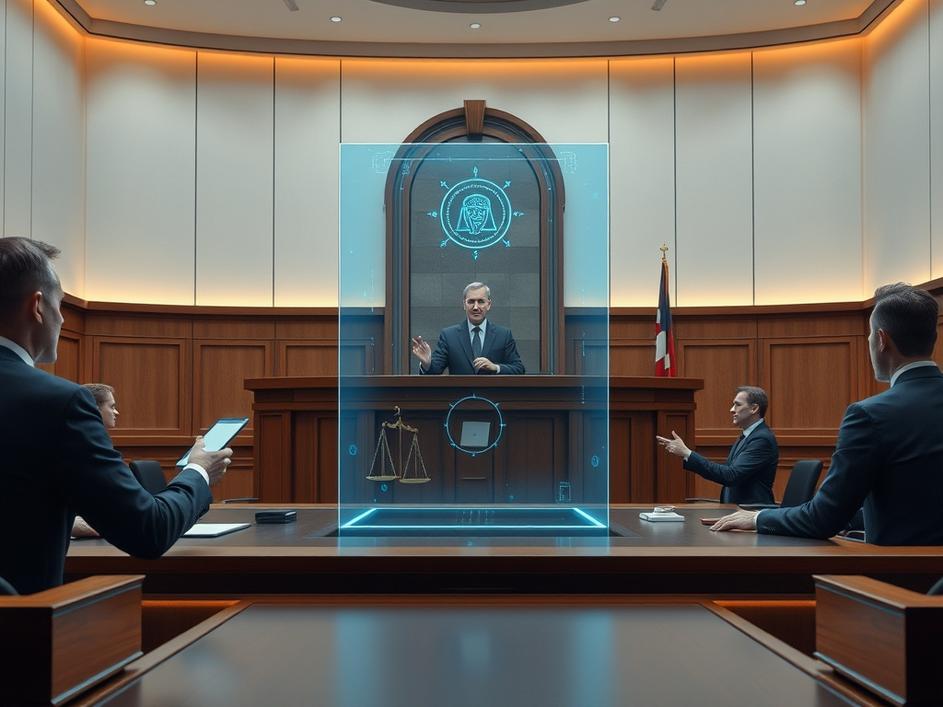
ToggleImagine walking into a courtroom, but instead of a human judge, you’re facing a sophisticated AI. It listens to the arguments, reviews the evidence, and delivers a verdict. For many, the concept of an AI judge sounds like something straight out of a dystopian movie. The traditional image of justice involves a wise, experienced human carefully weighing the facts and applying the law with empathy and understanding. Can an algorithm really replicate that?
Despite the initial skepticism, there’s a growing argument for exploring the use of AI in legal dispute resolution. One of the most compelling reasons is efficiency. Court systems around the world are often backlogged, leading to lengthy delays and increased costs for everyone involved. An AI could process information much faster than a human, potentially speeding up the resolution process significantly. For example, think about a small claims case. Instead of waiting months for a court date, an AI could review the evidence and deliver a ruling within days, or even hours. This speed translates directly into lower costs for both the parties involved and the court system itself.
Perhaps the most surprising argument in favor of AI judges is the potential for increased impartiality. Human judges, despite their best efforts, are subject to biases, both conscious and unconscious. These biases can stem from their background, personal experiences, or even their mood on a particular day. An AI, on the other hand, could be programmed to apply the law objectively, based solely on the facts presented. Of course, the fairness of an AI judge depends entirely on the data it’s trained on. If the training data reflects existing societal biases, the AI will likely perpetuate those biases. Therefore, careful attention must be paid to ensuring that the data used to train AI judges is representative and free from discriminatory patterns. This is a crucial challenge, but one that proponents believe can be overcome.
It’s unlikely that AI will replace human judges entirely, at least not in the foreseeable future. However, there are specific areas of law where AI could be particularly useful. One promising area is arbitration, a form of alternative dispute resolution where parties agree to have their dispute decided by a neutral third party. Arbitration is often used in commercial disputes and can be faster and less expensive than traditional litigation. AI could be used to automate certain aspects of the arbitration process, such as reviewing documents and identifying relevant case law. Another potential application is in small claims courts, where the amounts in dispute are relatively small and the procedures are often simplified. An AI could handle routine cases, freeing up human judges to focus on more complex matters.
While AI offers potential benefits in terms of speed, cost, and impartiality, it’s important to remember the limitations. Justice is not simply about applying rules; it’s also about understanding the human context. A human judge can consider mitigating circumstances, assess credibility, and exercise empathy in a way that an AI cannot. For example, consider a case involving a contract dispute. An AI might be able to determine whether the contract was breached, but it might not be able to understand the reasons why the breach occurred or the impact it had on the parties involved. These are the types of nuances that require human judgment and understanding. Legal decisions often require understanding of the larger societal impact, and AI is not capable of this. It is not clear that AI can adapt to changing societal norms, or take into account culture shifts in deciding outcomes.
The use of AI in legal decision-making raises a number of ethical considerations. One of the most important is transparency. If an AI makes a decision, it’s crucial to understand how it arrived at that decision. This requires being able to examine the AI’s algorithms and the data it was trained on. Another key concern is accountability. If an AI makes an error, who is responsible? Is it the programmer who created the algorithm, the organization that deployed it, or the AI itself? These are complex questions that need to be addressed before AI is widely used in the legal system. The source code should be public so that outcomes can be verified independently. The right to appeal AI legal decisions must be preserved, and an explanation of the AI decision needs to be provided.
Ultimately, the future of justice likely involves a collaboration between humans and machines. AI can be a valuable tool for improving the efficiency and fairness of the legal system, but it should not replace human judgment entirely. Instead, AI should be used to augment the work of human judges, providing them with better information and freeing them up to focus on the most complex and nuanced cases. The ideal scenario might be a system where AI handles routine tasks and provides recommendations, while human judges retain the ultimate authority to make decisions, especially in cases with significant human impact. As AI technology continues to evolve, it’s important to have an open and honest conversation about its potential role in the legal system, ensuring that it is used in a way that promotes justice and fairness for all.



Comments are closed