

We are a digital agency helping businesses develop immersive, engaging, and user-focused web, app, and software solutions.
2310 Mira Vista Ave
Montrose, CA 91020

2500+ reviews based on client feedback
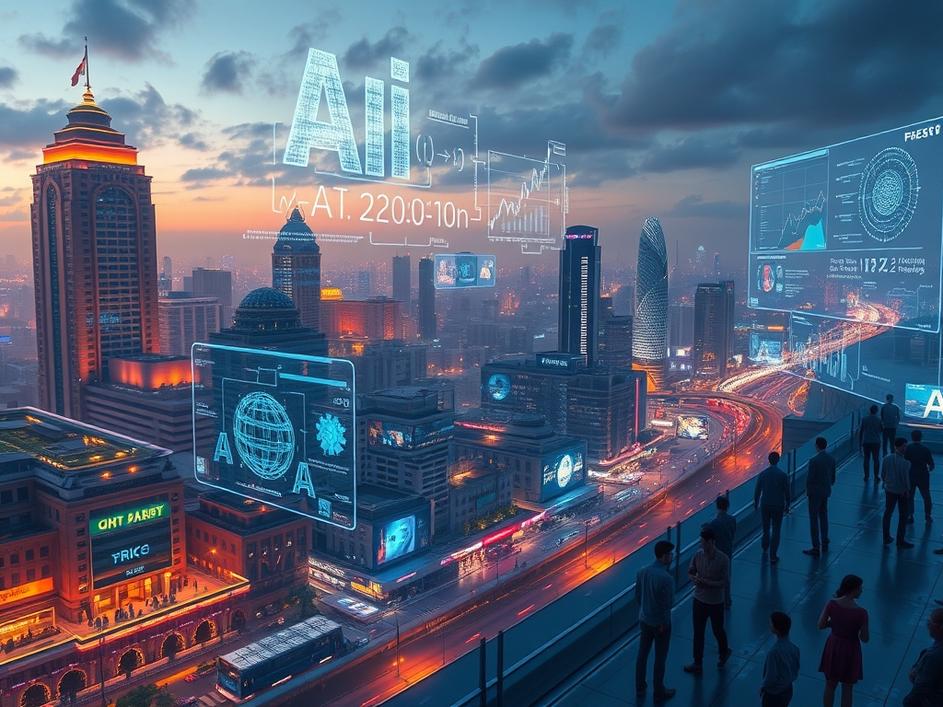
India is making a big move to establish itself as a significant force in the world of artificial intelligence. With Prime Minister Narendra Modi hosting France’s President Macron and also organizing one of the largest AI summits recently, it’s clear India isn’t just watching the AI revolution unfold; it wants to be a major part of it. This push isn’t just about technology; it’s about shaping the future of the global economy and India’s place within it.
India’s interest in AI is significant for several reasons. First, India has a massive population, which translates to a huge potential user base for AI applications. Think about AI in healthcare, education, agriculture, and countless other sectors. The scale of impact in India could be enormous. Second, India has a large pool of talented engineers and tech professionals. This human capital is crucial for developing and implementing AI solutions. Third, India’s growing economy provides a fertile ground for AI innovation and investment. All these factors combined make India a potentially influential player in the global AI landscape.
But, India’s AI journey isn’t without its challenges. One major hurdle is data privacy. AI thrives on data, and India needs to establish robust data protection laws to ensure ethical and responsible AI development. Another challenge is bridging the digital divide. While India boasts a large tech-savvy population, many people still lack access to basic internet and digital literacy. Addressing this inequality is essential to ensure that the benefits of AI are shared broadly. Finally, India must invest heavily in AI research and development to stay competitive. This includes funding universities, research institutions, and startups working on cutting-edge AI technologies.
India’s AI ambitions also have geopolitical implications. As AI becomes increasingly important for national security and economic competitiveness, countries are vying for leadership in this field. India’s rise as an AI power could reshape the global balance of power. It could also lead to new partnerships and collaborations with other countries. For example, India’s partnership with France, as demonstrated by Macron’s visit, could foster cooperation in AI research, development, and deployment. This could involve sharing expertise, co-funding projects, and developing common standards for AI ethics and governance.
Beyond economic and geopolitical considerations, India has an opportunity to leverage AI for social good. Imagine AI-powered solutions that address some of India’s most pressing challenges, such as poverty, disease, and environmental degradation. For instance, AI could be used to improve crop yields, predict natural disasters, or provide personalized healthcare in remote areas. By focusing on AI applications that benefit society as a whole, India can set an example for other countries and demonstrate the positive potential of this transformative technology. And so, India’s leadership in AI isn’t just about technological prowess; it’s about using AI to create a more equitable and sustainable future for all. This requires a holistic approach that considers the ethical, social, and economic implications of AI.
The AI summit and Macron’s visit are important milestones, but they are just the beginning of India’s AI journey. To truly become a global AI leader, India needs a long-term vision and a concrete plan of action. This includes investing in education and training to develop a skilled AI workforce, promoting innovation and entrepreneurship in the AI sector, and fostering collaboration between government, industry, and academia. Furthermore, India needs to engage in international dialogues to shape the global governance of AI. This involves working with other countries to develop common standards, address ethical concerns, and ensure that AI is used for peaceful and beneficial purposes. And even more, India needs to foster a culture of responsible AI development, where ethical considerations are integrated into every stage of the AI lifecycle.
It’s also important to address the regulatory landscape surrounding AI. India needs to develop clear and consistent regulations that promote innovation while mitigating the risks associated with AI, such as bias, discrimination, and job displacement. These regulations should be flexible enough to adapt to the rapidly evolving nature of AI, but also strong enough to protect the rights and interests of citizens. It will be a balancing act between encouraging innovation and safeguarding against potential harms. India’s approach to AI regulation will be closely watched by other countries, as it could serve as a model for how to govern this transformative technology.
In conclusion, India is positioning itself to be a major player in the AI revolution. With its large population, talented workforce, and growing economy, India has the potential to shape the future of AI in profound ways. But to realize this potential, India needs to address several challenges, including data privacy, the digital divide, and the need for greater investment in research and development. By focusing on AI for social good and engaging in international dialogues, India can help ensure that AI is used to create a more equitable and sustainable world. The path forward won’t be easy, but the rewards of success are immense. India’s AI journey is one to watch, as it could have far-reaching implications for the global economy, geopolitics, and society as a whole.


Comments are closed