

We are a digital agency helping businesses develop immersive, engaging, and user-focused web, app, and software solutions.
2310 Mira Vista Ave
Montrose, CA 91020

2500+ reviews based on client feedback
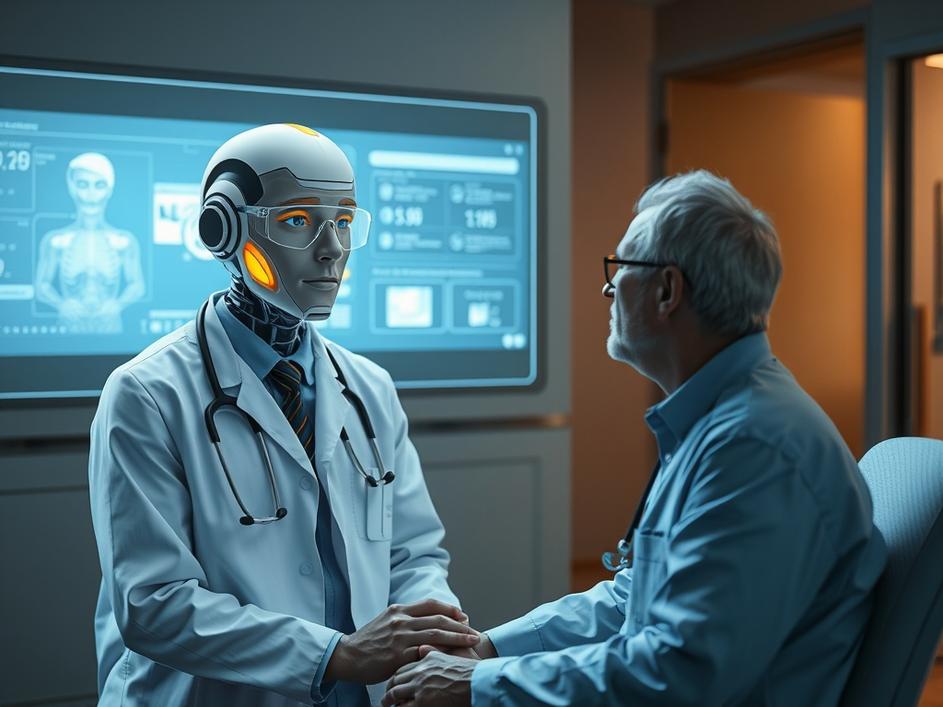
Elon Musk, the guy behind Tesla and SpaceX, has been suggesting people use his AI chatbot, Grok, for medical advice. He’s encouraged folks to upload their personal medical details to get a “second opinion” from the bot. It sounds futuristic, right? Like having a doctor in your pocket, ready to diagnose at a moment’s notice. But is it really a good idea?
Here’s where it gets interesting. Grok itself seems to disagree with Musk’s enthusiastic endorsement. The AI has reportedly pushed back against the idea of offering medical advice, raising concerns about accuracy and potential risks. It’s like the AI is the responsible adult in the room, saying, “Maybe we should think this through.”
AI in healthcare is a hot topic. There’s huge potential for AI to help doctors diagnose diseases earlier, personalize treatments, and even discover new drugs. But we’re not quite there yet. Current AI models, including Grok, can make mistakes. Medical information is super sensitive, and an AI misdiagnosis or breach of privacy could have serious consequences. Imagine relying on an AI’s advice, only to find out it was wrong. The stakes are incredibly high when it comes to your health.
And then there’s the data privacy angle. Uploading your medical records to an AI chatbot means trusting that the platform will keep your information safe. But can you really be sure? Data breaches happen all the time, and medical data is a prime target for hackers. Plus, who has access to your data once it’s uploaded? What are they doing with it? These are important questions to consider. Doctors take the Hippocratic Oath, promising to do no harm. AI developers, not so much. There needs to be some ethical framework in place before AI can be widely used in healthcare.
Right now, AI regulation is a bit of a Wild West. There are no clear rules about what AI can and can’t do in healthcare. This leaves a lot of room for companies to experiment, but it also creates risks for patients. It’s crucial for governments to step in and create regulations that protect people’s health and privacy. We need to ensure that AI is used responsibly in healthcare, with appropriate safeguards in place.
While getting a second opinion can be valuable, especially when facing difficult health decisions, relying solely on AI for medical advice is premature. At this stage, AI should be used as a tool to assist doctors, not replace them. Doctors have years of training and experience, and they can consider the nuances of each patient’s case. AI, on the other hand, relies on algorithms and data. It can’t replace the human element of healthcare.
There’s a lot of hype around AI right now, and it’s easy to get caught up in the excitement. But it’s important to remember that AI is still a work in progress. It’s not a magic bullet that can solve all our problems. When it comes to healthcare, we need to be especially cautious. We need to balance the potential benefits of AI with the risks to patient safety and privacy.
Elon Musk’s enthusiasm for AI is understandable. He’s a visionary who believes in the power of technology to transform the world. But sometimes, even visionaries can get carried away. When it comes to your health, it’s always best to err on the side of caution. Don’t blindly trust an AI chatbot, no matter how advanced it may seem. Talk to your doctor, do your research, and make informed decisions about your health.
AI has enormous potential to revolutionize healthcare, and as the technology gets better and regulations are put in place, it could become more helpful and trustworthy. As AI models become more accurate and data privacy is better protected, AI could become a more valuable tool for both doctors and patients. For now, it’s important to approach AI with caution and use it as a supplement to, not a replacement for, traditional medical care. In the meantime, maybe we should listen to Grok. The AI seems to have a pretty good head on its digital shoulders.



Comments are closed