

We are a digital agency helping businesses develop immersive, engaging, and user-focused web, app, and software solutions.
2310 Mira Vista Ave
Montrose, CA 91020

2500+ reviews based on client feedback
What's Included?
ToggleArtificial intelligence is the hot topic right now. You can’t go anywhere without hearing about it. But when it comes to jobs, opinions are all over the place. Some people think AI will be a helpful tool, making our work lives easier. Others see it as a threat, ready to take over and leave many jobless. And then there are those who believe it’s all just a lot of hype. So, what’s the real story? Let’s try to make sense of this.
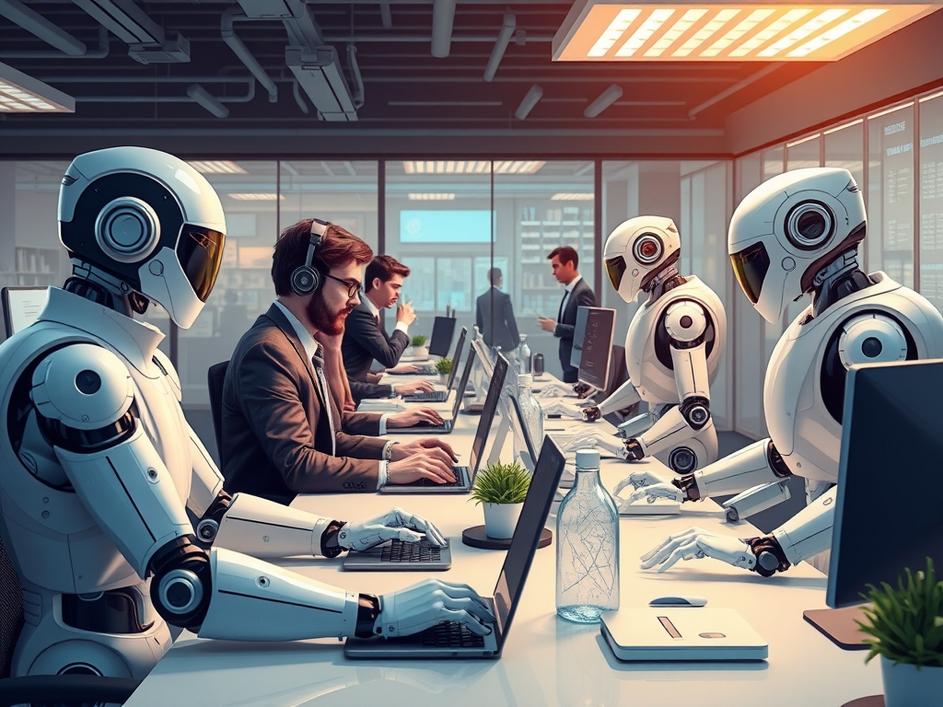
One viewpoint is that AI will mostly assist us in our jobs. Think of it as a super-smart assistant that can handle repetitive tasks, analyze huge amounts of data, and provide insights we might miss. This would free us to focus on the more creative, strategic, and interpersonal parts of our work. For example, instead of spending hours sifting through spreadsheets, an AI could quickly identify trends and patterns, allowing a human to make informed decisions based on those findings. This perspective sees AI as a way to augment human capabilities, not replace them entirely.
On the other hand, many worry about widespread job losses. As AI becomes more sophisticated, it could automate tasks that were once thought to require human intelligence. Customer service, data entry, and even some aspects of programming could be handled by AI systems. This could lead to companies needing fewer employees, especially in roles that involve routine or easily automated processes. The fear is that the pace of job displacement could outstrip the creation of new jobs, leading to significant unemployment and economic disruption. We’ve seen automation impact manufacturing, and this could be a much wider wave.
Then there’s the skeptical view. Some argue that AI is being overhyped and that its capabilities are not as advanced as some claim. They point out that AI still struggles with tasks that require common sense, creativity, and emotional intelligence. While AI can be impressive in specific domains, it often lacks the general intelligence needed to handle complex, real-world situations. These skeptics believe that the impact of AI on jobs will be more gradual and less dramatic than some predict. They also feel current AI is just a glorified search engine, not truly intelligent.
The truth is probably somewhere in the middle. AI is definitely advancing rapidly, and it’s already having an impact on the job market. However, it’s unlikely that AI will completely replace humans in most jobs anytime soon. Instead, we’re likely to see a shift in the types of jobs that are available and the skills that are required. Many existing jobs will be transformed as AI takes over certain tasks, and new jobs will be created to develop, implement, and maintain AI systems. So, people may need to adapt.
What does this mean for workers? It means that adaptability and a willingness to learn new skills will be more important than ever. People who can work alongside AI, leveraging its capabilities to enhance their own productivity and creativity, will be in high demand. Skills like critical thinking, problem-solving, communication, and emotional intelligence will also become increasingly valuable, as these are areas where humans still have a distinct advantage over machines. Education and training programs will need to evolve to equip workers with the skills they need to thrive in an AI-driven economy.
The future of work in the age of AI is uncertain, but it’s not something to be feared. By embracing lifelong learning, developing uniquely human skills, and focusing on how AI can augment our abilities, we can navigate this technological shift and create a future where humans and AI work together to achieve more than either could alone. The key is to be proactive, stay informed, and adapt to the changing landscape. Governments also have a role to play in supporting workers through training and education programs and ensuring that the benefits of AI are shared broadly across society.
I think it’s essential to avoid both extremes of the AI debate. Blindly embracing AI without considering the potential consequences is just as dangerous as dismissing its potential altogether. We need a balanced perspective that acknowledges both the opportunities and the challenges that AI presents. By fostering open discussions, promoting responsible development, and investing in education and training, we can harness the power of AI to create a more prosperous and equitable future for all. It’s not about AI versus humans; it’s about AI *with* humans.



Comments are closed