

We are a digital agency helping businesses develop immersive, engaging, and user-focused web, app, and software solutions.
2310 Mira Vista Ave
Montrose, CA 91020

2500+ reviews based on client feedback
What's Included?
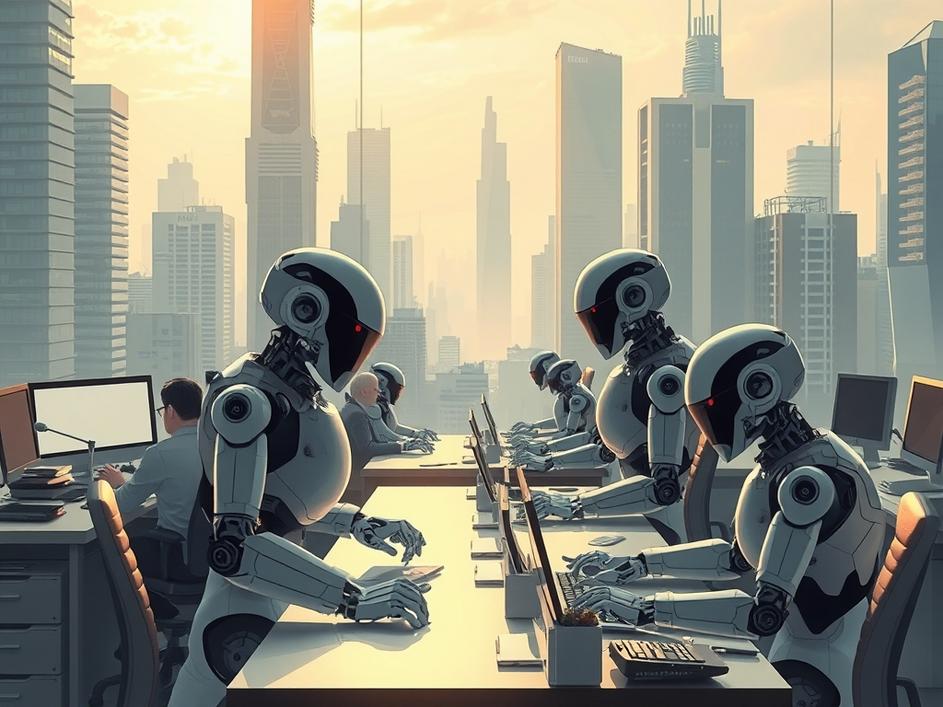
ToggleWe’ve all heard the buzz about AI, how it’s changing things, and how it might impact our lives. But what does that really mean for your day-to-day job? Boris Cheny, an engineer at Anthropic (the company behind the AI assistant Claude), thinks some major changes are coming, and they might arrive sooner than we expect. He is warning about a potentially “painful” reshaping of computer jobs. This isn’t some far-off prediction; Cheny believes shifts in job titles across the US could happen rapidly, even within this year.
Anthropic’s AI agent, Claude, has recently received an update, making it even more capable. This improvement isn’t just about making Claude faster or more accurate; it’s about its ability to handle more complex tasks and work more independently. As AI tools like Claude become more sophisticated, they can take on responsibilities previously handled by human employees. And that, according to Cheny, is where the potential for job market upheaval comes in.
So, which jobs are most likely to be affected? While Cheny doesn’t offer a specific list, it’s reasonable to assume that roles involving repetitive tasks, data analysis, and even some forms of content creation could be impacted. Think about jobs that involve sifting through large amounts of information, writing basic reports, or providing customer service. AI can already automate many of these tasks, freeing up human employees to focus on more complex or creative work. The question is, will there be enough of that “more complex or creative work” to go around?
Cheny uses the word “painful,” which is a strong one. It suggests that the changes won’t be easy. Why painful? Because adapting to this new reality will require significant retraining and adaptation. Employees whose jobs are automated will need to learn new skills to remain valuable in the workforce. This could involve acquiring expertise in areas like AI management, data science, or creative problem-solving. The challenge is that not everyone has the resources or the aptitude to make these transitions smoothly. Also, the current workforce may not be eager or capable to make such big leaps in their career path.
But it’s not all doom and gloom. The rise of AI also presents opportunities. Instead of viewing AI as a job replacement, we can see it as a tool that enhances human capabilities. Imagine a world where AI handles the mundane tasks, freeing up humans to focus on strategy, innovation, and building relationships. This requires a shift in mindset, from viewing AI as a threat to embracing it as a partner. We need to start thinking about how we can work *with* AI, rather than *against* it.
Cheny’s warning underscores the importance of lifelong learning. The skills that are valuable today might not be valuable tomorrow. To thrive in the age of AI, we need to be constantly learning, adapting, and upgrading our skills. This means investing in education, taking online courses, attending workshops, and staying curious about new technologies. It also means being willing to step outside of our comfort zones and embrace new challenges.
It’s not just individuals who need to adapt; companies and governments also have a role to play. Companies need to invest in training programs that help their employees acquire new skills. They also need to create a culture that embraces innovation and experimentation. Governments need to create policies that support workers who are displaced by automation. This could include providing unemployment benefits, funding retraining programs, and investing in education.
Boris Cheny’s warning should serve as a wake-up call. The AI revolution is not coming; it’s already here. And while it may bring challenges, it also presents opportunities. By embracing lifelong learning, fostering human-AI collaboration, and investing in education and training, we can navigate this period of change and create a future where AI benefits everyone.
The key takeaway here isn’t fear, but preparedness. Cheny’s perspective highlights the need for proactive adaptation. Waiting for the “painful” changes to arrive is a recipe for disaster. Instead, individuals and organizations should embrace continuous learning and skills development. By proactively addressing the challenges posed by AI, we can mitigate the potential negative impacts and unlock a future of increased productivity and innovation. The future of work is not about humans versus machines, but humans *with* machines. And those who recognize and embrace that reality will be best positioned to thrive in the years to come.



Comments are closed