

We are a digital agency helping businesses develop immersive, engaging, and user-focused web, app, and software solutions.
2310 Mira Vista Ave
Montrose, CA 91020

2500+ reviews based on client feedback
What's Included?
ToggleAmazon, the giant of e-commerce, never ceases to amaze with its speed of innovation. But sometimes, even the best-laid plans go awry. Recent reports indicate that Amazon has abandoned its Blue Jay warehouse robot project after less than six months. That’s a blink of an eye in the world of robotics development, raising questions about what went wrong and what it means for the future of automation within the company.
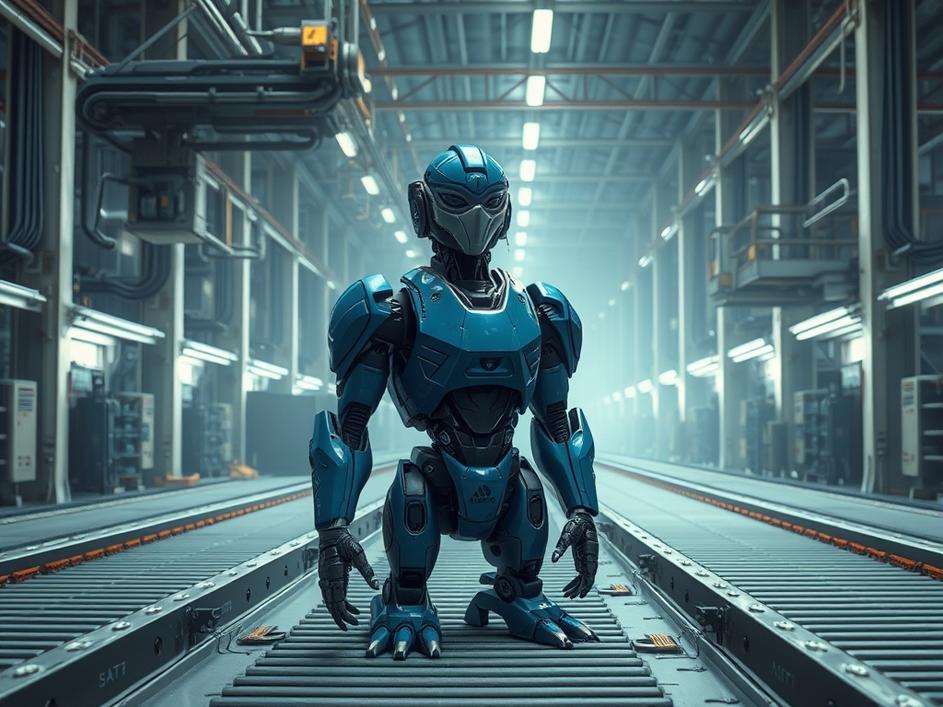
The Blue Jay robot was envisioned as a mobile manipulator, adept at navigating the complex environment of a warehouse while also picking and placing items. This kind of robot is supposed to combine the mobility of an automated ground vehicle (AGV) with the dexterity of a robotic arm. The goal, presumably, was to speed up order fulfillment, reduce errors, and ultimately lower costs. These are common aims for any company investing in warehouse automation, but the path to achieving them is rarely smooth.
Details on the specific reasons for Blue Jay’s quick demise are scarce. However, one can speculate on a few potential causes. Technical challenges are a common hurdle in robotics. Integrating complex systems such as navigation, object recognition, and grasping can be difficult. Imagine teaching a robot to not only see and identify different products, but also to delicately pick them up without damage, all while moving through a crowded warehouse. The software, sensors, and mechanical design all need to work in perfect harmony, and even slight imperfections can lead to system failure. Another possibility is that the robot simply wasn’t cost-effective. Even if the technology worked as intended, the cost of building, deploying, and maintaining the Blue Jay robots may have been higher than the anticipated savings in labor costs.
It’s important to note that abandoning Blue Jay doesn’t mean Amazon is giving up on warehouse automation. On the contrary, the report suggests that Amazon is pivoting to new technologies. This could involve exploring different robotic designs, investing in more advanced AI-powered systems, or focusing on simpler, more specialized automation solutions. Amazon has a long history of experimenting with different approaches to automation, and not every project is going to be a success. The key is to learn from failures and adapt quickly.
Amazon’s experience with Blue Jay highlights the challenges and opportunities in the rapidly evolving field of warehouse automation. While fully automated warehouses are still a distant prospect, robots are increasingly being used to assist human workers with repetitive and physically demanding tasks. The goal isn’t necessarily to replace humans entirely, but rather to create a more efficient and safer work environment. Expect to see continued investment and innovation in this area, as companies like Amazon strive to meet the ever-growing demands of e-commerce. This also means we are likely to see more of these failures as companies innovate and push boundaries.
For investors, the failure of Blue Jay is unlikely to have a significant impact on Amazon’s stock price. Amazon is a massive company with diverse revenue streams, and warehouse automation is just one piece of the puzzle. However, the company’s continued investment in this area is a positive sign, as it demonstrates a commitment to innovation and efficiency. Investors should pay attention to Amazon’s overall strategy for warehouse automation, as this could have a long-term impact on its profitability and competitiveness.
And while robotics make strides, let’s not forget the human element in warehouses. These are jobs performed by real people, with real families, and real needs. Automation must happen responsibly, with consideration for the workforce. Retraining, upskilling, and creating new opportunities for those displaced by robots are crucial. The future of warehouse work should be one where humans and robots work together, each complementing the other’s strengths.
Ultimately, the story of Blue Jay is a reminder that innovation is a process of trial and error. Not every idea will work, and not every technology will live up to its promise. But by embracing failure and learning from its mistakes, Amazon can continue to push the boundaries of what’s possible in warehouse automation and beyond. The insights gleaned from the Blue Jay experiment will undoubtedly inform future robotics projects, leading to more effective and efficient solutions. The journey toward fully automated warehouses is a marathon, not a sprint, and setbacks are simply part of the race.



Comments are closed