

We are a digital agency helping businesses develop immersive, engaging, and user-focused web, app, and software solutions.
2310 Mira Vista Ave
Montrose, CA 91020

2500+ reviews based on client feedback
What's Included?
ToggleThe market is a fickle beast. One minute everyone’s piling into a particular sector, convinced it’s the next big thing, and the next minute they’re running for the exits, proclaiming its demise. It’s in these moments of widespread panic or exuberant optimism that opportunities often present themselves. Ajay Tyagi, Head of Equities at UTI AMC, seems to be playing this contrarian game, particularly when it comes to Indian IT and private sector banks. While many are fretting about the impact of AI on IT services and the dominance of public sector banks, Tyagi is sticking with his overweight positions, and it might be a smart move.
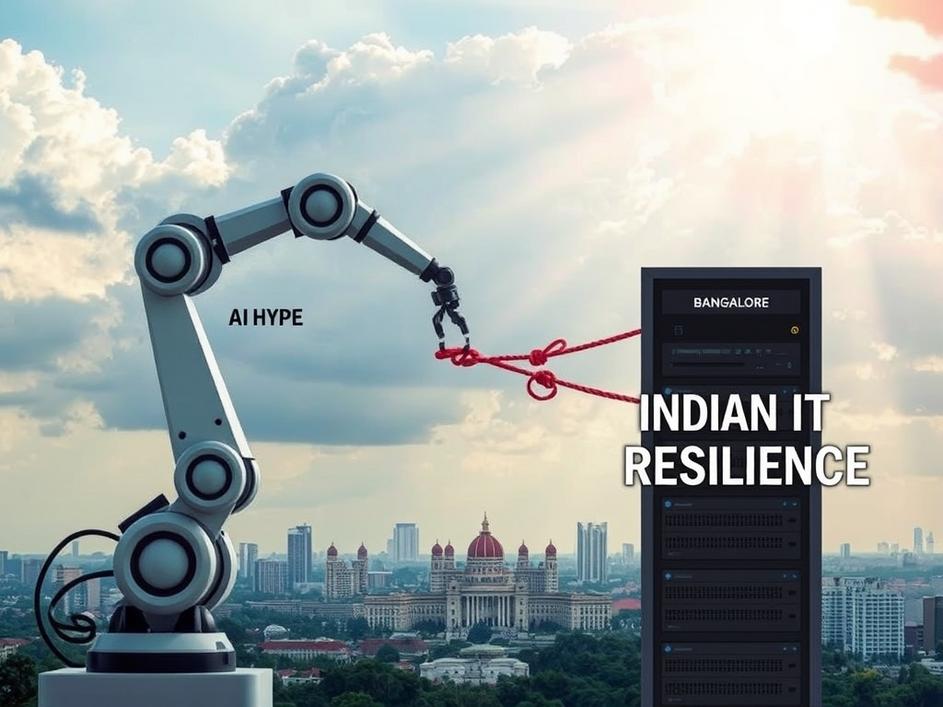
The narrative surrounding Indian IT has become increasingly negative. The rise of AI, particularly generative AI, has led to fears of automation and job losses within the sector. Many believe that traditional IT services, focused on coding and maintenance, will become obsolete as AI tools take over these tasks. And, sure, there’s disruption happening. It’s undeniable. But to suggest that Indian IT is on its deathbed is a gross oversimplification. Indian IT companies are adapting. They’re investing in AI, upskilling their workforce, and shifting their focus to higher-value services like cloud computing, cybersecurity, and data analytics. These are areas where demand is growing, and Indian IT firms have the potential to be major players. The key is adaptation, and many of them are already showing signs of successful transition.
Let’s not forget the hype cycle. Every major technological advancement goes through it. First, there’s the initial excitement and inflated expectations, followed by a period of disillusionment as reality sets in. Then, as the technology matures and its applications become clearer, we see a more realistic and sustainable period of growth. AI is likely to follow a similar path. The initial hype is already starting to fade, and companies are beginning to realize that implementing AI effectively requires significant investment, expertise, and data. Indian IT companies, with their existing infrastructure and skilled workforce, are well-positioned to help businesses navigate this complex landscape. So, while AI will undoubtedly disrupt the IT industry, it’s also creating new opportunities for those who are willing to adapt and innovate.
The Indian banking sector has long been dominated by public sector banks (PSUs). However, in recent years, private sector banks have been steadily gaining market share. They tend to be more efficient, more technologically advanced, and more customer-focused than their public sector counterparts. This translates into better profitability and stronger growth prospects. While PSUs still play a crucial role in serving certain segments of the population and supporting government initiatives, private banks are better positioned to capitalize on the growing demand for financial services in India. They’re more nimble, more innovative, and more responsive to changing market conditions. And as the Indian economy continues to grow, private banks are likely to be the primary beneficiaries.
Tyagi’s contrarian stance highlights the importance of taking a long-term view when investing. It’s easy to get caught up in short-term market fluctuations and panic selling when things look bleak. But successful investing requires discipline, patience, and the ability to see beyond the immediate noise. By staying overweight on Indian IT and private banks, Tyagi is betting that these sectors will continue to deliver strong returns over the long term. This doesn’t mean there won’t be challenges along the way. There will be periods of volatility and uncertainty. But for investors who are willing to ride out the storms, the rewards can be significant.
In a world of instant information and herd mentality, independent thinking is more valuable than ever. It’s important to do your own research, form your own opinions, and not simply follow the crowd. Tyagi’s contrarian playbook is a reminder that sometimes the best investment opportunities are found in areas that are currently out of favor. By going against the grain and challenging conventional wisdom, investors can potentially uncover hidden gems and generate superior returns. So, the next time you hear everyone singing the same tune, take a step back and ask yourself if there might be a different perspective worth considering.
The Indian economy is at a pivotal moment. It’s one of the fastest-growing major economies in the world, with a large and young population, a thriving entrepreneurial ecosystem, and a rapidly expanding middle class. This creates a wealth of opportunities for businesses and investors. However, there are also challenges to be addressed, including income inequality, infrastructure bottlenecks, and environmental concerns. But overall, the long-term outlook for India remains positive. And for investors who are willing to be patient and selective, there are plenty of opportunities to generate attractive returns. Whether Tyagi’s contrarian bet pays off remains to be seen. But his approach serves as a valuable reminder of the importance of independent thinking and a long-term perspective in the world of investing.
Ultimately, the market rewards those who can think for themselves. While the anxieties around AI’s disruption of IT and the perceived safety of public sector banks are widespread, a closer look reveals potential for savvy investors. Indian IT is evolving, not dying, and private banks are showcasing impressive efficiency. Sometimes, the best moves are made when you dare to zig when everyone else zags.



Comments are closed