

We are a digital agency helping businesses develop immersive, engaging, and user-focused web, app, and software solutions.
2310 Mira Vista Ave
Montrose, CA 91020

2500+ reviews based on client feedback
What's Included?
ToggleImagine trying to build a super complicated puzzle with millions of pieces, but you can’t see the picture on the box. That’s kind of what integrating and testing new technologies in modern mobile networks (RAN) feels like. It’s complex, time-consuming, and prone to errors. Vodafone, a massive telecom company, is teaming up with Cirrus360, a tech innovator, to change that. They’re using something called an “AI Reasoning driven Declarative Digital Twin platform.” Sounds complicated, right? Let’s break it down.
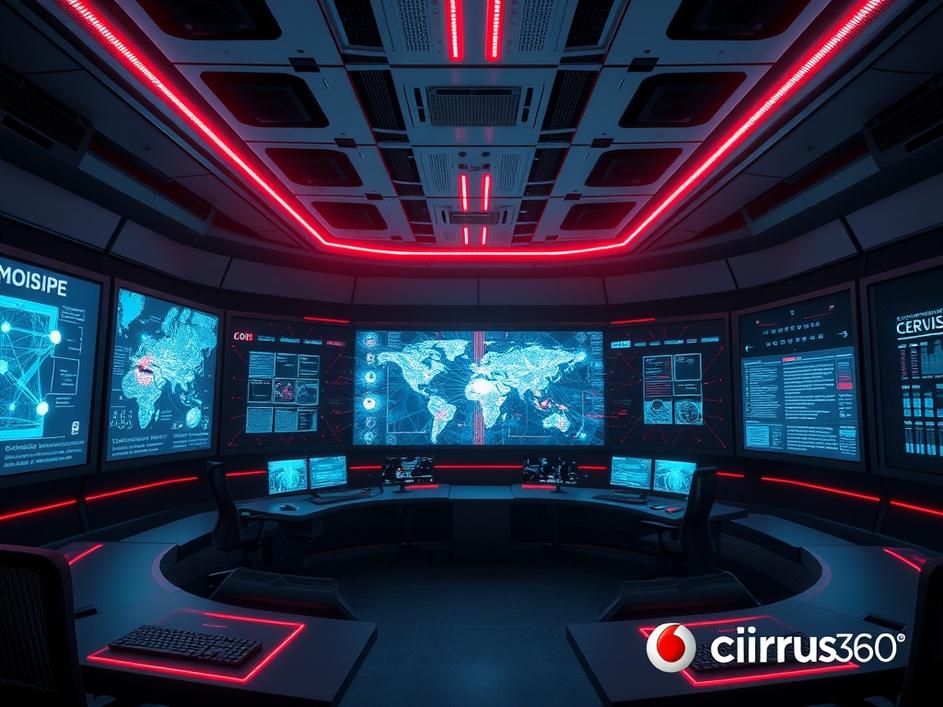
Think of a digital twin as a virtual copy of the real thing. In this case, it’s a copy of Vodafone’s Radio Access Network (RAN). This virtual copy allows engineers to run simulations, test new features, and troubleshoot problems without actually affecting the live network. This is a huge advantage because messing around with a live network can cause outages and frustrated customers. Now, throw in AI. The “AI Reasoning” part means the system can learn from the simulations, predict potential issues, and even suggest solutions. It’s like having a super-smart assistant who understands the network inside and out.
The “Declarative” aspect is also key. In traditional programming, you have to tell the computer *how* to do something, step by step. A declarative approach is different. You simply describe *what* you want the system to achieve, and the system figures out the best way to do it. In this context, engineers can define the desired state of the network (e.g., optimal performance under heavy load), and the AI-powered digital twin will automatically find the configuration that achieves that state. This reduces the need for manual configuration and scripting, saving time and reducing the risk of errors.
For Vodafone, this technology promises faster integration of new features, quicker troubleshooting of network problems, and ultimately, a better experience for their customers. They can test upgrades and changes in a safe, virtual environment, ensuring everything works smoothly before it goes live. This also allows them to optimize their network performance continuously, adapting to changing traffic patterns and user demands. Furthermore, it could lead to significant cost savings by automating tasks that were previously done manually. And because the AI learns over time, the system becomes more efficient and effective.
This collaboration between Vodafone and Cirrus360 is significant because it points to the future of network management. As networks become more complex and dynamic, traditional methods of testing and integration simply won’t cut it. AI-powered digital twins offer a powerful solution by providing a virtual environment for experimentation, optimization, and automation. This approach isn’t just for large telecom companies like Vodafone. Any organization that relies on complex networks, from hospitals to factories, could benefit from this technology. As AI and digital twin technologies continue to evolve, we can expect to see even more innovative applications in the years to come. This demo showcases just one step towards a more automated, efficient, and reliable network infrastructure.
While the promise of AI-driven digital twins is exciting, there are potential challenges to consider. One is the accuracy of the digital twin. The more closely the virtual copy reflects the real-world network, the more reliable the simulations and predictions will be. This requires continuous monitoring and updating of the digital twin to ensure it stays in sync with the physical network. Another challenge is the complexity of the AI algorithms. These algorithms need to be carefully designed and tested to ensure they are providing accurate and reliable recommendations. Finally, there’s the issue of data security and privacy. Digital twins often rely on sensitive network data, so it’s crucial to protect this data from unauthorized access and use.
Looking ahead, the potential applications of this technology extend far beyond testing and integration. Imagine a network that can proactively identify and address potential problems before they impact users. The AI-powered digital twin could continuously monitor the network, predict potential failures, and automatically reconfigure the network to avoid disruptions. This would lead to a more resilient and reliable network, with fewer outages and a better overall user experience. Furthermore, the digital twin could be used to optimize network resource allocation, ensuring that resources are allocated to the areas where they are most needed. This could lead to significant improvements in network efficiency and performance.
The collaboration between Vodafone and Cirrus360 offers a compelling glimpse into the future of network management. By combining the power of AI with digital twin technology, they are paving the way for more automated, efficient, and reliable networks. While there are challenges to overcome, the potential benefits are too significant to ignore. As these technologies continue to mature, we can expect to see them adopted by a wide range of organizations, transforming the way networks are managed and operated. The move toward declarative systems shows promise and makes it easier to evolve to support additional capabilities. The network of the future will be smarter, more adaptable, and more resilient, thanks to innovations like this AI-driven digital twin platform.



Comments are closed