

We are a digital agency helping businesses develop immersive, engaging, and user-focused web, app, and software solutions.
2310 Mira Vista Ave
Montrose, CA 91020

2500+ reviews based on client feedback
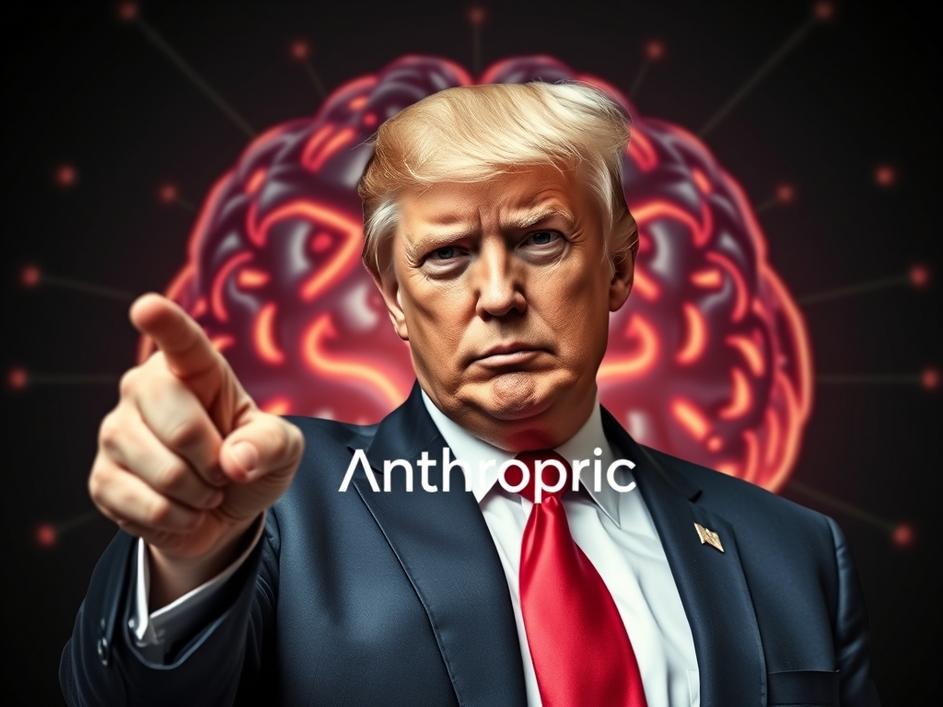
Former President Donald Trump has reportedly issued an order demanding the U.S. government immediately cease all use of technology developed by Anthropic, an artificial intelligence company. The directive, apparently given during his time in office, has only recently come to light, prompting a flurry of questions about the reasoning behind such a drastic measure and what it signifies for the future of AI development and government partnerships.
Anthropic is an AI safety and research company. Founded by former members of OpenAI, Anthropic is focused on building reliable, interpretable, and steerable AI systems. Their main product is Claude, a conversational AI assistant similar to ChatGPT or Google’s Gemini. It’s designed to be helpful, harmless, and honest. They prioritize AI safety, trying to ensure that AI systems align with human values. The company has attracted significant investment and attention in the tech world due to its focus on responsible AI development.
The specifics behind Trump’s order remain shrouded in mystery. Officially, no detailed explanation has been publicly released. This lack of transparency has fueled speculation. Some believe that the decision stemmed from concerns about national security, with potential worries about the data Anthropic’s AI models were trained on or the possibility of foreign influence. Others suggest that the ban may have been motivated by political considerations, perhaps due to perceived biases within the AI algorithms or disagreements with the company’s leadership.
Another theory involves the general apprehension surrounding rapidly evolving AI technology. Perhaps the administration felt that Anthropic’s technology wasn’t ready for government applications or that its use posed unforeseen risks. Without official clarification, pinpointing the exact cause remains difficult, leaving room for numerous interpretations.
The immediate impact of the ban likely forced government agencies to scramble to find alternative solutions for any tasks that relied on Anthropic’s technology. This could have resulted in delays, increased costs, or the adoption of less effective tools. More broadly, the order may have created a chilling effect on collaboration between the government and AI companies. Startups and established players might be hesitant to work with the government if there’s a risk of sudden, unexplained bans on their products. It raises the stakes, and makes the business relationship more precarious.
This situation underscores the complex relationship between government, technology, and national security. The ban sets a precedent for future administrations to potentially restrict or outright prohibit the use of specific AI technologies within the government. This could lead to a fragmented landscape where different administrations favor different AI vendors based on political or ideological considerations. It highlights the need for clear guidelines and transparent decision-making processes when it comes to adopting and regulating AI technologies.
The situation with Anthropic and the Trump administration highlights the increasing entanglement of AI with politics and power. As AI becomes more pervasive, governments around the world are grappling with how to regulate it, how to use it effectively, and how to protect themselves from its potential risks. This incident serves as a reminder that AI is not simply a neutral technology, but one that can be shaped by political forces and used to advance particular agendas. The question isn’t just about the capabilities of the AI, but also about who controls it and how it’s deployed.
Ultimately, the lack of transparency surrounding this ban is concerning. Whether the decision was justified or not, the public deserves to know the reasoning behind it. Openness and accountability are essential for fostering trust in government decision-making, especially when it comes to technologies that have the potential to profoundly impact society. Without transparency, suspicions and conspiracy theories will continue to flourish, further eroding public trust in both government and AI.
Regardless of one’s political leanings, the situation with Anthropic should serve as a wake-up call. It’s crucial for governments to develop clear, consistent, and transparent policies regarding the use of AI. This includes establishing guidelines for data privacy, algorithmic bias, and national security. It also requires fostering open dialogue between policymakers, AI developers, and the public to ensure that AI is used responsibly and ethically. Only through transparency and collaboration can we harness the full potential of AI while mitigating its risks.



Comments are closed