

We are a digital agency helping businesses develop immersive, engaging, and user-focused web, app, and software solutions.
2310 Mira Vista Ave
Montrose, CA 91020

2500+ reviews based on client feedback
What's Included?
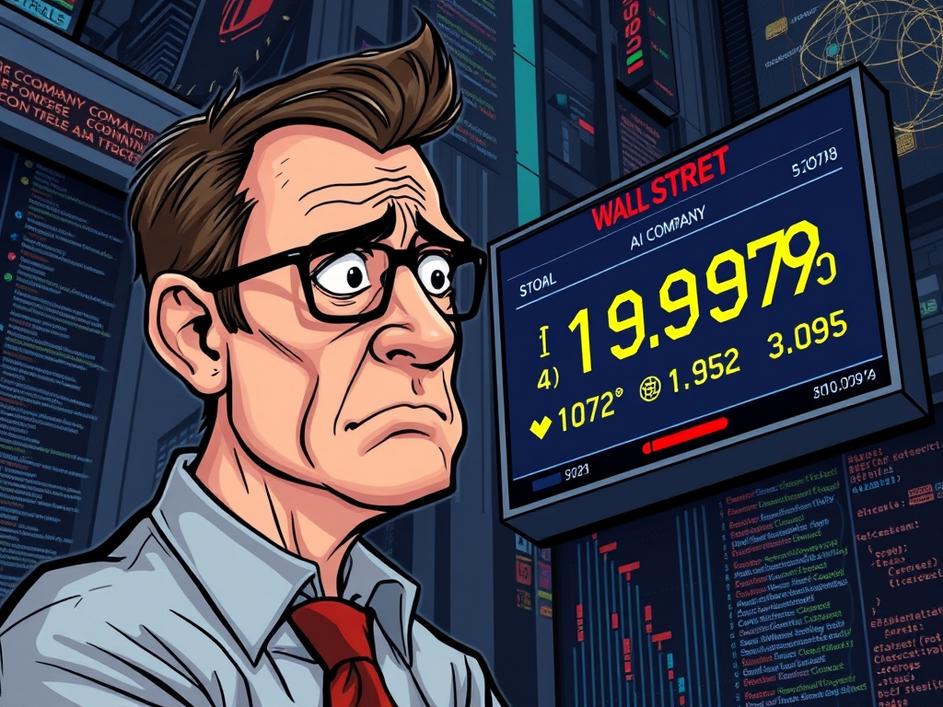
ToggleRecently, the stock market has been giving some major tech companies a bit of a scare, and it’s all got to do with artificial intelligence. We’re seeing giants like IBM, Salesforce, and Crowdstrike, once considered untouchable, suddenly facing investor skepticism. What’s causing this unease? It boils down to fears about how AI advancements might disrupt their existing business models. It seems investors are wondering if these companies are truly ready for a world increasingly dominated by intelligent machines. It’s not that these companies are failing, but rather that the future is uncertain, and uncertainty makes investors nervous. Many see the potential for new, smaller, more nimble AI-focused startups to steal market share from the established players.
The core issue is the potential for AI to completely change the game. These big tech firms have built their empires on specific services and products. Now, AI threatens to automate many of those services, or even make them obsolete. For example, companies that specialize in data analysis might find themselves competing with AI-powered tools that can do the same job faster and cheaper. Or a CRM, customer relationship management, software platform, could see its core functions replicated by AI assistants. The question is, can these companies adapt quickly enough? Can they integrate AI into their offerings in a meaningful way that keeps them ahead of the curve? The market clearly has doubts.
Of course, there’s always a certain amount of hype surrounding new technologies, and AI is no exception. The initial excitement often leads to inflated valuations, which inevitably correct themselves. We might be seeing some of that happening now. Investors who were overly optimistic about the immediate impact of AI are now taking a more cautious approach. But beyond the hype, there are real concerns about the long-term implications of AI for these companies. It’s not just about integrating a few AI features; it’s about fundamentally rethinking how they operate and deliver value to their customers. This requires a significant shift in mindset and investment, and not all companies are equally equipped to handle it.
So, who’s likely to come out on top in this AI revolution? It’s probably going to be a mix of companies. Some of the established tech giants will successfully adapt and integrate AI into their core businesses, while others will struggle and lose ground. We’ll also see new players emerge, companies that are built from the ground up with AI at their core. These AI-first companies may have a significant advantage because they don’t have to deal with the legacy systems and organizational structures that can hinder the larger, more established firms. Investors are actively searching for these potential winners, which explains why some of the traditional tech darlings are facing increased scrutiny.
This period of market jitters should serve as a wake-up call for the tech industry. It’s not enough to simply add a few AI features to existing products. Companies need to embrace AI as a fundamental part of their strategy and invest in the talent and infrastructure necessary to stay ahead of the curve. They need to demonstrate to investors that they have a clear vision for how AI will transform their business and create long-term value. Those that fail to adapt risk being left behind in the AI revolution. The message from Wall Street is clear: adapt or risk irrelevance. And while established companies scramble to adapt, the door is wide open for startups with AI innovation.
Ultimately, the stock market’s reaction to AI isn’t just about profits and losses. It reflects a broader societal shift. AI is poised to transform everything from healthcare and education to transportation and manufacturing. The companies that successfully navigate this transformation will not only generate financial returns but also shape the future of our world. This makes the current market jitters all the more significant. They highlight the immense potential of AI, but also the challenges and uncertainties that lie ahead. It is a period of great change. It’s about betting on companies that will not just survive, but thrive in an AI-driven world.
The recent AI market jitters are a sign of the times. They reflect the growing realization that AI is not just a passing fad but a fundamental force that will reshape the economy and society. While some companies may struggle to adapt, others will seize the opportunity and emerge as leaders in the AI era. The key is to have a clear vision, a willingness to experiment, and a commitment to investing in the future. The next few years will be crucial as companies jockey for position in the AI landscape. And while uncertainty might cause investors angst, where there is uncertainty, there is also the potential for significant growth and reward.



Comments are closed