

We are a digital agency helping businesses develop immersive, engaging, and user-focused web, app, and software solutions.
2310 Mira Vista Ave
Montrose, CA 91020

2500+ reviews based on client feedback
What's Included?
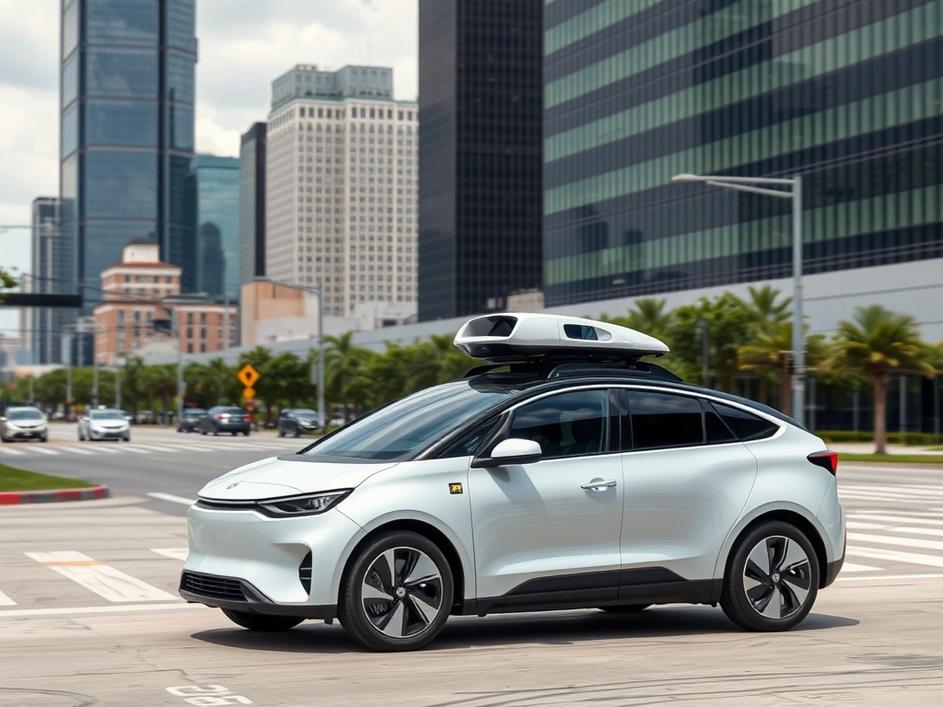
ToggleSelf-driving cars are no longer the stuff of science fiction. Waymo, a leading company in autonomous vehicle technology, is bringing its self-driving car service to Houston, Texas. This means that residents can now hail a ride in a vehicle that drives itself. It’s a big step for the company and a potentially transformative moment for transportation in the city.
Imagine opening an app on your phone, requesting a car, and then having that car arrive without a driver. That’s essentially how Waymo’s service operates. The vehicles are equipped with a suite of sensors, cameras, and sophisticated software that allows them to navigate roads, avoid obstacles, and obey traffic laws. Passengers simply enter their destination, sit back, and let the car do the driving. Of course, there are still safety protocols in place, including monitoring and support systems should anything unexpected occur.
Why did Waymo choose Houston as its next location? Several factors likely played a role. Houston is a large and sprawling city with significant transportation challenges. It also has a relatively tech-savvy population that might be more open to adopting new technologies. And, importantly, Texas has generally favorable regulations for autonomous vehicle testing and deployment. Houston also offers diverse driving conditions, from congested urban areas to open highways, allowing Waymo to further refine its technology.
Self-driving cars hold the promise of numerous benefits. They could potentially reduce traffic accidents, which are often caused by human error. Autonomous vehicles could also improve traffic flow, reduce congestion, and make transportation more accessible to people who are unable to drive themselves, such as the elderly or those with disabilities. Furthermore, self-driving cars could free up commuters’ time, allowing them to work, relax, or engage in other activities during their commute.
Despite the potential advantages, the widespread adoption of self-driving cars also raises several concerns. Job displacement is a major worry, as professional drivers could be out of work. There are also questions about safety and liability in the event of an accident. Who is responsible if a self-driving car causes a crash? How will these vehicles handle unexpected situations, such as sudden weather changes or road closures? The public needs clear answers to these questions before fully trusting autonomous vehicles.
Waymo’s expansion into Houston is a sign that self-driving technology is moving closer to becoming a mainstream reality. While there are still challenges to overcome, the potential benefits of autonomous vehicles are too significant to ignore. As the technology continues to improve and regulations become clearer, we can expect to see more self-driving cars on our roads. This could eventually lead to a radical transformation of our transportation system, making it safer, more efficient, and more accessible for everyone.
The introduction of self-driving cars extends beyond just commuting. Consider the impact on logistics and delivery services. Autonomous trucks could revolutionize the shipping industry, enabling faster and more efficient transportation of goods across the country. Local deliveries could also become more streamlined, with self-driving vans delivering packages directly to your doorstep. This could lead to lower prices for consumers and increased efficiency for businesses.
One of the most challenging aspects of self-driving technology is addressing the ethical dilemmas that may arise. For example, in an unavoidable accident scenario, should the car be programmed to prioritize the safety of its passengers or the safety of pedestrians? These are complex questions that require careful consideration and public discussion. It’s essential that we develop ethical frameworks that guide the development and deployment of self-driving cars to ensure that they are used in a responsible and socially beneficial way.
While Waymo’s launch in Houston is a significant milestone, it’s important to remember that self-driving technology is still in its early stages of development. Continuous testing, refinement, and data collection are crucial for improving the safety and reliability of these systems. We can expect to see further advancements in sensor technology, artificial intelligence, and software algorithms in the years to come. As the technology matures, self-driving cars will become even more capable and adaptable to a wider range of driving conditions.
Waymo’s expansion into Houston marks the beginning of a new era of mobility. Self-driving cars have the potential to reshape our cities, transform our transportation systems, and improve our lives in countless ways. While there are challenges and concerns that need to be addressed, the potential benefits are too great to ignore. As we move forward, it’s essential that we embrace innovation while also prioritizing safety, ethics, and social responsibility. The future of transportation is here, and it’s driven by technology.



Comments are closed