

We are a digital agency helping businesses develop immersive, engaging, and user-focused web, app, and software solutions.
2310 Mira Vista Ave
Montrose, CA 91020

2500+ reviews based on client feedback
What's Included?
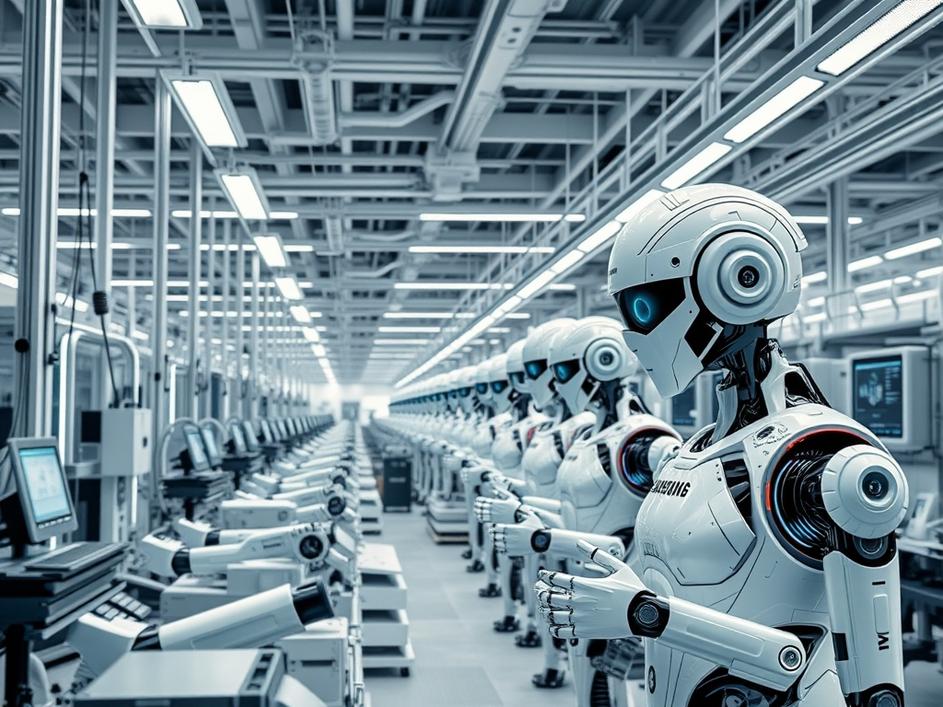
ToggleSamsung Electronics is making a big move. They want to turn all their factories, both in South Korea and around the world, into AI-powered, self-running operations by 2030. That’s the plan, anyway. It’s a huge investment in the future of manufacturing, and it signals a belief that artificial intelligence is ready to take on a much bigger role in how things are made. This isn’t just about replacing a few workers with robots; it’s about completely rethinking the entire production process.
So, why is Samsung doing this? Well, there are a few good reasons. First, there’s the never-ending quest for greater efficiency. AI can analyze data and make decisions much faster than humans. This can lead to fewer errors, less wasted materials, and ultimately, lower costs. In a world where competition is fierce, any edge you can get is crucial. Plus, AI systems can work 24/7 without getting tired or needing breaks. That’s a big advantage in terms of productivity. And, honestly, the tech has matured a lot lately. It’s getting to the point where the return on investment starts to make real sense. It’s no longer some pie-in-the-sky dream. It’s becoming a practical reality.
Of course, any time you talk about automation, the question of jobs comes up. Will robots take over everything and leave humans unemployed? Samsung insists that’s not the goal. They say the idea is to shift human workers into more skilled roles that require creativity and problem-solving. Instead of doing repetitive tasks on an assembly line, people might be working on designing and maintaining the AI systems themselves. That requires a different skillset, of course, and there will need to be investment in training and education. But it’s a more optimistic vision than simply replacing everyone with machines. Still, there will be disruption, and managing that disruption will be key to the success of this transition. It’s not just about the technology; it’s about the people.
This transition won’t be easy, though. There are plenty of challenges to overcome. First, there’s the technical hurdle of actually creating AI systems that can run a factory reliably. That requires huge amounts of data, sophisticated algorithms, and a lot of computing power. And you need to factor in system failures. These systems need to be incredibly robust and resilient. And you need to ensure that AI solutions from different vendors can ‘talk’ to each other and avoid creating technology silos within a factory. Then, there’s the security aspect. AI-powered factories are vulnerable to cyberattacks, and protecting them will be crucial. It’s not just about preventing theft of intellectual property; it’s about ensuring that the entire production process doesn’t get hijacked. And, of course, there’s the ethical dimension. How do you ensure that AI systems are fair and unbiased? How do you prevent them from making decisions that could harm workers or the environment? These are questions that need to be addressed proactively.
Samsung’s move is part of a broader trend toward automation and digitalization in manufacturing. Companies around the world are exploring how AI, robotics, and other technologies can improve their operations. And, really, this kind of thinking is vital for a company like Samsung. They operate in an incredibly competitive global market. They have to constantly innovate to stay ahead. This isn’t just about cutting costs; it’s about creating new products and services that wouldn’t be possible without AI. It’s about building a more resilient and adaptable supply chain. And it’s about positioning themselves as a leader in the fourth industrial revolution. Furthermore, it’s about customising the whole manufacturing process so individual customers can get the product they want, rather than having to settle for something “off the rack.”
The impact of Samsung’s AI factories will extend beyond the factory floor. It could lead to new business models, new types of jobs, and new ways of interacting with customers. Imagine, for example, a world where you can design your own custom phone or appliance and have it manufactured on demand. That’s the kind of future that AI-powered manufacturing could make possible. And it could also lead to a more sustainable manufacturing sector. AI can help companies reduce waste, conserve energy, and minimize their environmental impact. It’s a win-win situation for both business and the planet. However, there are other elements to consider. Will this lead to greater disparity between those countries which can afford advanced AI and robotics versus those which cannot? Will it lead to over-reliance on technology, and a lack of resilience in the event of system failures?
Samsung’s plan is ambitious, and it’s not without its risks. But it’s also a sign of things to come. As AI continues to develop, we’re likely to see more and more companies adopting this technology. The future of manufacturing is automated, intelligent, and connected. And Samsung is betting that they can be at the forefront of that future. The goal is no longer just making products; it’s about creating intelligent systems that can learn, adapt, and improve over time. That’s a fundamental shift in how we think about manufacturing, and it has the potential to transform the world economy.
In conclusion, Samsung’s move toward AI-driven autonomous factories represents a bold step into the future. While challenges and potential disruptions lie ahead, the potential benefits in terms of efficiency, innovation, and sustainability are significant. The successful integration of AI into manufacturing will require careful planning, investment in workforce training, and a commitment to ethical considerations. Ultimately, Samsung’s journey will provide valuable lessons for other companies and industries as they navigate the AI revolution.



Comments are closed