

We are a digital agency helping businesses develop immersive, engaging, and user-focused web, app, and software solutions.
2310 Mira Vista Ave
Montrose, CA 91020

2500+ reviews based on client feedback
What's Included?
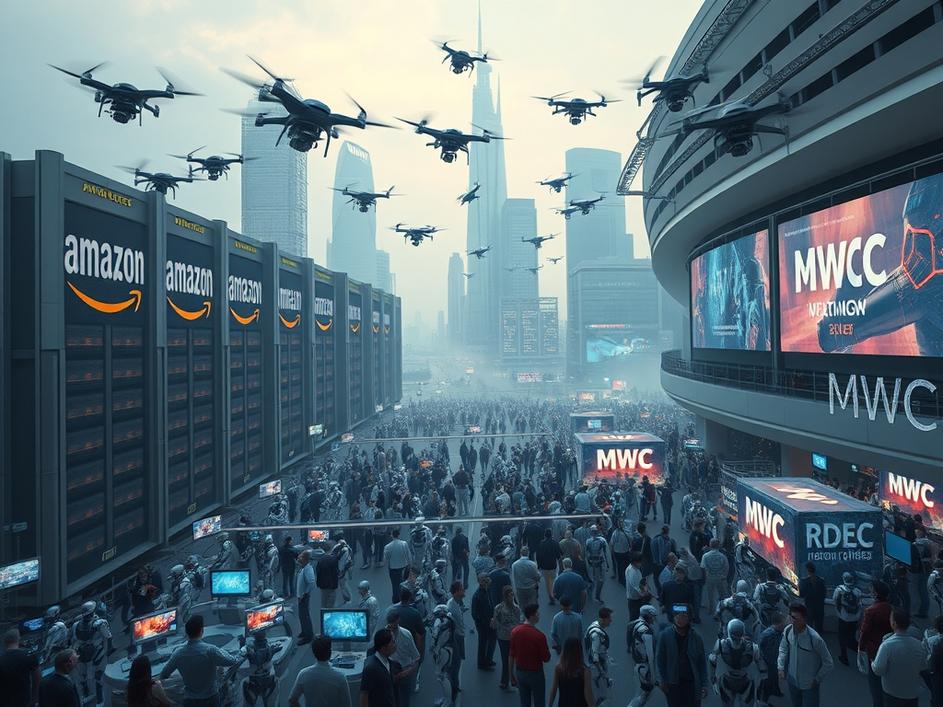
ToggleThe news cycle rarely sleeps, and this week’s tech headlines are particularly jarring. Reports of drones striking Amazon data centers are raising serious questions about infrastructure security. While details remain sketchy, the implications are enormous. These data centers are the backbone of the digital world, and a successful attack could disrupt services for millions, if not billions, of people. It makes you wonder, are we truly prepared for this kind of threat? It’s not just about sophisticated hacking anymore; physical security is back in the spotlight, and potentially more vulnerable than ever.
So, what exactly happened? Initial reports suggest multiple drone incidents affecting different Amazon data centers. Were these targeted attacks? Or accidental collisions? The answers are crucial. If it was deliberate, who’s behind it and what were their motives? Competitors trying to gain an edge? Activists making a statement? Or something even more sinister? And if it was accidental, it exposes a significant vulnerability in airspace management and drone technology. Either way, Amazon and other tech giants need to rethink their security protocols. Investing in counter-drone technology, enhancing physical barriers, and working with regulatory bodies to establish stricter airspace rules are all essential steps.
Meanwhile, across the globe at Mobile World Congress (MWC), Artificial Intelligence (AI) is dominating the conversation. That’s not exactly unexpected. But the extent of AI’s integration into every aspect of the conference is noteworthy. From AI-powered smartphones to AI-driven network optimization, it seems like every company is showcasing its AI capabilities. While the potential benefits of AI are undeniable – improved efficiency, personalized experiences, and new technological breakthroughs – there’s also a growing concern about the human element being overshadowed. Are we becoming too reliant on AI? And what are the long-term consequences of ceding control to intelligent machines?
The rapid advancement of AI brings ethical considerations to the forefront. Issues such as bias in algorithms, data privacy, and job displacement need careful consideration. It’s not enough to simply develop AI for the sake of innovation. We need to ensure that it aligns with human values and promotes a fair and equitable society. Open discussions about AI ethics, collaboration between researchers and policymakers, and the establishment of clear regulatory frameworks are crucial to navigating this complex landscape. Otherwise, we risk creating a future where AI exacerbates existing inequalities and undermines human autonomy. The focus needs to shift from simply “can we build it?” to “should we build it, and how can we build it responsibly?”
These two seemingly disparate events – drone strikes on data centers and AI’s dominance at MWC – highlight the precarious position of the tech industry today. On the one hand, we’re pushing the boundaries of technological innovation with AI, unlocking possibilities that were once confined to science fiction. On the other hand, we’re facing new and evolving threats to our critical infrastructure. The challenge lies in balancing progress with security, innovation with ethics, and efficiency with human well-being. This requires a multi-faceted approach involving technological advancements, regulatory oversight, and a fundamental shift in mindset. We need to move beyond a purely profit-driven model and prioritize the long-term interests of society.
Ultimately, the future of technology depends on our ability to navigate these challenges responsibly. We must invest in robust security measures to protect our critical infrastructure from physical and cyber threats. And we must ensure that AI is developed and deployed in a way that benefits all of humanity, not just a select few. The tech industry has a responsibility to lead the way, but governments, researchers, and the public all have a role to play. By working together, we can create a future where technology empowers us to solve the world’s most pressing problems, rather than creating new ones. The conversation about responsible innovation needs to start now, before it’s too late. The stakes are simply too high to ignore.



Comments are closed