

We are a digital agency helping businesses develop immersive, engaging, and user-focused web, app, and software solutions.
2310 Mira Vista Ave
Montrose, CA 91020

2500+ reviews based on client feedback
What's Included?
ToggleArtificial intelligence is rapidly changing the world, but this technological revolution comes with a huge demand for energy. AI data centers, the powerhouses behind these advancements, consume massive amounts of electricity. Recently, former President Trump hosted a roundtable discussion focusing specifically on the energy usage of these centers, bringing the issue into the political spotlight. This isn’t just about keeping the lights on; it’s about the future of sustainable AI and the potential strain on our existing power grids.
Data centers are the unsung heroes (and villains) of the digital age. They are physical facilities housing the servers, networking equipment, and storage systems that keep the internet humming. Think of them as gigantic warehouses filled with computers, all working tirelessly. The sheer number of servers, coupled with the need for constant cooling to prevent overheating, results in massive energy consumption. AI applications, with their intensive computational needs, amplify this problem significantly. Training complex AI models, like large language models, requires far more energy than your average website or online game.
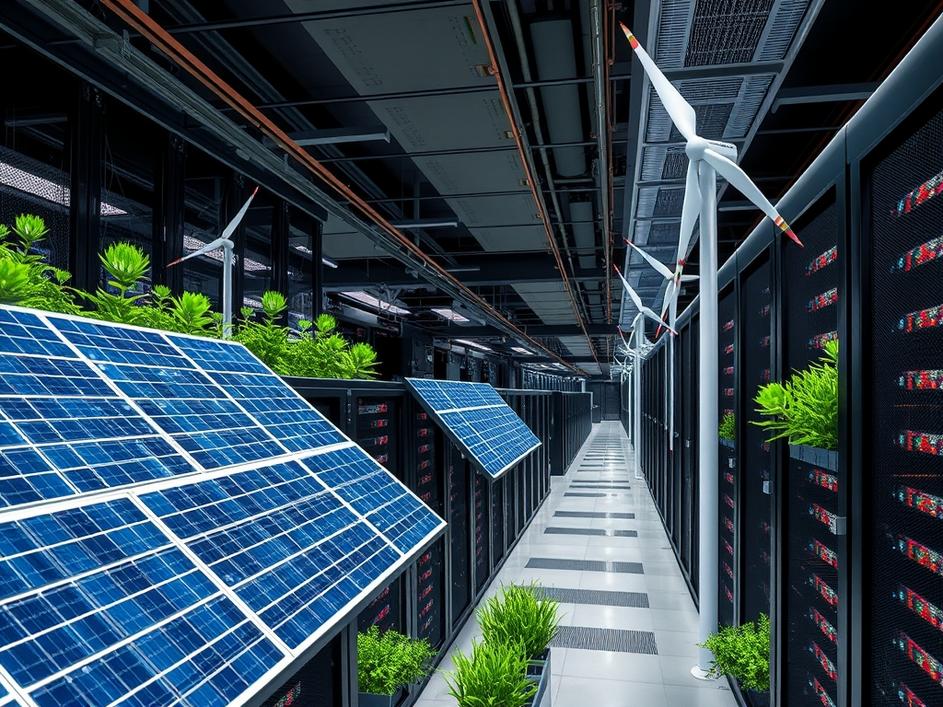
While details of the specific topics discussed at Trump’s roundtable are emerging, it’s reasonable to assume that the conversation revolved around a few key areas. One likely topic is the potential for government regulation and incentives to encourage more energy-efficient data center designs. Another area of concern is probably the location of these data centers. Locating them in areas with abundant renewable energy sources, like solar or wind, could significantly reduce their carbon footprint. The discussion probably also touched on the need for innovation in cooling technologies and server hardware to reduce overall energy consumption.
While government intervention can play a role, true progress in reducing AI’s energy footprint will likely come from technological innovation. There’s a growing need for more energy-efficient AI algorithms that can achieve the same results with less computational power. Researchers are exploring new hardware architectures, like neuromorphic computing, which mimic the human brain to perform computations more efficiently. Advances in cooling technology, such as liquid cooling and immersion cooling, also offer promising solutions. Developing more efficient battery technology could also create backup power for the grid.
The challenge lies in striking a balance between fostering AI innovation and mitigating its environmental impact. AI has the potential to drive economic growth and solve some of the world’s most pressing problems, from climate change to healthcare. However, unchecked energy consumption by AI data centers could undermine these benefits. Finding sustainable solutions is crucial to ensure that AI’s progress doesn’t come at the expense of the environment. This requires a collaborative effort involving governments, industry leaders, and researchers, each playing a vital role in creating a more sustainable AI ecosystem.
The focus on AI data center energy usage is a welcome development. It signals a growing awareness of the environmental challenges posed by this rapidly evolving technology. By prioritizing energy efficiency and embracing innovation, we can pave the way for a future where AI’s benefits are realized without jeopardizing the health of the planet. The conversation sparked by events like Trump’s roundtable is a crucial step in that direction, prompting a more comprehensive discussion about the sustainability of our increasingly AI-powered world. The goal is not to stifle innovation, but to guide it towards a more sustainable path, ensuring that AI serves as a force for good, both economically and environmentally.
This roundtable is hopefully just the beginning of a longer, more in-depth conversation. Continued dialogue between policymakers, industry experts, and researchers is essential to develop effective strategies for managing AI’s energy demands. This includes investing in research and development of energy-efficient AI technologies, implementing policies that incentivize sustainable practices, and promoting greater transparency about data center energy consumption. By working together, we can ensure that the AI revolution is a green revolution, benefiting both humanity and the planet.



Comments are closed