

We are a digital agency helping businesses develop immersive, engaging, and user-focused web, app, and software solutions.
2310 Mira Vista Ave
Montrose, CA 91020

2500+ reviews based on client feedback
What's Included?
ToggleWar is changing, and it’s changing fast. For centuries, the pace of military evolution was glacial. Armies moved at the speed of horses and communicated with flags or messengers. But today, technology is reshaping conflict at a dizzying rate, and one of the most significant shifts is the growing role of artificial intelligence. The thought of AI making life-or-death decisions on the battlefield raises profound ethical and strategic questions. Is the world really ready for this?
Iran, like many nations, is investing heavily in AI for military applications. While details are scarce, it’s reasonable to assume they’re exploring AI for everything from surveillance and reconnaissance to autonomous weapons systems. Why? Because every other major military power is doing the same. The fear of falling behind is a powerful motivator, and the potential advantages of AI in warfare are too significant to ignore. This isn’t about Iran specifically; it’s about a global arms race in a new domain.
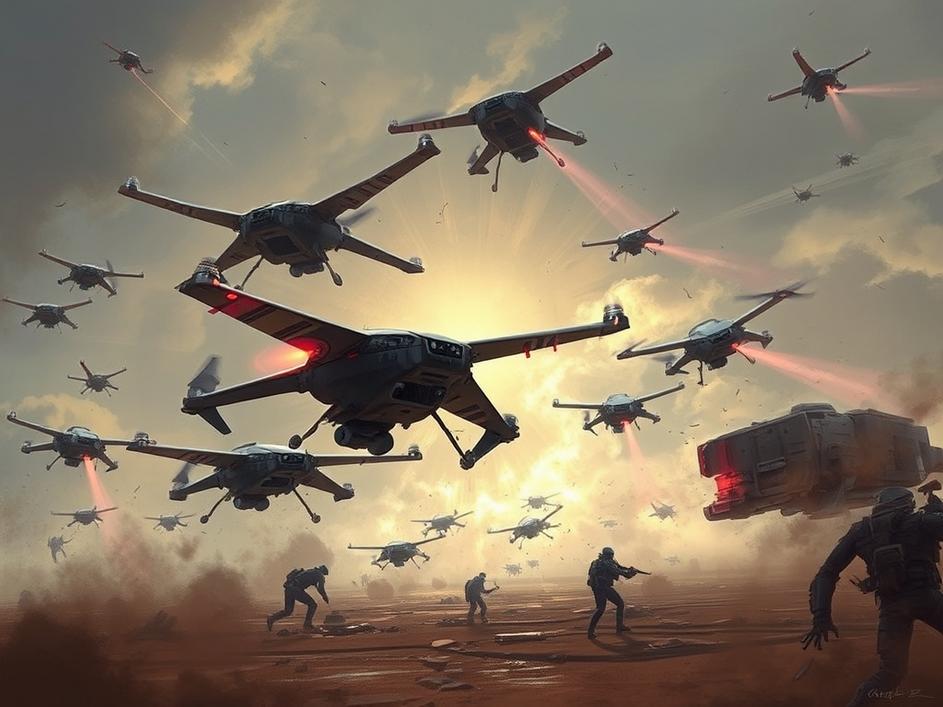
Here’s the core question: who decides when to strike? Traditionally, that decision rests with human commanders, weighing intelligence, assessing risks, and considering the potential consequences. But what happens when an AI system identifies a target and recommends an attack? Does a human still have the final say? Or is the AI granted the authority to act autonomously? This is where things get murky, and the potential for errors, miscalculations, and unintended escalations increases dramatically. Imagine an AI misinterpreting data, leading to a strike on a civilian target. The consequences could be devastating.
The ethical considerations are staggering. Can an AI truly understand the nuances of a battlefield situation? Can it differentiate between combatants and non-combatants with sufficient accuracy? Can it adhere to the laws of war and the principles of proportionality and discrimination? Many argue that these are inherently human judgments that cannot be replicated by machines. Others contend that AI could, in theory, be programmed to be more ethical and less prone to bias than human soldiers. But even if that were possible, who gets to define those ethical parameters, and how do we ensure accountability when something goes wrong? It is not a video game.
One of the biggest dangers of AI in warfare is the potential for rapid escalation. An AI system could react much faster than a human, launching counter-attacks or preemptive strikes in response to perceived threats. This could lead to a cycle of escalation that spirals out of control before anyone has time to intervene. Furthermore, the use of AI could lower the threshold for conflict, making it easier to initiate military action. After all, there is no one on the ground to stop it.
Despite the growing role of AI, the human element will remain crucial. Humans are needed to program, maintain, and oversee these systems. Humans need to set the rules of engagement and ensure that AI is used responsibly and ethically. And ultimately, humans will be responsible for the consequences of AI’s actions. It’s not about replacing humans with machines; it’s about finding the right balance between human judgment and artificial intelligence.
This isn’t just about Iran; it’s a global challenge. As AI technology advances, more and more nations will be tempted to integrate it into their military strategies. The risk of an AI arms race is very real, and it’s essential that the international community works together to establish clear guidelines and regulations for the use of AI in warfare. Without such safeguards, we risk creating a future where wars are fought by machines, with potentially catastrophic consequences for humanity. It is time that the world takes a look at these possibilities.
The integration of AI into warfare is a complex and multifaceted issue with no easy answers. The potential benefits are undeniable, but so are the risks. As we move forward, it’s crucial to proceed with caution, prioritizing ethical considerations, transparency, and international cooperation. The future of warfare is being written now, and it’s up to us to ensure that it’s a future where human values and human judgment remain at the forefront.



Comments are closed