

We are a digital agency helping businesses develop immersive, engaging, and user-focused web, app, and software solutions.
2310 Mira Vista Ave
Montrose, CA 91020

2500+ reviews based on client feedback
What's Included?
ToggleFor years, the debate has raged: can a smartphone camera truly replace a dedicated digital camera? We’ve seen incredible advancements in mobile photography, with computational power and AI algorithms filling the gaps in sensor size and lens quality. But professional photographers and serious hobbyists have often remained skeptical. Now, with the release of the Xiaomi 17 Ultra, the question seems more relevant than ever. Is this the phone that finally bridges the gap, offering image quality that rivals traditional cameras? Or is it just another impressive smartphone camera that ultimately falls short?
Xiaomi is clearly making a strong statement with the 17 Ultra. They’re not just aiming for incremental improvements; they’re positioning this phone as a serious contender in the photography world. This isn’t just about taking quick snapshots for social media; it’s about capturing high-quality images suitable for printing, editing, and even professional use. The specifications are certainly impressive, with a large main sensor, advanced image processing, and a versatile array of lenses covering a wide range of focal lengths. But specs alone don’t tell the whole story. The real test is in the actual image quality and the overall user experience.
So, how does the Xiaomi 17 Ultra perform in real-world scenarios? Early reports suggest the image quality is indeed exceptional. The large main sensor captures a significant amount of light, resulting in excellent dynamic range and low-light performance. Details are sharp and well-defined, even in challenging lighting conditions. Color reproduction is also said to be accurate and pleasing, without the oversaturation or artificial enhancements that plague some smartphone cameras. The phone’s image processing algorithms do a good job of reducing noise and sharpening details, without introducing unwanted artifacts. However, the real test is how these images hold up when compared side-by-side with photos taken with a high-end digital camera. It is also important to see if the quality degrades as the zoom increases using digital zoom.
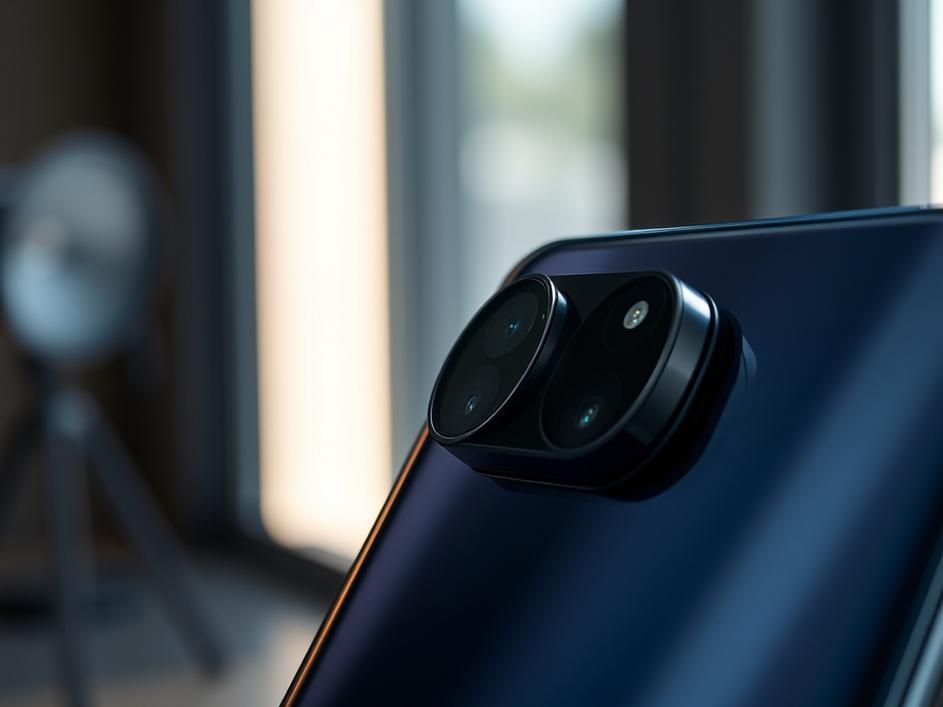
One area where traditional cameras have always held a significant advantage is in lens quality. High-end lenses are designed to minimize distortion, chromatic aberration, and other optical imperfections. While smartphone cameras have made strides in this area, they still face limitations due to their small size and complex designs. The Xiaomi 17 Ultra attempts to address this with a sophisticated multi-lens system, but it remains to be seen how well these lenses perform compared to their full-sized counterparts. Sharpness across the entire image frame, especially at the edges, is a key factor to consider. Also, the quality of the zoom lens and its ability to maintain image quality at longer focal lengths is crucial for versatility.
Smartphones have a secret weapon that traditional cameras lack: computational photography. This involves using sophisticated algorithms to process images in real-time, enhancing details, reducing noise, and even adding artificial effects. The Xiaomi 17 Ultra leverages these technologies to great effect, employing AI-powered scene recognition, HDR processing, and night mode capabilities. These algorithms can dramatically improve image quality, especially in challenging situations. However, there’s a fine line between enhancing an image and making it look artificial. The best computational photography systems are those that subtly improve image quality without sacrificing realism.
Beyond image quality, the overall user experience is also crucial. Smartphones have the advantage of being incredibly convenient and easy to use. They’re always with you, and taking a photo is as simple as pointing and tapping. Traditional cameras, on the other hand, can be more cumbersome to carry and operate, especially for casual users. The Xiaomi 17 Ultra aims to offer the best of both worlds, combining excellent image quality with a user-friendly interface and a range of convenient features. The speed of the camera app, the responsiveness of the autofocus, and the ease of sharing photos are all important factors to consider.
The comparison extends beyond still photography. Modern smartphones, including the Xiaomi 17 Ultra, offer impressive video recording capabilities. Features like 4K resolution, high frame rates, and image stabilization have made them viable options for capturing high-quality video footage. Traditional video cameras still offer advantages in terms of audio recording, zoom range, and manual control, but smartphones are rapidly closing the gap. The Xiaomi 17 Ultra’s video performance is another key factor to consider in determining whether it can truly replace a dedicated camera.
So, has Xiaomi finally done it? Has the Xiaomi 17 Ultra truly surpassed traditional cameras? The answer is complex. In some areas, such as convenience and computational photography, smartphones have a clear advantage. The Xiaomi 17 Ultra’s image quality is undoubtedly impressive, and it can produce stunning results in a variety of situations. However, traditional cameras still hold an edge in terms of lens quality, sensor size, and manual control. For professional photographers and serious hobbyists, these factors may still be enough to justify using a dedicated camera. But for the average user, the Xiaomi 17 Ultra offers a compelling combination of image quality, convenience, and versatility that may well be enough to replace their traditional camera. The lines are blurring, and the future of photography is looking increasingly mobile. This phone does signal that the convenience and quality gaps are getting closer, however, it is likely a matter of time before phones completely eclipse traditional cameras for the average user.



Comments are closed