

We are a digital agency helping businesses develop immersive, engaging, and user-focused web, app, and software solutions.
2310 Mira Vista Ave
Montrose, CA 91020

2500+ reviews based on client feedback
What's Included?
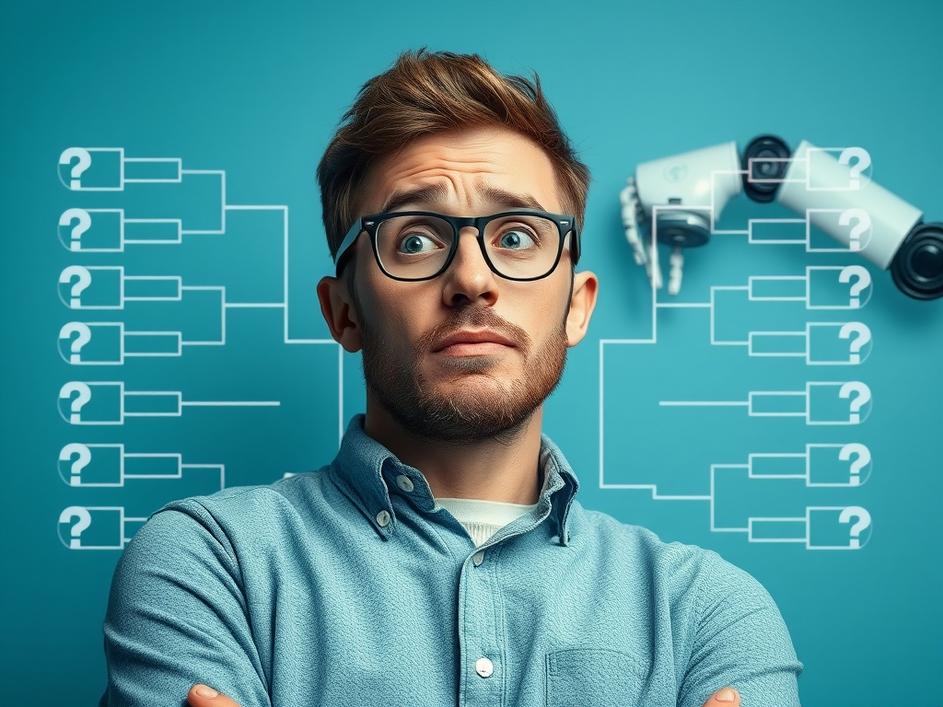
ToggleThe NCAA Women’s Basketball Tournament is a time of excitement, upsets, and bracket challenges. But this year, before the first tip-off, a different kind of upset occurred: a significant error in ESPN’s official bracket. The sports network, a staple for college basketball fans, released a bracket containing glaring inaccuracies, leaving many to wonder how such a mistake could happen on such a prominent platform. The finger-pointing has begun, and whispers of artificial intelligence gone awry are circulating. This error has become a big deal and it is impacting more than just some office pools.
So, what exactly went wrong? The specifics point to incorrect team placements and seedings within the bracket. Certain teams were slotted in positions that contradicted official NCAA announcements, creating confusion and frustration among fans and analysts alike. It wasn’t a minor typo; it was a fundamental flaw that undermined the credibility of the bracket. Many had to rethink their picks, and some questioned whether the initial bracket reflected accurate data or a glitch in the system. The nature of the errors also suggests that the mistakes may have been made algorithmically. It wasn’t just that a name was spelled wrong. It was whole placements that were off.
The growing suspicion is that an AI algorithm might be responsible for the bracket blunder. In an age where automation and AI are increasingly used to streamline processes, it’s not unreasonable to think ESPN might have employed such technology to generate the bracket. The problem, of course, is that AI is only as good as the data it’s fed and the programming it receives. If the input data was flawed or the algorithm contained errors, the resulting output – the bracket – would inevitably be incorrect. Some wonder if AI is really ready for primetime. And, on top of that, were there not enough checks and balances in place?
The implications of this mistake extend beyond simple embarrassment for ESPN. The network’s credibility as a reliable source for sports information takes a hit. Fans rely on accurate brackets to inform their predictions and enjoy the tournament experience. When that trust is broken, it erodes confidence in the platform. Moreover, the error raises questions about the role of AI in sports broadcasting and the potential pitfalls of relying too heavily on automated systems without adequate human oversight. Some are wondering if there will be more errors going forward.
While the bracket blunder is undoubtedly a setback, it also presents an opportunity for ESPN and other media outlets to learn valuable lessons about the responsible use of AI. Moving forward, it’s crucial to implement rigorous quality control measures, including human review of AI-generated content, to prevent similar errors from occurring in the future. Transparency is also key; openly acknowledging the mistake and explaining the steps being taken to rectify it can help rebuild trust with the audience. Perhaps the lesson here is that humans are still needed to oversee AI. It is also possible that AI should be used to check AI. In any event, something needs to change to prevent future errors. And the public is going to be watching closely to see what happens next.
This incident underscores a broader debate about the integration of AI in sports media. While AI offers numerous benefits, such as automating tasks, analyzing data, and personalizing content, it’s essential to recognize its limitations and potential risks. AI should be viewed as a tool to augment human capabilities, not replace them entirely. Human judgment, critical thinking, and ethical considerations remain paramount, especially when it comes to disseminating information to the public. The bracket issue highlights the importance of checks and balances, and human oversight of automated technologies. This can help prevent the spread of misinformation and maintain public trust.
Looking ahead, the future of bracketology may involve a hybrid approach, combining the power of AI with the expertise of human analysts. AI can be used to crunch data, identify trends, and generate potential bracket scenarios, while human analysts can provide context, evaluate subjective factors, and ensure accuracy. The key is to find the right balance between automation and human input to create a bracket that is both informative and reliable. It may also be important to not rely on one AI program to create the brackets. If one program is flawed, it might be prudent to have another AI check the output to prevent these kinds of errors. It is also important to remember that AI is always improving and it is very likely that future programs will be able to more accurately create these brackets.
ESPN’s bracket blunder serves as a wake-up call for the sports media industry and beyond. It highlights the importance of responsible AI implementation, rigorous quality control, and the enduring value of human expertise. As AI continues to evolve and play an increasingly prominent role in our lives, it’s crucial to approach its integration with caution, transparency, and a commitment to ethical principles. The trustworthiness of information is at stake, and it is up to us to use technology wisely and responsibly. Maybe next year, March Madness will be error-free – hopefully, with the help of a more refined AI or, perhaps, a very careful human editor.


Comments are closed