

We are a digital agency helping businesses develop immersive, engaging, and user-focused web, app, and software solutions.
2310 Mira Vista Ave
Montrose, CA 91020

2500+ reviews based on client feedback
What's Included?
ToggleArtificial intelligence. It’s everywhere. From writing simple emails to driving cars, AI is rapidly changing how we live and work. Now, it’s setting its sights on Hollywood. The question isn’t whether AI will impact filmmaking, but how profoundly. Recent discussions at industry events highlight a growing push from AI developers who want filmmakers to embrace, not fear, this new technology. But is Hollywood ready to trust a robot with its stories?
Some AI executives are directly challenging filmmakers to abandon traditional production methods. They argue that clinging to old ways of doing things will only hinder creativity and efficiency. Instead, they propose that filmmakers should “unlearn” established workflows and actively seek new ways to integrate AI into every stage of production, from initial concept to final edit. This call to action isn’t just about using AI for simple tasks; it’s about fundamentally rethinking how movies are made.
It’s easy to see AI as simply another tool in the filmmaker’s toolbox, like a better camera or editing software. But AI promises something much more significant. Imagine AI algorithms that can analyze scripts and predict audience reactions, helping studios decide which projects to greenlight. Or AI-powered tools that can generate realistic special effects on a fraction of the budget, opening up new creative possibilities for independent filmmakers. The potential applications are vast and could reshape the entire industry.
Of course, the idea of AI taking over Hollywood is causing concern. Many worry about job displacement for writers, actors, editors, and other creative professionals. The human element is what makes movies special. AI algorithms can analyze data and identify trends, but they can’t replicate the emotional depth, personal experiences, and unique perspectives that human artists bring to their work. The challenge lies in finding a balance, where AI assists and enhances human creativity, rather than replacing it entirely.
One possible outcome is the creation of entirely new roles within the film industry. We might see AI wranglers, prompt engineers, and algorithm supervisors – professionals who specialize in managing and collaborating with AI systems. These roles will require a unique blend of technical skills and creative sensibilities. Education and training programs will need to adapt quickly to prepare the next generation of filmmakers for this new landscape.
While big studios may be hesitant to fully embrace AI due to legacy systems and established workflows, independent filmmakers could be the ones to truly unlock its potential. With fewer resources and less red tape, indie filmmakers can afford to experiment with AI and push the boundaries of storytelling. Imagine a micro-budget film that uses AI to create stunning visual effects that would have been impossible just a few years ago. Or a documentary that uses AI to analyze vast amounts of data and uncover hidden truths.
As with any powerful technology, there are ethical considerations to address. Who owns the copyright to a script written by AI? How do we ensure that AI algorithms are not biased or discriminatory? How do we protect the privacy of actors and crew members whose data is used to train AI models? These are complex questions that require careful consideration and open discussion.
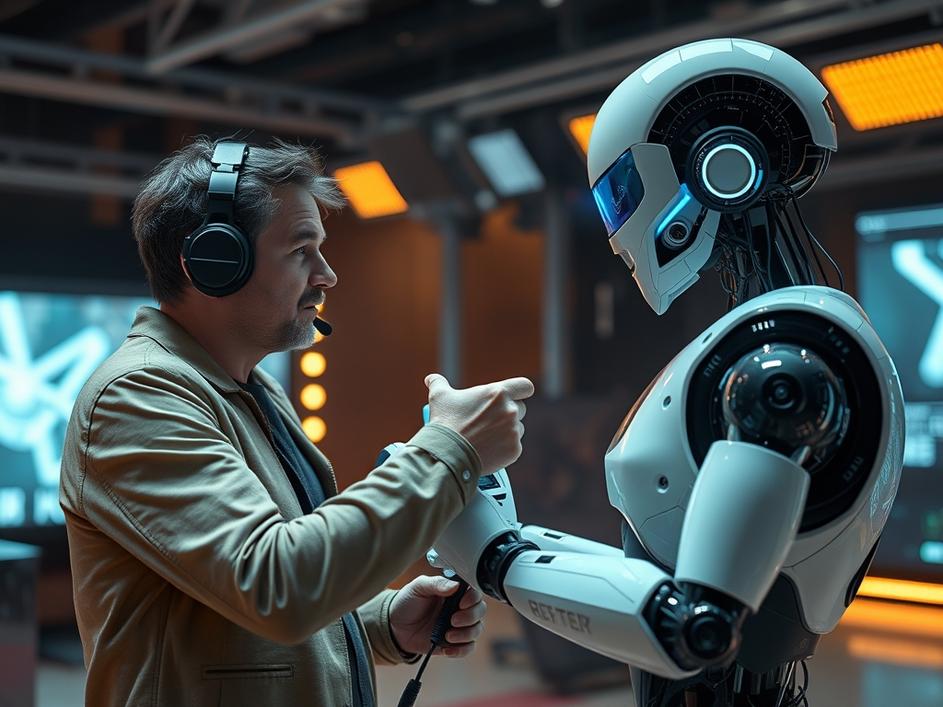
The future of filmmaking likely involves a collaboration between humans and machines. AI can handle repetitive tasks, generate ideas, and provide valuable insights, while human artists can bring their creativity, emotions, and unique perspectives to the table. By embracing this partnership, Hollywood can create more innovative, engaging, and thought-provoking movies than ever before. The key is to approach AI not as a threat, but as a powerful tool that can unlock new creative possibilities and elevate the art of storytelling. It’s a brave new world and only time will tell how the story unfolds.


Comments are closed