

We are a digital agency helping businesses develop immersive, engaging, and user-focused web, app, and software solutions.
2310 Mira Vista Ave
Montrose, CA 91020

2500+ reviews based on client feedback
What's Included?
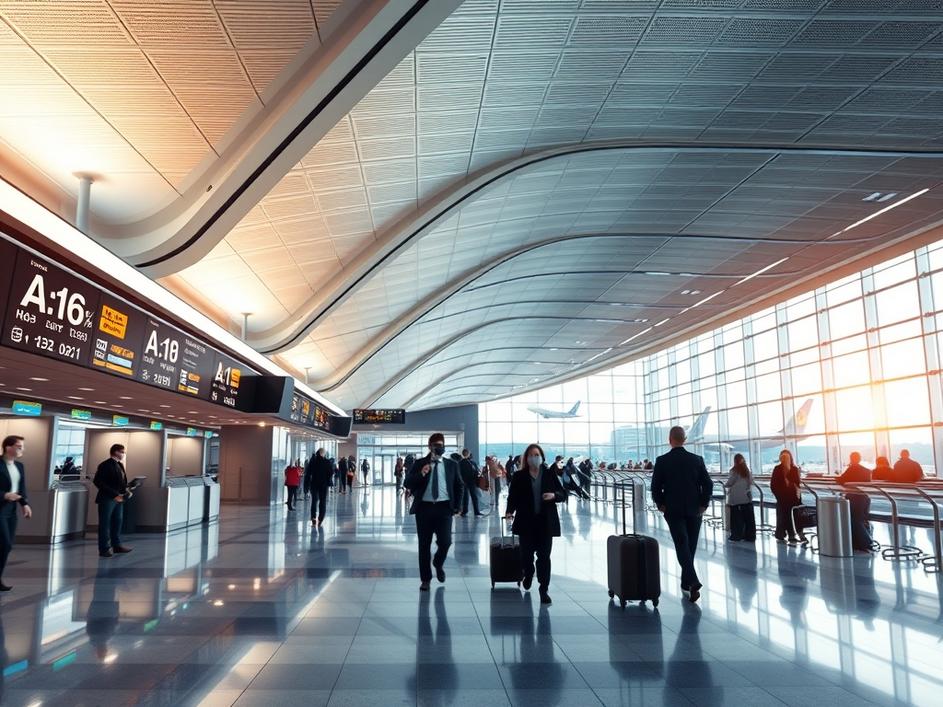
ToggleImagine breezing through an airport, your flight running smoothly, with minimal delays. That’s the vision Spanish tech firm Indra and aviation software company Synaptic Aviation are working towards. They’re teaming up to bring artificial intelligence to three of Spain’s busiest airports: Barcelona, Madrid, and Palma de Mallorca. The goal? To make things run more efficiently for everyone, from airlines to passengers.
Airports are complex ecosystems. Planes need to take off and land on time, luggage needs to be handled, passengers need to get to their gates, and all of this has to happen seamlessly. When one thing goes wrong, it can create a domino effect, leading to delays and frustration. Especially during peak seasons, airports become bottlenecks, and managing resources becomes a real challenge. This collaboration aims to tackle those challenges head-on by using AI to better predict and manage airport operations.
The partnership between Indra and Synaptic Aviation focuses on predictive analytics and real-time decision-making. Synaptic Aviation’s software, powered by AI, can analyze vast amounts of data – flight schedules, weather conditions, passenger flow, and more – to predict potential problems before they even occur. For example, the system could foresee a potential delay due to a late incoming flight and automatically adjust gate assignments or crew schedules to minimize the impact. This proactive approach is a big step up from simply reacting to problems as they arise.
The benefits of this AI implementation extend beyond just getting flights out on time. By optimizing resource allocation – like staff, equipment, and gates – airports can reduce operational costs. Fewer delays mean less fuel wasted by planes circling the airport, which translates to lower emissions and a smaller environmental footprint. And, of course, happier passengers are more likely to spend money at airport shops and restaurants, boosting revenue for businesses within the airport.
From an airline’s perspective, efficiency is everything. Faster turnaround times mean more flights can be scheduled, increasing revenue. Reduced delays lead to lower compensation costs for passengers and improved customer satisfaction. By providing airlines with better data and insights, this AI system empowers them to make smarter decisions about route planning, crew management, and resource allocation. For the end customer, improved efficiency directly translates into a less stressful and more enjoyable travel experience.
This project in Spain is just one example of how artificial intelligence is poised to revolutionize the aviation industry. As AI technology continues to develop, we can expect to see even more innovative applications in areas like security screening, baggage handling, and air traffic control. Imagine a future where your luggage is automatically tracked from the moment you drop it off until it arrives at your destination, or where security lines are a thing of the past thanks to advanced biometric scanning. The possibilities are endless.
While the potential benefits of AI in airports are significant, there are also challenges to consider. Data privacy and security are paramount. Airports handle sensitive information about passengers, and it’s crucial to ensure that this data is protected from unauthorized access. Algorithmic bias is another concern. If the AI system is trained on biased data, it could perpetuate existing inequalities or make unfair decisions. It’s important to carefully monitor and audit AI systems to ensure that they are fair, transparent, and accountable. Implementation of new technology can also be challenging and require extensive training of staff and adapting existing infrastructure. Communication and transparency are key.
The deployment of AI at Barcelona, Madrid, and Palma de Mallorca airports represents a significant step forward in the quest for smarter and more efficient air travel. By harnessing the power of data and machine learning, these airports are paving the way for a future where flights are on time, resources are optimized, and passengers have a better overall experience. It’s not about replacing human workers, but augmenting their abilities with powerful tools that can make complex decisions faster and more effectively. The real test will be the successful integration of these AI systems within the existing airport environment and whether they provide a meaningful enhancement in the customer journey, but it seems that innovation is certainly taking flight.



Comments are closed