

We are a digital agency helping businesses develop immersive, engaging, and user-focused web, app, and software solutions.
2310 Mira Vista Ave
Montrose, CA 91020

2500+ reviews based on client feedback
What's Included?
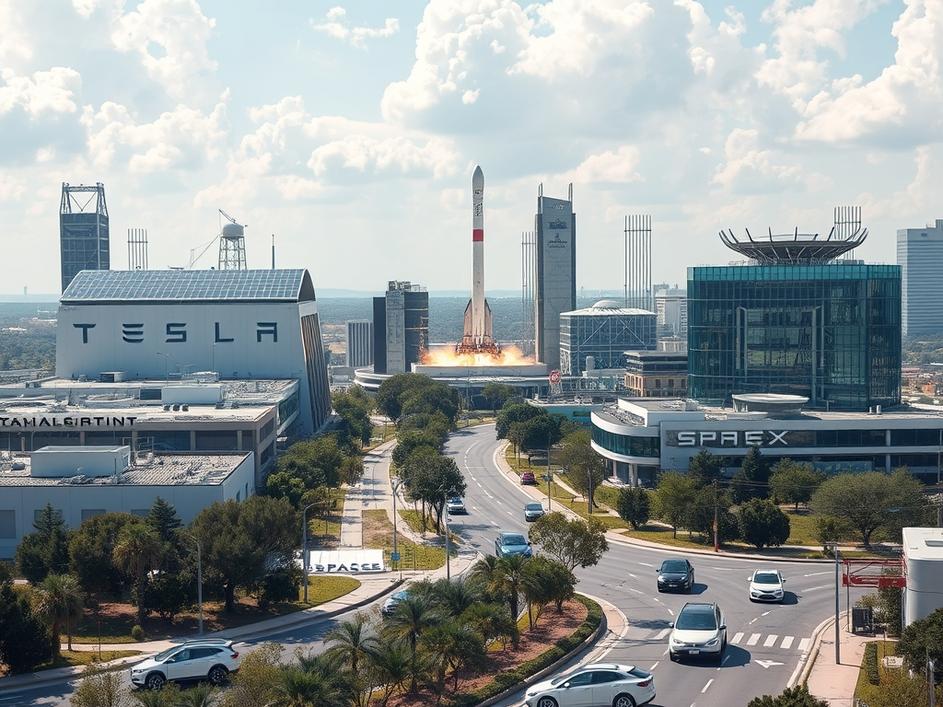
ToggleElon Musk recently announced that both Tesla and SpaceX plan to build advanced chip factories in Austin, Texas. This is big news for the region and for the companies themselves, suggesting a significant push towards greater vertical integration and control over their supply chains. It also highlights Austin’s growing importance as a tech hub, attracting major players and investments.
Austin has become a magnet for tech companies, drawn by a combination of factors. Texas offers a business-friendly environment with lower taxes and fewer regulations compared to states like California. And Austin boasts a talented workforce, fueled by the presence of the University of Texas and a thriving tech scene. For Musk, who has already moved Tesla’s headquarters to Austin, expanding into chip manufacturing there makes strategic sense. It consolidates operations and leverages the existing infrastructure and talent pool.
For both Tesla and SpaceX, having greater control over chip production is crucial. Tesla relies heavily on advanced chips for its autonomous driving systems, battery management, and overall vehicle performance. SpaceX needs sophisticated chips for its rockets, satellites, and Starlink internet service. By designing and manufacturing their own chips, these companies can reduce their dependence on external suppliers, mitigate supply chain risks, and tailor the chips to their specific needs. This leads to better performance, greater efficiency, and a competitive edge.
While cost savings are a definite advantage of in-house chip production, the real benefits extend far beyond that. Tesla and SpaceX can design chips that are specifically optimized for their applications, pushing the boundaries of innovation. They can incorporate unique features, improve performance metrics, and integrate hardware and software more seamlessly. This level of customization is simply not possible when relying on off-the-shelf chips from third-party vendors. The ability to iterate quickly and experiment with new designs will be a huge asset for both companies.
Building and operating advanced chip factories is a complex and capital-intensive undertaking. It requires significant investments in equipment, infrastructure, and skilled personnel. Tesla and SpaceX will face challenges in scaling up production, managing costs, and staying ahead of the rapidly evolving chip technology landscape. Furthermore, the semiconductor industry is highly competitive, with established players like Intel, Samsung, and TSMC already dominating the market. Tesla and SpaceX will need to differentiate themselves and find their niche to succeed in this challenging environment. They will be competing for talent, resources, and market share.
The entry of Tesla and SpaceX into chip manufacturing could have a ripple effect on the broader semiconductor industry. It could spur innovation, increase competition, and lead to new business models. Other companies may be inspired to follow suit, bringing more chip production back to the United States. This could help reduce reliance on foreign suppliers and strengthen domestic manufacturing capabilities. However, it could also exacerbate existing supply chain challenges and create new bottlenecks. The industry will need to adapt to these changes and find ways to collaborate and compete effectively.
For investors, the news of Tesla and SpaceX building chip factories in Austin is generally positive. It signals a long-term commitment to innovation and growth, and it could lead to higher profit margins and increased shareholder value. However, investors should also be aware of the risks involved, including the high costs and technical challenges of chip manufacturing. For consumers, the benefits could include improved product performance, lower prices, and greater availability. As Tesla and SpaceX become more self-sufficient in chip production, they may be able to offer better products at more competitive prices.
Elon Musk’s decision to build advanced chip factories in Austin is a bold move with significant potential. It reflects his ambition to push the boundaries of technology and create vertically integrated companies that control their entire value chain. While there are challenges and risks involved, the potential rewards are substantial. This investment could strengthen Tesla and SpaceX, boost the Austin economy, and transform the semiconductor industry. It’s a development worth watching closely in the years to come. This move will allow for greater control, customization, and innovation, ultimately benefiting both companies and their customers. The future looks bright for Tesla, SpaceX, and Austin’s burgeoning tech scene.

Comments are closed