

We are a digital agency helping businesses develop immersive, engaging, and user-focused web, app, and software solutions.
2310 Mira Vista Ave
Montrose, CA 91020

2500+ reviews based on client feedback
What's Included?
ToggleArtificial intelligence is rapidly advancing, promising to reshape industries and redefine what’s possible. But like any technological gold rush, the path to success is paved with challenges. One of the biggest hurdles? Ensuring AI systems are actually reliable and effective in the real world. We’ve all seen examples of AI gone wrong, from biased algorithms to chatbots that completely miss the mark. The problem isn’t just about writing better code; it’s about giving AI the right kind of training data.
For a long time, the AI world has relied heavily on synthetic data. This is essentially artificial information generated by computers to mimic real-world scenarios. Synthetic data is cheap, plentiful, and easy to control, which makes it attractive for training AI models. But here’s the catch: synthetic data is, well, synthetic. It’s an approximation of reality, not reality itself. This means AI trained solely on synthetic data can struggle when faced with the messy, unpredictable nature of the real world. Think of it like learning to drive in a simulator versus actually getting behind the wheel on a busy street.
Global App Testing (GAT) is tackling this problem head-on with its new AI GroundTruth service. The core idea is simple but powerful: instead of relying solely on synthetic data, AI systems need to be trained and validated using real human judgment in real-world contexts. GAT AI GroundTruth provides a platform for AI leaders to access this crucial human insight. It connects them with a network of real people who can evaluate AI performance, identify biases, and provide feedback on how to improve accuracy and reliability. This is especially important for tasks that require subjective judgment or understanding of nuanced context – things that AI often struggles with.
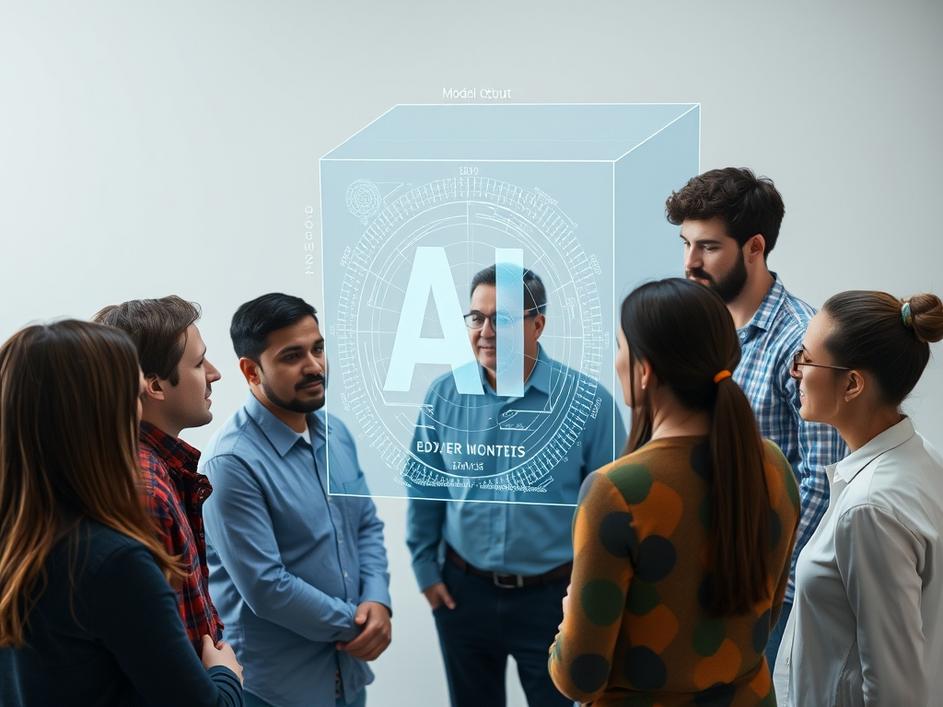
The rise of generative AI models like large language models (LLMs) has made the need for human feedback even more critical. These models are incredibly powerful, but they’re also prone to generating inaccurate, biased, or even harmful content. Relying solely on automated metrics to evaluate their performance simply isn’t enough. Human reviewers can catch subtle errors, identify potential biases, and assess the overall quality and appropriateness of the output. This human-in-the-loop approach is essential for ensuring that AI systems are not only technically proficient but also aligned with human values and ethical standards.
Ultimately, the success of AI depends on building trust. People need to feel confident that AI systems are reliable, fair, and safe to use. This requires more than just technical accuracy; it requires addressing the potential for bias, ensuring transparency, and prioritizing human oversight. Services like GAT AI GroundTruth play a vital role in this process by providing a mechanism for incorporating human judgment into the AI development lifecycle. By grounding AI in reality, we can unlock its full potential while mitigating the risks.
AI is not meant to replace humans, but to augment our abilities and improve our lives. By focusing on human-centered AI development, we can ensure that these powerful technologies are used responsibly and ethically. GAT AI GroundTruth represents a step in this direction, recognizing that the key to unlocking AI’s true potential lies in harnessing the power of human intelligence. It’s a reminder that even in the age of algorithms and machine learning, human judgment remains an indispensable ingredient for success. This approach acknowledges that AI, at its best, amplifies human capabilities and perspectives, creating a synergy that drives innovation and progress while prioritizing fairness and societal benefit.



Comments are closed