

We are a digital agency helping businesses develop immersive, engaging, and user-focused web, app, and software solutions.
2310 Mira Vista Ave
Montrose, CA 91020

2500+ reviews based on client feedback
What's Included?
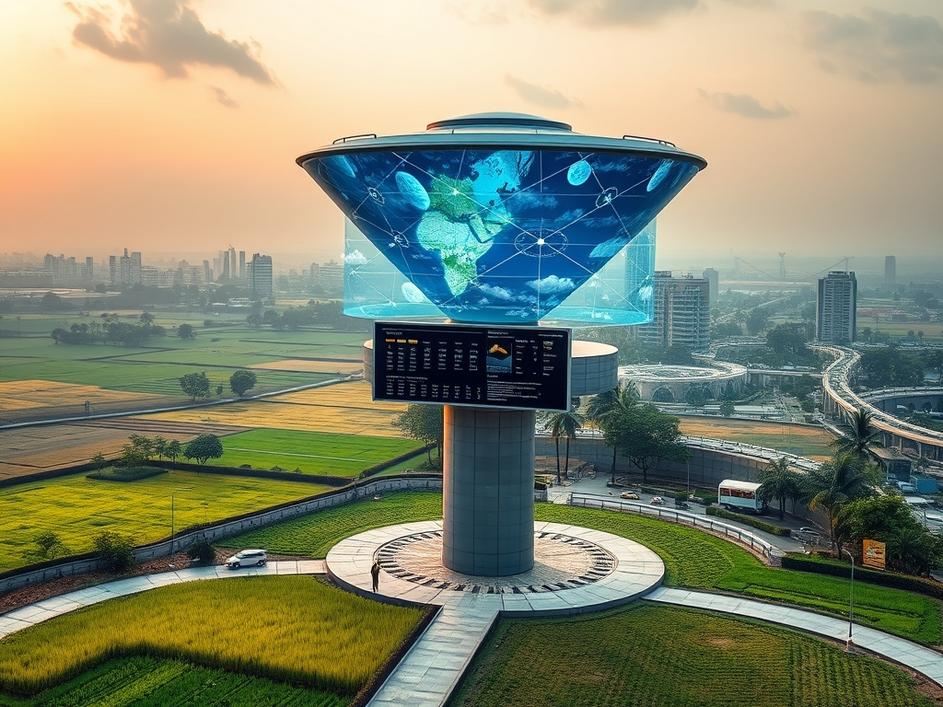
ToggleWe all complain about the weather, but we rely on forecasts to plan our lives. Imagine if those forecasts were consistently more accurate and delivered faster. That’s the promise of artificial intelligence (AI) in meteorology, and it’s becoming a reality in India, according to recent news from the India Meteorological Department (IMD).
IMD scientists are now using AI and other advanced tech to improve their weather predictions. This isn’t just about slightly better forecasts; it’s about a significant leap forward in our ability to understand and anticipate weather patterns. The goal is to provide more timely and precise information to everyone, from farmers planning their crops to city dwellers deciding whether to carry an umbrella.
Traditional weather forecasting relies on complex computer models that analyze vast amounts of data. However, these models can be slow and sometimes inaccurate, especially when dealing with rapidly changing weather systems. AI offers a solution by learning from historical data and identifying patterns that humans might miss. It can also process information much faster, leading to quicker and more up-to-date forecasts.
AI’s impact extends beyond simply predicting whether it will rain or not. It can help forecast severe weather events like cyclones and heatwaves with greater precision, giving people more time to prepare and evacuate if needed. This is particularly crucial in a country like India, which is highly vulnerable to extreme weather. Think about the impact on agriculture. More precise forecasts mean farmers can make better decisions about planting, irrigation, and harvesting, potentially saving crops and livelihoods.
So, what specific technologies are being used? While the details are still emerging, we can expect to see a combination of machine learning algorithms, big data analytics, and advanced sensor networks. Machine learning allows the models to learn and improve over time as they are fed more data. Big data analytics enables scientists to process the massive amounts of information generated by weather satellites, radar systems, and ground-based sensors. And improved sensor networks provide more real-time data for the models to work with.
Of course, there are challenges to overcome. One is ensuring that the AI models are trained on diverse and representative data to avoid biases. Another is ensuring that the technology is accessible and affordable for everyone, especially in rural areas. But the opportunities are immense. With continued investment and innovation, AI has the potential to revolutionize weather forecasting and make India more resilient to the impacts of climate change.
It’s important to remember that AI is a tool, not a replacement for human expertise. Meteorologists still play a vital role in interpreting the data, validating the models, and communicating the forecasts to the public. The best approach is a combination of AI-powered technology and skilled human judgment. The AI helps with data crunching and pattern recognition, and the meteorologists use their knowledge and experience to refine the forecasts and provide context.
The integration of AI into weather forecasting is an ongoing process, but the early results are promising. As the technology continues to evolve, we can expect to see even more improvements in the accuracy and timeliness of weather forecasts. This will have a positive impact on many aspects of Indian society, from agriculture and disaster management to transportation and tourism. It also underscores the growing importance of AI in addressing some of the world’s most pressing challenges.
India isn’t alone in exploring AI for weather forecasting. Meteorological agencies around the world are experimenting with similar technologies. The European Centre for Medium-Range Weather Forecasts (ECMWF), for instance, is using machine learning to improve its global weather model. The National Oceanic and Atmospheric Administration (NOAA) in the United States is also investing in AI research. This global effort suggests that AI will play an increasingly important role in weather forecasting worldwide.
Ultimately, this isn’t just about getting a slightly more accurate weather app on your phone. It’s about building a more resilient and sustainable future. By harnessing the power of AI, we can better understand and prepare for the challenges of a changing climate. And that’s something we can all benefit from.



Comments are closed