

We are a digital agency helping businesses develop immersive, engaging, and user-focused web, app, and software solutions.
2310 Mira Vista Ave
Montrose, CA 91020

2500+ reviews based on client feedback
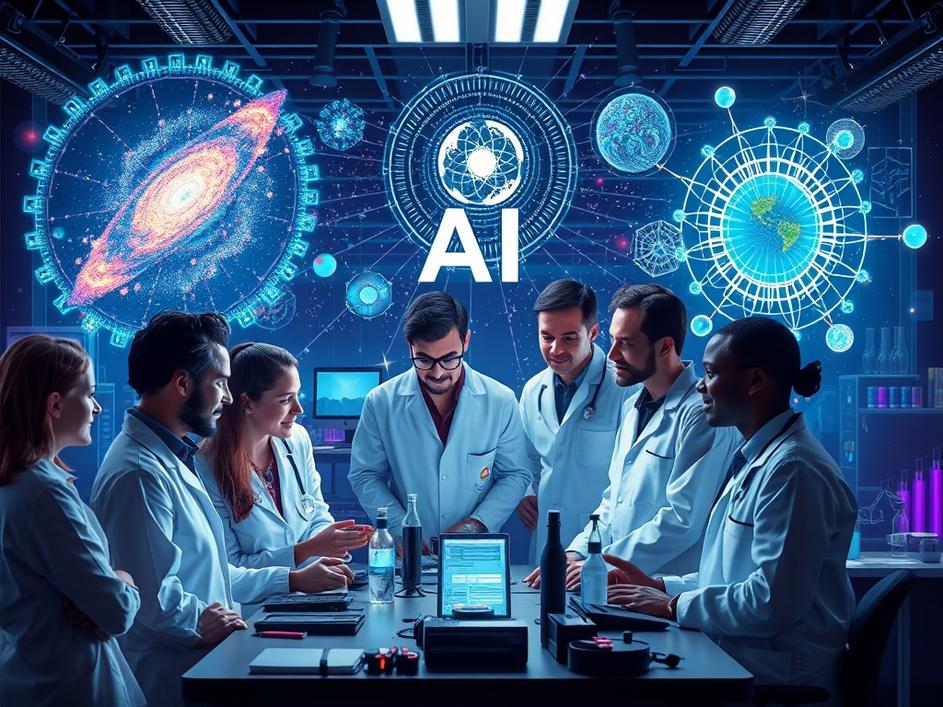
The Center for Decoding the Universe is hosting the Physics and AI Conference in 2026 (PAI26). This isn’t just another academic gathering. It’s a focused effort to bring together brilliant minds from seemingly disparate fields to tackle some of the most fundamental questions about our universe. The premise is simple: can the power of artificial intelligence unlock physics’ deepest secrets? Researchers from various backgrounds will attend this event. The conference is an open forum.
For years, physics has relied on mathematical models and experimental data to understand the cosmos. AI, particularly machine learning, offers a different, complementary approach. AI algorithms can sift through vast datasets, identify patterns invisible to the human eye, and even propose new theoretical frameworks. The timing of PAI26 reflects a pivotal moment: AI has matured enough to be a serious tool for scientific discovery, and physics faces increasingly complex challenges that demand innovative solutions. It is the perfect time for two major fields to converge.
While the idea of using AI in physics sounds futuristic, concrete applications are already emerging. For example, AI is being used to analyze data from the Large Hadron Collider, helping physicists identify new particles and understand the fundamental forces of nature. In astrophysics, AI algorithms are being trained to classify galaxies, detect gravitational waves, and even model the formation of the universe. These are not just proof-of-concept studies; they represent genuine advances in our understanding of the cosmos. The ability of AI to discern patterns is being useful to physics.
Despite the promise, integrating AI into physics isn’t without its challenges. One of the biggest hurdles is communication. Physicists and AI researchers often speak different languages, use different tools, and have different priorities. PAI26 will be a critical opportunity to bridge this gap, fostering collaborations and establishing common ground. There are many things AI and Physics can learn from each other. It will be important for them to use the same lexicon.
It’s important to remember that AI is a tool, not a replacement for human ingenuity. While AI algorithms can identify patterns and generate hypotheses, it’s up to physicists to interpret these findings, design experiments to test them, and ultimately develop a deeper understanding of the universe. The best approach is likely a synergistic one, where AI augments human intuition and creativity. AI will not replace the physicist.
As AI becomes more integrated into scientific research, it’s crucial to consider the ethical implications. Who is responsible when an AI algorithm makes a mistake? How do we ensure that AI is used responsibly and ethically in scientific discovery? These are questions that PAI26 will need to address, ensuring that the pursuit of knowledge is guided by ethical principles. Making sure that AI is used ethically will be important.
PAI26 represents a bold vision for the future of scientific discovery. By bringing together physicists and AI researchers, the conference aims to unlock new insights into the universe and accelerate the pace of scientific progress. It’s an investment in the future, with the potential to revolutionize our understanding of the cosmos. This conference could foster future collaboration. PAI26 could have a huge impact on science.
The 2026 Conference on Physics and AI is more than just an academic event. It’s a sign of things to come. As AI continues to evolve, it will play an increasingly important role in all aspects of our lives, from scientific research to everyday tasks. By embracing AI and addressing its challenges, we can unlock its full potential and create a brighter future for all. It is important to prepare for the advancements of AI. PAI26 is important for the future of science.

Comments are closed