

We are a digital agency helping businesses develop immersive, engaging, and user-focused web, app, and software solutions.
2310 Mira Vista Ave
Montrose, CA 91020

2500+ reviews based on client feedback
What's Included?
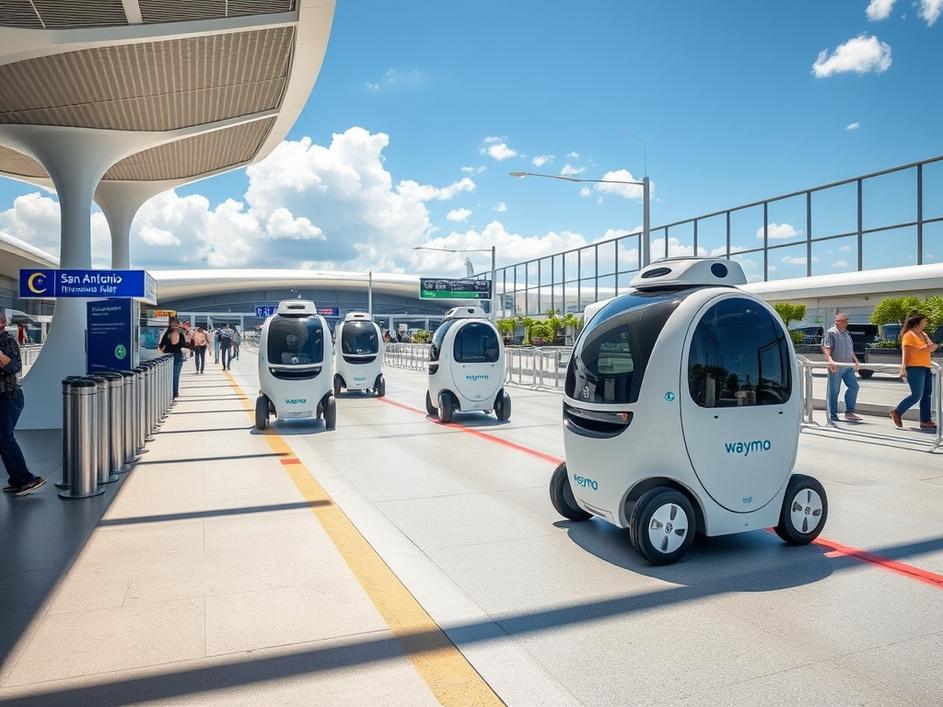
ToggleSan Antonio International Airport just joined the autonomous vehicle revolution. Waymo, the self-driving technology company, has officially launched its robotaxi service at the airport. This makes San Antonio the fourth airport where Waymo offers its driverless rides, aiming to provide a convenient and modern transportation option for travelers.
For those landing in San Antonio, hailing a Waymo is now an option for getting to their final destination. The process is straightforward: passengers can request a ride through the Waymo app, similar to how they would with a traditional ride-sharing service. The Waymo vehicles will then pick up passengers at designated spots at the terminals. Arriving at the airport is equally simple. Waymo will drop off riders right at the terminal curbside, making catching a flight a little less stressful.
Waymo’s expansion into airports like San Antonio’s isn’t just about offering another ride option. It’s a strategic move to normalize and integrate autonomous vehicles into everyday life. Airports are high-traffic areas with a constant flow of people, making them ideal locations to showcase the technology’s reliability and safety. By providing a positive experience for passengers, Waymo hopes to build trust and encourage wider adoption of self-driving cars.
Of course, the introduction of robotaxis also raises questions about safety. Waymo has invested heavily in developing advanced sensor systems and sophisticated software to ensure their vehicles can navigate complex environments safely. Each vehicle is equipped with multiple cameras, lidar, and radar, providing a 360-degree view of its surroundings. The system is designed to detect and respond to potential hazards, such as pedestrians, cyclists, and other vehicles. While Waymo vehicles have driven millions of miles in autonomous mode, incidents, however rare, can still happen. Continuous monitoring, data collection, and software updates are essential to improve the system’s performance and address any unexpected situations.
The arrival of Waymo robotaxis could potentially impact the traditional transportation landscape at San Antonio International Airport. Taxi services and ride-sharing companies may face increased competition as more travelers opt for the convenience and novelty of autonomous vehicles. However, it’s important to note that Waymo’s service is still in its early stages, and it will likely take time for it to become a dominant player in the market. The overall impact will depend on factors such as pricing, availability, and public perception.
Waymo’s expansion into San Antonio underscores the growing momentum behind autonomous transportation. As the technology matures and becomes more widely available, we can expect to see self-driving vehicles playing an increasingly important role in our transportation systems. This could lead to a number of benefits, including reduced traffic congestion, improved safety, and increased accessibility for people who are unable to drive themselves. While there are still challenges to overcome, such as regulatory hurdles and public acceptance, the long-term potential of autonomous transportation is undeniable.
It’s also worth thinking about the broader implications. If robotaxis become commonplace, what does that mean for parking infrastructure at airports? Could we see a shift towards more efficient drop-off and pick-up zones, freeing up space currently dedicated to parking lots? And what about the potential for integrating autonomous vehicles with other modes of transportation, such as public transit, to create a seamless and interconnected transportation network? These are just some of the questions that arise as we move closer to a future where self-driving vehicles are a reality.
San Antonio’s embrace of Waymo is interesting. It positions the city as forward-thinking and open to innovation. This can be a draw for tech companies and talent. It also gives residents and visitors access to a cutting-edge transportation option, potentially improving their travel experience. The city is essentially testing the waters, observing how this technology integrates into its existing infrastructure and community.
For Waymo, the San Antonio launch is another step in its long-term strategy. The company isn’t just trying to build a better taxi service; it’s aiming to create a fully autonomous transportation ecosystem. This involves not only developing the technology but also working with cities and communities to integrate it safely and effectively. San Antonio will provide a valuable learning environment, allowing Waymo to gather data, refine its algorithms, and address any challenges that arise. This data helps Waymo improve its service and prepares it for expansion into other cities and regions. The success of Waymo in San Antonio will be an important indicator of the company’s future prospects and the overall viability of autonomous transportation.
The launch of Waymo’s robotaxi service at San Antonio International Airport marks an exciting step forward in the evolution of transportation. While there are still questions to be answered and challenges to overcome, the potential benefits of autonomous vehicles are too significant to ignore. By embracing this technology, San Antonio is positioning itself as a leader in innovation and a city ready for the future. The journey towards widespread adoption of self-driving cars is just beginning, and it will be fascinating to watch as it unfolds.



Comments are closed