

We are a digital agency helping businesses develop immersive, engaging, and user-focused web, app, and software solutions.
2310 Mira Vista Ave
Montrose, CA 91020

2500+ reviews based on client feedback
What's Included?
ToggleWe’ve all been there. You’re hammering away at a spreadsheet, deeply focused on formulas and figures. Suddenly, your boss calls, needing an immediate status update on a completely different project. You answer the phone, switch gears, and try to recall all the details. Later, back at your spreadsheet, you realize you’ve made a mistake, a tiny error born from that mental jump. This everyday scenario, multiplied across countless workplaces, highlights a surprisingly significant problem: task switching. And it’s not just about simple mistakes; it’s about lost time, reduced efficiency, and increased stress.
Our brains aren’t designed for constant context switching. Imagine your brain as a computer. Each task requires loading a specific program. When you switch tasks, you’re essentially closing one program and opening another. This process takes time and energy. A residue of the previous task lingers, interfering with your focus on the new one. This phenomenon, known as ‘attention residue,’ makes it harder to concentrate and increases the likelihood of errors. Think about it – have you ever walked into a room and completely forgotten why you were there? That’s a minor example of the cognitive cost of switching mental gears. The more complex the tasks, the greater the cost.
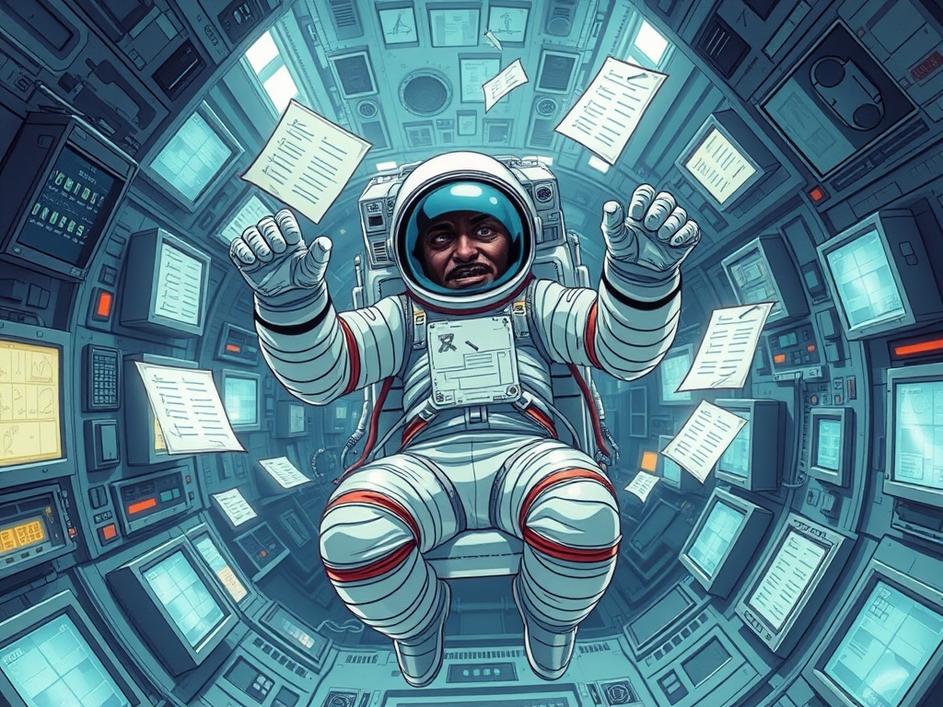
The recent reports about astronauts struggling with task switching in space offer a fascinating, if somewhat alarming, glimpse into the problem. Consider the extreme environment they operate in: constant danger, complex equipment, isolation, and high stakes. Astronauts must flawlessly execute a wide range of tasks, from conducting scientific experiments to maintaining life support systems. Any lapse in concentration, any error caused by poor task switching, could have serious consequences. These challenges are amplified by the unique stressors of space travel – weightlessness, radiation exposure, and disrupted sleep cycles. If highly trained professionals in a controlled environment struggle with this, it underscores the universality of the task-switching challenge. It also highlights the need for strategies to mitigate its impact, not only in space but here on Earth.
In today’s hyper-connected world, we are bombarded with notifications, emails, and instant messages. We are constantly pulled in different directions, expected to juggle multiple tasks simultaneously. This constant stream of interruptions fragments our attention and prevents us from achieving deep focus. Studies have shown that multitasking, often touted as a valuable skill, actually reduces productivity. It takes longer to complete tasks when you’re constantly switching between them, and the quality of your work suffers. Consider the cost of constantly checking your email every five minutes. Each interruption, however brief, disrupts your train of thought and requires you to re-establish your focus.
So, what can we do to combat the negative effects of task switching? The key is to minimize interruptions and create dedicated blocks of time for focused work. Start by identifying your most demanding tasks and scheduling uninterrupted time to complete them. Turn off notifications, close unnecessary tabs, and let your colleagues know you’re unavailable. Batch similar tasks together to reduce the cognitive load of switching between different types of work. For example, answer all your emails at once instead of checking them sporadically throughout the day. Prioritize tasks ruthlessly and delegate when possible. Learn to say ‘no’ to non-essential requests that disrupt your focus. And finally, take regular breaks to allow your brain to rest and recharge. A short walk, a few minutes of meditation, or even just stepping away from your computer can significantly improve your focus and reduce the risk of errors.
Ultimately, the solution to the task-switching problem lies in embracing a single-tasking mindset. Resist the urge to juggle multiple tasks simultaneously and instead focus on one thing at a time. Give your full attention to the task at hand, and don’t move on until it’s completed. This approach may seem counterintuitive in a fast-paced world that demands constant multitasking, but it is the most effective way to improve productivity, reduce errors, and enhance your overall well-being. In a world obsessed with speed and efficiency, sometimes the best approach is to slow down and focus.
While individual strategies are essential, organizations also have a role to play in minimizing the negative impact of task switching. Companies should create a culture that values focused work and minimizes unnecessary interruptions. This could involve implementing policies that discourage constant emailing or instant messaging, providing employees with dedicated quiet spaces for focused work, and encouraging managers to respect employees’ time and attention. By creating a supportive environment that prioritizes deep work, organizations can unlock the full potential of their employees and improve overall productivity.
As we move further into the age of information overload, the ability to focus and concentrate will become increasingly valuable. The organizations that recognize the importance of minimizing task switching and creating a culture of focused work will be the ones that thrive. It’s time to rethink our approach to work and prioritize deep work over superficial multitasking. By embracing the single-tasking mindset, we can not only improve our productivity and reduce errors, but also enhance our overall well-being and find greater satisfaction in our work. If astronauts in space are struggling with task switching, it’s a wake-up call for all of us here on Earth to prioritize focus and reclaim our attention.


Comments are closed