

We are a digital agency helping businesses develop immersive, engaging, and user-focused web, app, and software solutions.
2310 Mira Vista Ave
Montrose, CA 91020

2500+ reviews based on client feedback
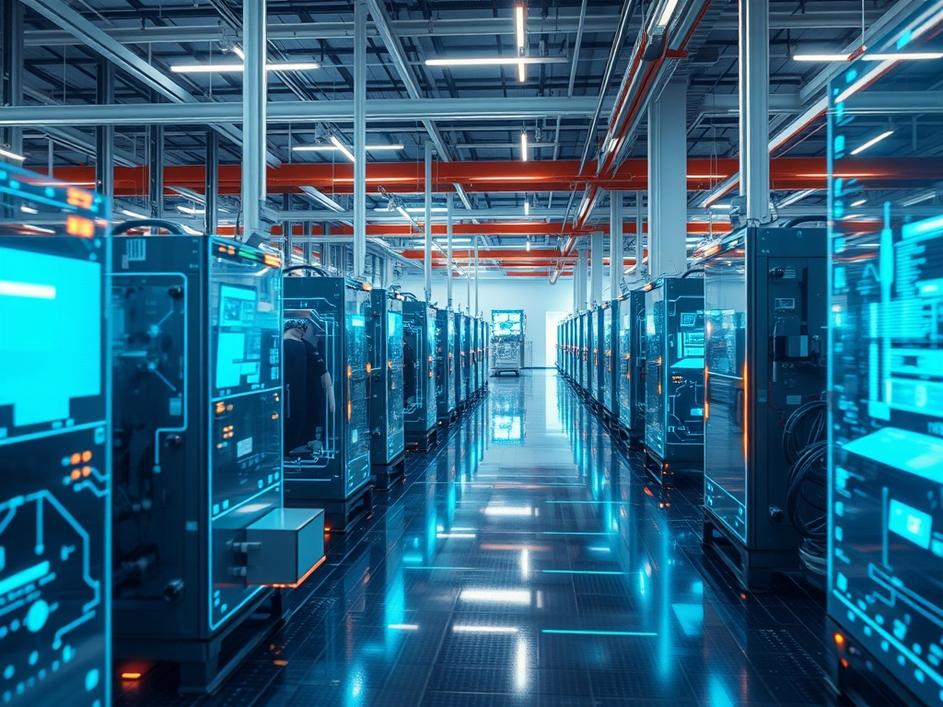
Siemens’ Transform Innovation Day 2026 wasn’t just another tech conference; it was a carefully curated peek into the not-so-distant future of industrial automation and digital transformation. The event showcased how the company envisions artificial intelligence (AI) and digital twins reshaping manufacturing, infrastructure, and various other sectors. It’s about more than just incremental improvements; Siemens is painting a picture of a fundamentally different industrial landscape, one driven by data, interconnectedness, and intelligent systems.
Digital twins, virtual replicas of physical assets or systems, have been around for a while, but Siemens is pushing the concept to new heights. Imagine being able to simulate the performance of an entire factory, predict potential bottlenecks, and optimize processes in real-time – all before anything is physically implemented. This level of predictive capability can significantly reduce downtime, improve efficiency, and enable businesses to adapt to changing market conditions with unprecedented agility. The 2026 vision emphasizes digital twins that are not just static models but living, breathing simulations that evolve alongside their physical counterparts.
AI is positioned as the central nervous system of this future industrial ecosystem. Siemens demonstrated how AI can be integrated into every aspect of operations, from predictive maintenance and quality control to supply chain optimization and personalized product design. We’re not just talking about basic automation; this is about AI algorithms that can learn, adapt, and make intelligent decisions autonomously. For example, AI could analyze sensor data from a machine, detect anomalies that indicate an impending failure, and automatically schedule maintenance – all without human intervention. This promises to dramatically improve reliability and reduce operational costs.
While the vision is certainly ambitious, Siemens also emphasized the practical applications of these technologies. The company showcased real-world examples of how AI and digital twins are already being used to solve concrete problems and deliver tangible benefits. This focus on practicality is crucial because it helps to bridge the gap between the theoretical potential of these technologies and their actual implementation in industrial settings. It’s one thing to talk about the power of AI; it’s another thing entirely to show how it can be used to improve efficiency, reduce costs, and create new opportunities.
Underpinning this entire vision is the concept of seamless connectivity. The future of industry, according to Siemens, is one where all devices, machines, and systems are interconnected, sharing data and collaborating in real-time. This requires robust communication networks, standardized protocols, and a secure infrastructure to protect sensitive data. The Internet of Things (IoT) is a key enabler of this connectivity, allowing businesses to collect vast amounts of data from their operations and use it to drive intelligent decision-making. But it’s not just about connecting devices; it’s about connecting people, processes, and ideas to create a truly collaborative industrial ecosystem.
While technology is undoubtedly the driving force behind this industrial transformation, Siemens also acknowledged the importance of the human element. As AI takes over more and more routine tasks, human workers will be freed up to focus on more creative, strategic, and value-added activities. This requires a shift in skills and training, as workers need to be able to work alongside AI systems, interpret data, and make informed decisions. The future of industry is not about replacing humans with machines; it’s about empowering humans with technology to create a more efficient, productive, and sustainable world.
Of course, realizing this vision will not be without its challenges. Issues such as data security, privacy, and the ethical implications of AI need to be carefully considered. Furthermore, there is the challenge of integrating these new technologies into existing industrial infrastructure, which can be complex and costly. And finally, there is the need to address the skills gap and ensure that workers have the training and education they need to succeed in this new industrial landscape. Siemens recognizes these challenges and is actively working to address them through research, development, and collaboration with industry partners.
Siemens’ Transform Innovation Day 2026 offered a compelling vision of the future of industry, one where AI and digital twins play a central role in driving efficiency, innovation, and sustainability. While the challenges are significant, the potential benefits are enormous. By embracing these technologies and working together, businesses can create a more resilient, adaptable, and competitive industrial sector that benefits everyone.

Comments are closed