

We are a digital agency helping businesses develop immersive, engaging, and user-focused web, app, and software solutions.
2310 Mira Vista Ave
Montrose, CA 91020

2500+ reviews based on client feedback
What's Included?
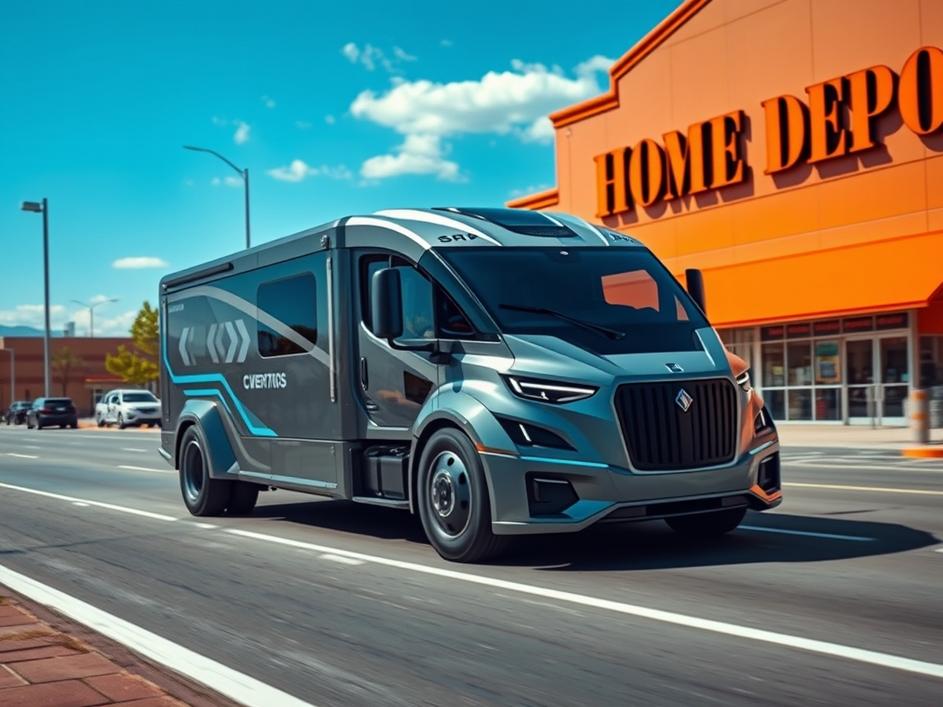
ToggleI’ve always been a bit skeptical about self-driving cars. The idea of handing over control to a computer just felt… wrong. But after watching a recent video showcasing the FSD 14.3 (Full Self-Driving) system in action on a Cybertruck, I’m starting to see the light. The video, which followed a user on a supervised drive to Home Depot, showed a level of autonomy that was genuinely impressive. It wasn’t just staying in a lane; it was navigating complex intersections, reacting to pedestrians, and generally behaving like a cautious, experienced driver.
The Cybertruck itself is a head-turner, no doubt. Paired with the FSD 14.3 system, it seems like we’re finally approaching a point where self-driving technology is becoming more than just a futuristic fantasy. The video highlighted the system’s ability to handle real-world driving scenarios. From stop signs to merging onto highways, the Cybertruck appeared to navigate with ease, only requiring minimal intervention from the driver. This is a significant leap forward from previous iterations of FSD, which often felt clunky and unreliable.
What really struck me was the smoothness of the ride. The Cybertruck didn’t exhibit any of the jerky, robotic movements that I’ve seen in other self-driving demos. Instead, it accelerated and decelerated gradually, maintained a safe following distance, and made lane changes with confidence. It was as if a professional driver was at the wheel, anticipating potential hazards and reacting accordingly. This level of refinement is crucial for building trust in autonomous systems, and FSD 14.3 seems to be delivering on that front.
Of course, it’s important to remember that FSD is still a “supervised” system. The driver needs to remain attentive and ready to take control if necessary. But the fact that the system can handle the vast majority of driving tasks autonomously is a game-changer. It frees up the driver to focus on other things, like navigating or simply enjoying the ride. And as the technology continues to improve, the need for human intervention will likely decrease even further.
What does this mean for the future of driving? Well, it’s hard to say for sure. But it’s clear that self-driving technology is rapidly evolving, and FSD 14.3 represents a significant step forward. Imagine a world where commuting is no longer a stressful chore, where long road trips are relaxing and enjoyable, and where accidents caused by human error are a thing of the past. That’s the promise of self-driving technology, and it’s a future that seems increasingly within reach. The integration of the Ace Pro 2 camera for capturing the drive is also an interesting addition, allowing for a detailed record of the FSD’s performance and providing valuable data for further development.
I know what some of you are thinking: “What about safety? What about liability?” These are valid concerns, and they need to be addressed. But I believe that the potential benefits of self-driving technology far outweigh the risks. With proper regulation and ongoing testing, we can create a safe and reliable autonomous driving system that will benefit everyone.
It’s also important to acknowledge that FSD is not perfect. There will be bugs, glitches, and unexpected situations that the system can’t handle. But that’s why it’s so important to have a human driver in the loop. The more data that Tesla collects, the better the system will become. And as FSD continues to learn and adapt, it will become an even more capable and reliable autonomous driving system. This continuous learning process is crucial for ensuring the safety and effectiveness of self-driving technology.
The implications extend beyond personal vehicles. Think about the impact on the trucking industry, logistics, and public transportation. Self-driving trucks could transport goods more efficiently and safely, reducing costs and improving delivery times. Autonomous buses and taxis could provide affordable and accessible transportation options for everyone, especially in underserved communities. The possibilities are endless.
So, while I remain cautiously optimistic, I can’t deny that FSD 14.3 has impressed me. It’s a glimpse into a future where driving is safer, more efficient, and more enjoyable. It will be interesting to see how the technology develops in the coming years and how it transforms the way we travel. The road ahead may be long, but the journey has begun, and the destination is looking increasingly promising.
Comments are closed