

We are a digital agency helping businesses develop immersive, engaging, and user-focused web, app, and software solutions.
2310 Mira Vista Ave
Montrose, CA 91020

2500+ reviews based on client feedback
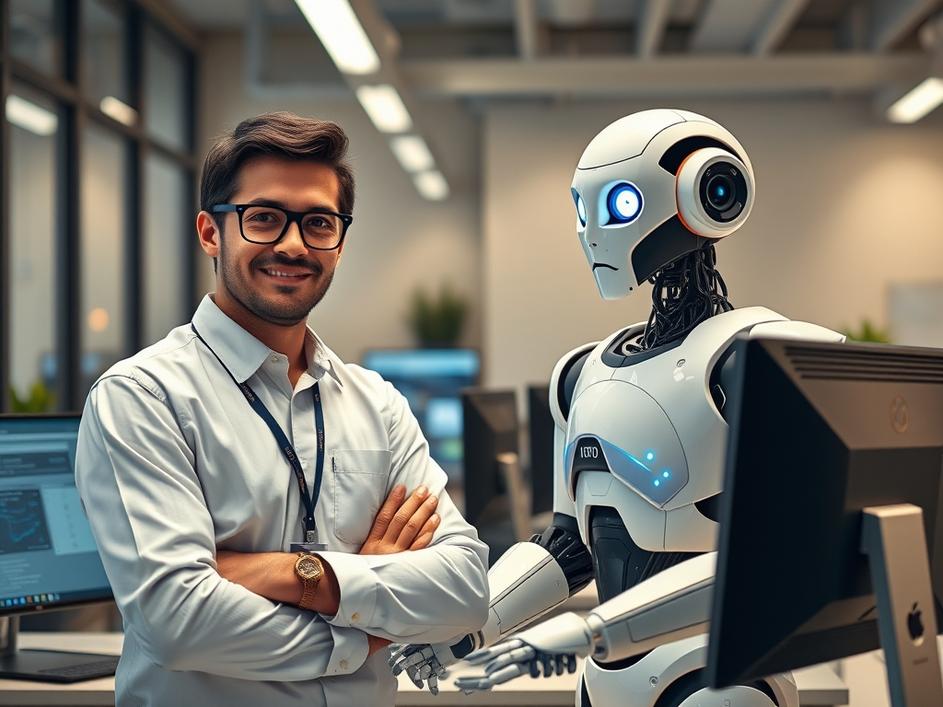
Word travels fast, especially on a college campus. Imagine being a computer science student, fresh off spring break, and receiving an email suggesting your chosen career path is about to be devoured by artificial intelligence. That’s the situation at the University of Washington, where concerns about AI’s impact on software engineering jobs prompted a message from the department head. This sparked anxiety, but is it justified, or just another wave of tech-related panic?
The tech world is notorious for its boom-and-bust cycles. Remember when everyone needed to be a web designer? Or a mobile app developer? Now, AI is the hot topic, and with it comes the inevitable fear that current skills will become obsolete. But the reality is rarely so black and white. Technology evolves, and so do the skills required to navigate it. The rise of AI doesn’t necessarily mean the end of software engineering; it might just mean a shift in focus.
Think of AI as a sophisticated tool, not a job-stealing monster. Software engineers have always used tools to automate tasks and improve efficiency. Compilers, debuggers, and code libraries are all examples of technologies that, at one point, might have seemed like threats to human programmers. But they ultimately made programmers more productive and enabled them to tackle more complex problems. AI should be viewed in the same light. It can automate repetitive coding tasks, freeing up engineers to concentrate on higher-level design, problem-solving, and innovation.
AI excels at pattern recognition and automation, but it lacks the human qualities of creativity, critical thinking, and nuanced understanding. Software engineering is not just about writing code; it’s about understanding user needs, designing intuitive interfaces, and solving complex problems in innovative ways. These are areas where human engineers still hold a significant advantage. Imagine trying to explain to an AI the subtle nuances of human emotion or the complexities of a real-world business problem. It simply can’t replicate the human element that is crucial to successful software development.
The rise of AI will likely create new roles and opportunities for software engineers. Instead of simply writing code, engineers might focus on training AI models, developing AI-powered tools, or integrating AI into existing software systems. The demand for engineers who understand both software development and artificial intelligence is likely to increase. This means that computer science students should focus on developing a broad skill set that includes not only coding but also data analysis, machine learning, and critical thinking. Adaptation is key to navigating the evolving tech landscape.
It’s important to approach the AI revolution with a healthy dose of skepticism. The hype surrounding AI often outpaces the reality of its capabilities. While AI has made impressive strides in recent years, it’s still far from being able to completely replace human software engineers. Many AI-powered coding tools are still in their early stages of development, and they often require significant human oversight and intervention. It’s also worth noting that AI is not a magic bullet; it’s a tool that needs to be used effectively in order to achieve its full potential.
The most important thing that software engineers can do to future-proof their careers is to embrace continuous learning. The tech industry is constantly evolving, and engineers need to stay up-to-date on the latest trends and technologies. This means taking online courses, attending conferences, and experimenting with new tools and techniques. It also means being willing to adapt to new roles and responsibilities as the industry changes. The engineers who are willing to learn and adapt will be the ones who thrive in the age of AI.
The future of software engineering is likely to be one of collaboration between humans and AI. AI will handle the repetitive tasks, freeing up engineers to focus on the more creative and strategic aspects of software development. This collaboration will lead to more innovative and efficient software solutions. Instead of fearing AI, software engineers should embrace it as a powerful tool that can help them to be more productive and successful. The key is to understand AI’s strengths and weaknesses and to use it in a way that complements human skills.
So, is the demise of software engineering jobs greatly exaggerated? Absolutely. While AI will undoubtedly impact the industry, it’s unlikely to lead to mass unemployment. Instead, it will likely create new opportunities and require engineers to adapt their skills. The future belongs to those who embrace change, continuously learn, and see AI as a partner, not a replacement. The email from the University of Washington, while perhaps alarming on the surface, should serve as a call to action: a reminder to stay informed, adaptable, and ready to embrace the evolving landscape of software engineering.


Comments are closed