

We are a digital agency helping businesses develop immersive, engaging, and user-focused web, app, and software solutions.
2310 Mira Vista Ave
Montrose, CA 91020

2500+ reviews based on client feedback
What's Included?
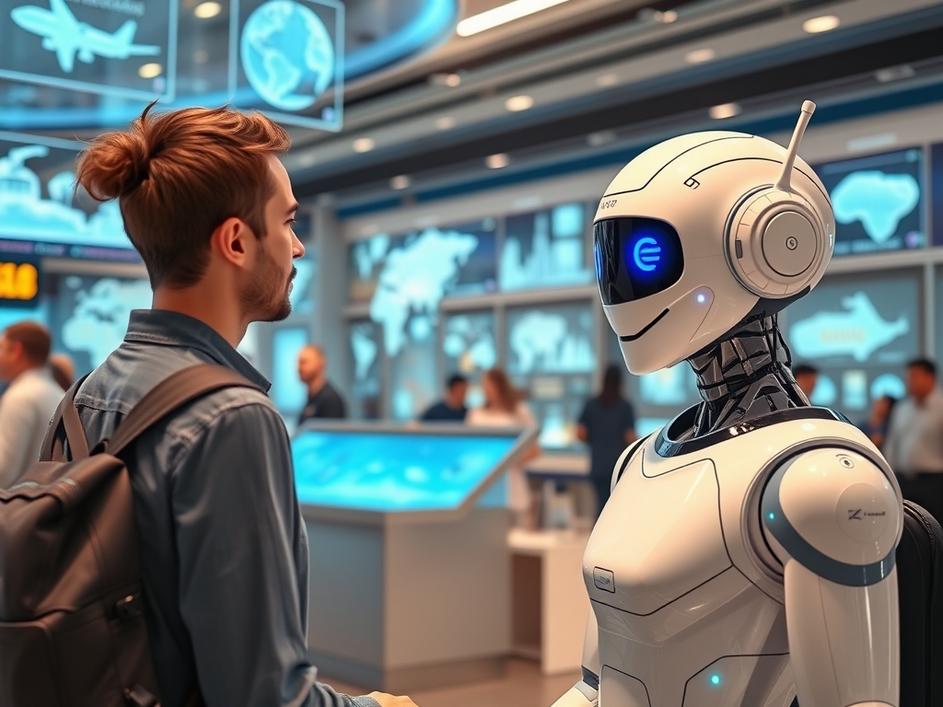
ToggleWe’ve seen AI chatbots answer customer service questions and even draft legal documents. Now, a new study suggests that people are warming up to the idea of letting artificial intelligence handle their travel bookings. The study, released in April 2026, indicates a significant shift in consumer attitudes, revealing that travelers are increasingly open to the prospect of AI-powered travel agents crafting their itineraries and managing reservations. But there’s a catch: trust and control remain absolutely essential.
The research paints a picture of cautious optimism. People aren’t blindly jumping on the AI bandwagon. Instead, they’re expressing a willingness to experiment with AI booking tools, provided certain safeguards are in place. The biggest concerns revolve around transparency, accuracy, and the ability to maintain control over the booking process. No one wants to be stuck with a non-refundable flight to the wrong destination because an algorithm made a mistake.
Trust is the bedrock of any successful transaction, and that’s especially true when it comes to travel. We’re not just buying a product; we’re investing in an experience. We’re entrusting our hard-earned money and precious vacation time to a third party. If that third party is an AI, it needs to prove its reliability and competence. This means providing clear explanations of how decisions are made, offering guarantees of accuracy, and giving users the power to override or modify recommendations.
Even if people trust an AI’s ability to find the best deals and create personalized itineraries, they still want to feel like they’re in control. Nobody wants to feel like they’re being herded onto a pre-packaged tour with no room for deviation. AI travel agents need to offer flexibility and customization options, allowing users to fine-tune their plans and make adjustments as needed. The ideal AI travel agent should act as a helpful assistant, not a dictatorial overlord.
I think AI has the potential to revolutionize the travel industry, but it’s important to approach this technology with a healthy dose of skepticism and a clear understanding of its limitations. AI excels at crunching data, identifying patterns, and automating repetitive tasks. It can quickly sift through mountains of information to find the best deals on flights, hotels, and activities. However, AI lacks the human touch, the empathy, and the nuanced understanding of individual preferences that a skilled human travel agent can provide. For example, my aunt wanted to go to Italy. An AI might have found her the cheapest flights, but it wouldn’t have known about her love for small, family-run trattorias or her desire to avoid crowded tourist traps. A good travel agent, on the other hand, could have used their personal experience and local knowledge to craft a truly unforgettable trip.
I believe the future of travel lies in a hybrid approach that combines the best of both worlds. AI can handle the tedious tasks of searching for deals and managing logistics, while human agents can provide personalized recommendations, offer expert advice, and handle unexpected problems. Think of AI as a powerful tool that empowers travel agents to be even more effective, rather than a replacement for human expertise.
What does this mean for travel agencies? For one, agencies need to invest in AI tools to improve the quality of their service. But more importantly, they need to focus on what they do best: providing personalized attention and expert guidance. They need to train their agents to work alongside AI, leveraging its capabilities to enhance their own skills and knowledge. Travel agencies that embrace this hybrid approach will be well-positioned to thrive in the age of AI.
It’s also important to consider the ethical implications of using AI in travel. How do we ensure that AI algorithms are fair and unbiased? How do we protect user data from misuse? How do we prevent AI from manipulating or deceiving travelers? These are important questions that need to be addressed as AI becomes more prevalent in the travel industry. We also need to consider that the data will only be as unbiased as the data it is fed. If the data shows, for example, that males are more likely to pay for an upgrade, then the AI may attempt to get a male to pay for an upgrade more often than a female.
The study’s findings are encouraging, but they also serve as a reminder that AI is not a magic bullet. It’s a powerful tool that can be used to improve the travel experience, but it needs to be implemented thoughtfully and responsibly. As travelers, we should be open to experimenting with AI booking tools, but we should also demand transparency, control, and accountability. As travel professionals, we should embrace AI as a valuable asset, but we should never forget the importance of human connection and personalized service. The future of travel is not about replacing humans with machines; it’s about finding the right balance between technology and human expertise.



Comments are closed