

We are a digital agency helping businesses develop immersive, engaging, and user-focused web, app, and software solutions.
2310 Mira Vista Ave
Montrose, CA 91020

2500+ reviews based on client feedback
What's Included?
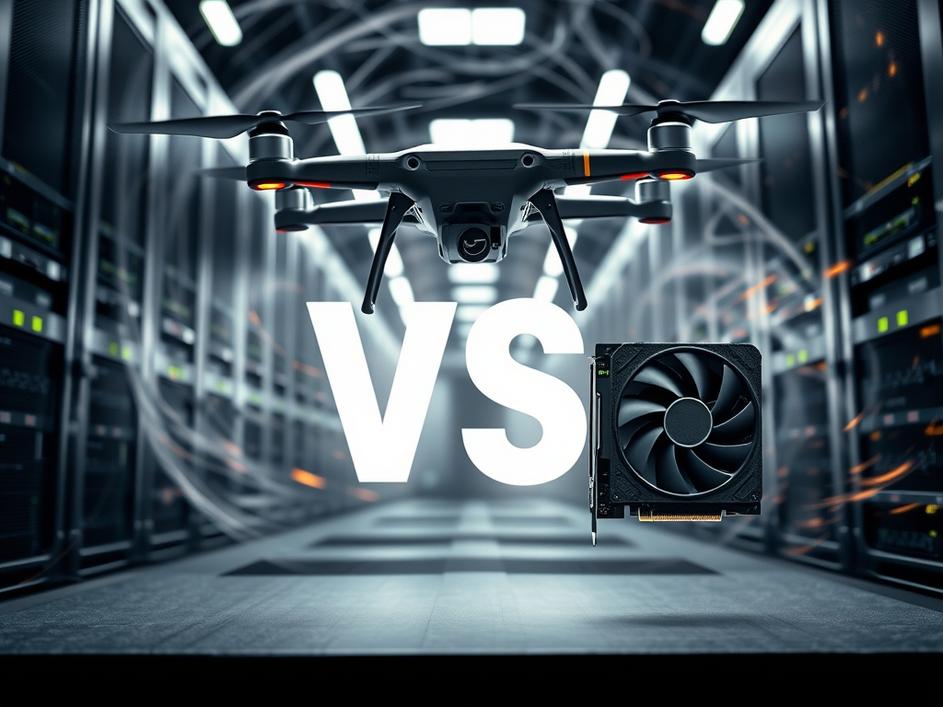
ToggleIt looks like the gloves are off in the cloud computing world, specifically when it comes to the chips that power it all. Amazon CEO Andy Jassy recently made waves by suggesting that Amazon’s own in-house chips offer better value than those from industry giant Nvidia. This isn’t just boardroom banter; it’s a direct challenge that could reshape the future of cloud infrastructure and AI development.
Jassy’s argument centers on the idea of “bang for your buck.” He’s essentially saying that while Nvidia’s chips are undoubtedly powerful, Amazon’s custom-designed silicon delivers comparable performance at a lower cost. This is a critical point for companies running massive cloud workloads, where even slight cost differences can add up to significant savings over time. Amazon has been quietly developing its own chips, like Graviton for general-purpose computing and Trainium and Inferentia for machine learning, for years. Now, they’re ready to go head-to-head with the established players.
Nvidia has long been the king of the hill when it comes to GPUs, which are essential for demanding tasks like AI training and high-performance computing. Their chips are known for their raw power and extensive software ecosystem, making them the go-to choice for many developers and researchers. However, this dominance comes at a price. Nvidia’s top-of-the-line GPUs can be incredibly expensive, putting a strain on budgets, especially for smaller companies and startups. And so, Amazon’s claim isn’t about which chip is better, it’s about which chip is better for your wallet.
Amazon’s move highlights a broader trend in the tech industry: the increasing importance of custom silicon. Companies are realizing that off-the-shelf chips don’t always perfectly meet their specific needs. By designing their own chips, they can tailor performance, power consumption, and cost to optimize their infrastructure. This trend isn’t limited to Amazon; Google, Apple, and other tech giants are also investing heavily in custom silicon. The benefit is that these companies aren’t simply buying hardware, they’re developing specifically for their software and hardware combinations.
So, what does all this mean for the future of cloud computing? For starters, it could lead to more competition and innovation in the chip market. Nvidia can’t afford to rest on its laurels; it needs to continue pushing the boundaries of performance while also addressing the cost concerns of its customers. We might also see more cloud providers following Amazon’s lead and developing their own custom chips. This would give them greater control over their infrastructure and potentially offer customers more specialized and cost-effective services.
While cost is a major factor, it’s not the only consideration. Nvidia has a well-established software ecosystem, including libraries and tools that make it easier for developers to build and deploy AI applications. Amazon needs to convince developers that its chips are not only cheaper but also easy to use and well-supported. This will require significant investment in software development and community building. This is a challenge that Amazon has faced and overcome before, by providing tools that allow developers to quickly learn and transition.
Ultimately, the competition between Amazon and Nvidia, and the broader trend toward custom silicon, is good for the industry as a whole. It drives innovation, lowers costs, and gives customers more choices. While Nvidia remains a formidable player, Amazon’s challenge is a sign that the cloud computing landscape is evolving, and the future is likely to be one of greater diversity and specialization. The reality is that the customer is the winner, and innovation, which is what this competition drives, will bring costs down while improving power.
There’s no easy answer to the question of whether Amazon’s chips are truly a better value than Nvidia’s. It depends on the specific workloads you’re running, your budget, and your technical expertise. If you’re a small startup with limited resources, Amazon’s cost-effective chips might be a great option. But if you need the absolute highest performance and have access to a team of experienced AI engineers, Nvidia’s GPUs might still be the best choice. It’s a fascinating battle to watch, and one that will have significant implications for the future of cloud computing.



Comments are closed