

We are a digital agency helping businesses develop immersive, engaging, and user-focused web, app, and software solutions.
2310 Mira Vista Ave
Montrose, CA 91020

2500+ reviews based on client feedback
What's Included?
ToggleIndia has set an ambitious goal: to boost its manufacturing sector so it accounts for 25% of the country’s Gross Domestic Product (GDP). Currently, manufacturing hovers around 16%. That’s a significant jump, and the question on everyone’s mind is, how will India achieve this?
It’s not just about wanting more factories. Several hurdles stand in the way. Things like outdated infrastructure, complicated regulations, and a need for a more skilled workforce all play a role. Plus, global competition is fierce. To compete effectively, India needs to find an edge. Can artificial intelligence (AI) be that edge?
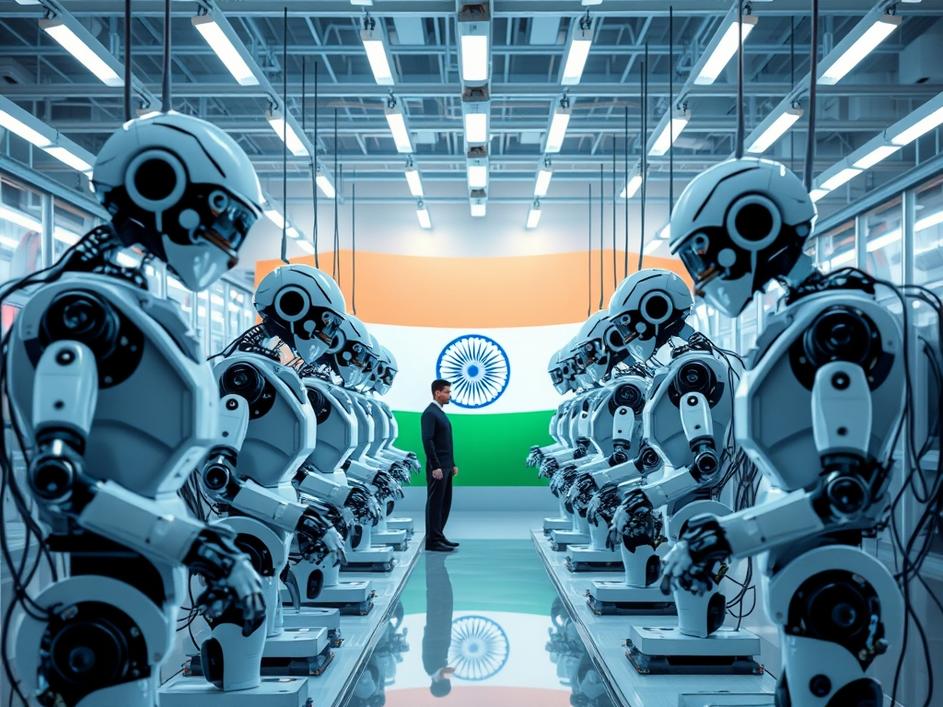
The idea is that AI can bring a new level of efficiency and innovation to factories. Think about it: AI can analyze huge amounts of data to optimize production processes, predict maintenance needs before breakdowns occur, and improve quality control. This means less waste, lower costs, and better products. But, like any big change, adopting AI comes with its own set of considerations.
AI’s power lies in its ability to crunch numbers and spot patterns that humans might miss. In manufacturing, this translates to several key advantages. For example, AI-powered systems can monitor equipment performance in real-time, identifying potential problems before they lead to costly downtime. This predictive maintenance can save companies a lot of money and keep production humming along smoothly.
AI can also optimize supply chains, predicting demand fluctuations and ensuring that materials are available when and where they’re needed. This reduces inventory costs and minimizes delays.
Furthermore, AI can enhance quality control by detecting defects early in the production process. This prevents defective products from reaching customers and improves overall product quality.
But simply throwing AI into the mix isn’t enough. To truly benefit, India needs a well-thought-out strategy. This means investing in education and training to create a workforce that can work alongside AI systems. It also means addressing concerns about job displacement and ensuring that the benefits of AI are shared broadly. It’s also important to modernize the regulatory landscape to encourage innovation while protecting workers and consumers.
Consider the human element. While AI can automate many tasks, it also creates new opportunities for people. Instead of performing repetitive manual labor, workers can focus on more creative and strategic roles, such as designing new products, optimizing processes, and managing AI systems. The key is to provide workers with the skills and training they need to adapt to these changing roles.
The government has a crucial role to play in making this happen. By creating a supportive environment for businesses to invest in AI, and by funding research and development, the government can help accelerate the adoption of AI in manufacturing. Tax incentives, grants, and other forms of support can encourage companies to take the leap and experiment with new technologies. Government can also lead by example, adopting AI in its own manufacturing and infrastructure projects.
Standardization is another area where the government can make a difference. By developing industry-wide standards for AI systems, the government can promote interoperability and reduce the risk of vendor lock-in. This would make it easier for companies to adopt AI solutions and integrate them into their existing operations.
The benefits of a stronger manufacturing sector extend far beyond the factory floor. It can create jobs, boost exports, and improve the overall standard of living. A thriving manufacturing sector can also help to reduce India’s reliance on imports and make the country more self-sufficient.
Furthermore, a strong manufacturing base can drive innovation and technological advancements. As companies compete to develop better products and more efficient processes, they will invest in research and development, leading to new breakthroughs and discoveries. This can have a ripple effect throughout the economy, creating new opportunities and improving competitiveness.
India’s dream of making manufacturing a quarter of its GDP is certainly ambitious, but it’s not impossible. With a strategic approach that embraces AI, invests in people, and creates a supportive environment for businesses, India can transform its manufacturing sector and unlock its full potential. It’s a long road ahead, but the journey is worth it. The integration of AI into manufacturing processes could be the key to unlocking a new era of economic growth and prosperity for India, but the human element needs to be at the forefront, to make sure that this change is beneficial for all citizens, not just the owners of factories and corporations. It is crucial to create new opportunities for people in the manufacturing sector so that people are not left behind in the wave of automation.



Comments are closed